
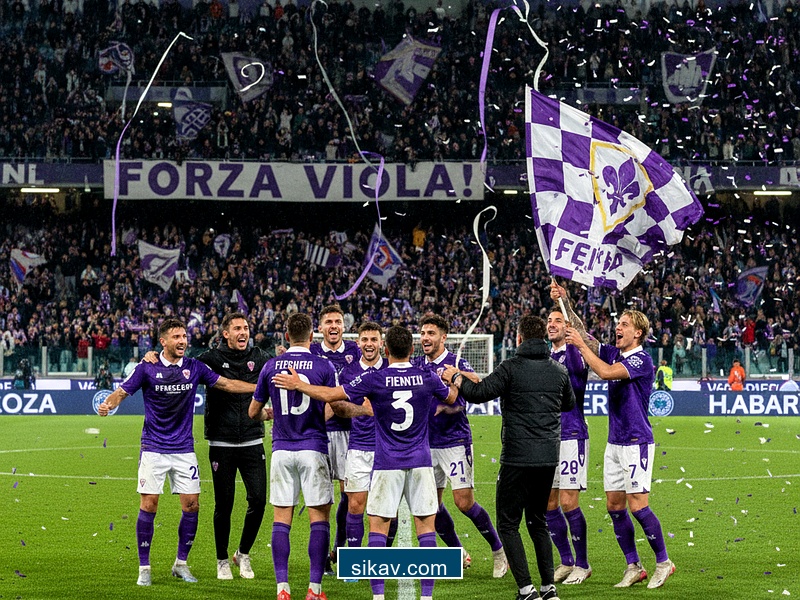
The bells of Giotto’s Campanile have likely rung with less urgency for weddings than the collective sigh of relief that swept through the Artemio Franchi this weekend. Fiorentina has finally won a football match in Serie A. It took until the Panettone was on the table, the Christmas lights were strung across the Ponte Vecchio, and the patience of the Curva Fiesole had been ground down to a fine, volatile powder. But the zero in the win column has been erased.
To view this merely as three points is to misunderstand the psyche of this city. In Florence, football is not a pastime; it is a civic duty performed under the judgmental gaze of the Renaissance. While the source report dryly notes this as the "first Serie A win of the season," the reality is a visceral exorcism of months of tactical impotency. However, before the Prosecco is corked, we must place this dreary start against the tapestry of what this club represents, specifically looking back two decades to when the color violet signified terror, not timidity.
The Ghost of Luca Toni and the Class of 2005
To understand the depth of the current malaise—and the significance of breaking it—one must juxtapose this jagged, desperate squad with the symphonic precision of the 2005-06 Fiorentina side. Twenty years ago, under the astute stewardship of Cesare Prandelli, the Viola didn't just win; they swashbuckled.
That era was defined by a tactical identity that the current iteration has sorely lacked until this weekend. In 2005, the plan was lucid: feed Luca Toni. The giant from Modena wasn't just a target man; he was a gravitational force. He scored 31 goals that season, securing the European Golden Shoe, a feat no Italian had managed in nearly half a century. But Toni was merely the spearhead of a beautifully balanced trident.
"The difference between the Fiorentina of 2005 and the struggling collective we have watched freeze this winter lies in the midfield geometry. The modern obsession with 'control' often results in sterile possession. Prandelli’s team possessed the ball to kill, not to rest."
The 2005 midfield featured Stefano Fiore and a young Riccardo Montolivo, but the true architect was Fabio Liverani. He was a regista of the highest order—slow in the legs but lightning in the mind. He could dissect a defense with a glance. Compare that to the frenetic, anxiety-ridden distribution we have witnessed this season. Where Liverani painted masterpieces with vertical passes, the current midfield has spent months sketching stick figures with sideways safety balls. This Christmas victory finally showed a glimpse of vertical courage, a willingness to risk possession for penetration.
Tactical Dissonance: The Lost Art of the Winger
Another stark contrast lies on the flanks. The modern game demands inverted wingers cutting inside to shoot, often clogging the central channels. This season, Fiorentina’s attack has often looked like traffic congestion in the Piazza della Signoria. Conversely, the mid-2000s team utilized Martin Jørgensen—a player of supreme intelligence and industry. He provided width in the truest sense, stretching defenses until they snapped, creating the pockets of space that Toni and Adrian Mutu would ruthlessly exploit.
The partnership of Mutu and Toni was telepathic. The Romanian’s chaotic brilliance foiled Toni’s structured dominance. This season, the forward line has looked like strangers introduced five minutes before kickoff. The victory secured this week was less about fluid chemistry and more about sheer, bloody-minded refusal to lose. It was ugly, gritty, and lacked the aesthetic varnish of the Mutu years, but in a relegation dogfight—which is what a winless run until December implies—aesthetics are a luxury the poor cannot afford.
The Shadow of the Cecchi Gori Collapse
Why does a winless run hit Florence harder than other cities? Because the trauma of 2002 is never far from the surface. When the club went bankrupt under the Cecchi Gori ownership and was reborn as Florentia Viola in Serie C2, the fans learned that existence is not guaranteed. Every prolonged slump since then carries the faint, sulfurous whiff of that death.
This "first win" narrative is not just about points; it is about staving off the existential dread that haunts the Franchi. The architecture of the stadium itself, with the looming Tower of Marathon, seems to demand greatness. When the team fails to win for half a season, the stadium feels less like a fortress and more like a mausoleum.
Analyzing the Pivot Point
So, how was the deadlock finally broken? Tactical analysis of the breakthrough suggests a reversion to simplicity. The manager, likely under immense pressure, abandoned the complex pressing triggers that had failed since August and opted for a low block and counter-attack strategy—classic Italian Catenaccio with a modern twist. By ceding possession, they removed the anxiety of creativity.
This is a humiliating concession for a club that prides itself on 'beautiful football,' but it was necessary. The defense, which has been porous and disorganized, finally looked compact. It recalls the 2007-08 season where Sébastien Frey seemingly played goalkeeping duties for a different sport, making save after impossible save to drag the team into the Champions League. This week's win required a similar heroic individual effort at the back, proving that when systems fail, individual grit is the last line of defense.
A Christmas Gift, Not a Solution
Let us not delude ourselves. One win in December is a bandage on a arterial wound. The Sette Sorelle (Seven Sisters) era of Serie A, where Fiorentina stood shoulder-to-shoulder with Juventus, Milan, and Inter, feels like a different geological epoch. The current squad lacks the star power of a Batistuta or the silken touch of a Rui Costa.
However, momentum is a tangible force in Calcio. A team that wins once remembers how to win again. The players who walked off the pitch looked lighter, unburdened by the historic weight of their failure. They have given the city a peaceful Christmas, silencing the critics for at least a week. But when January arrives, the nostalgia for the golden eras of the past must be shelved. They cannot play like Toni and Mutu; they must simply learn to play like a team that deserves to stay in Serie A.