
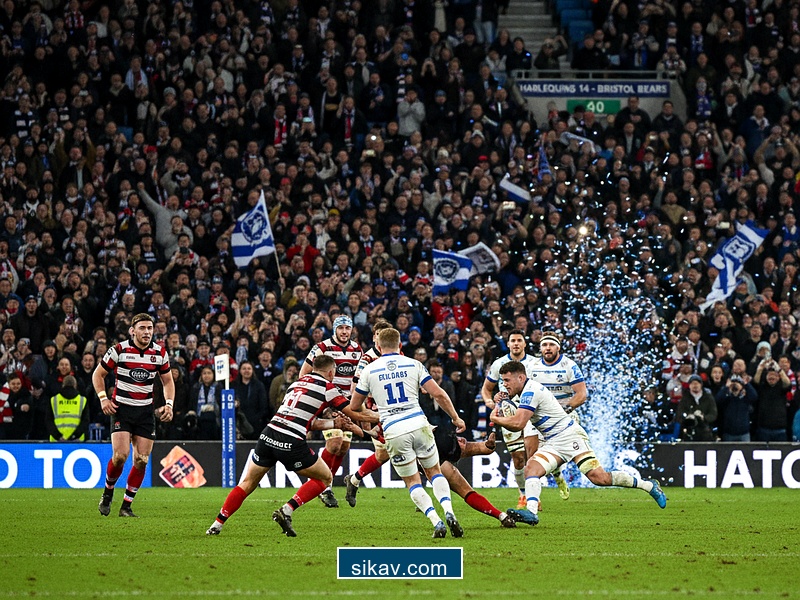
Pat Lam’s side did not merely defeat Harlequins at Twickenham; they systematically deconstructed the host’s defensive integrity through superior pod alignment and transition speed. While the fixture was billed as an exhibition of attacking flair, Bristol imposed a structural rigidity that exploited the seams in Harlequins' drift defense with surgical precision. The 14-40 scoreline reflects a total mastery of spatial manipulation rather than simple physical dominance.
| Key Metric | Harlequins | Bristol Bears | Tactical Implication |
|---|---|---|---|
| Gainline Success % | 38% | 62% | Bristol commanded front-foot ball. |
| Ruck Speed (<3 sec) | 41% | 68% | Defensive realignment failure for Quins. |
| Defenders Beaten | 14 | 33 | Evidence of mismatch isolation. |
| Offloads | 8 | 19 | Continuity in the contact area. |
Why The Numbers Matter
The statistics above illuminate the core of Bristol's victory. The disparity in ruck speed is the critical data point. In modern Premiership rugby, a ruck speed of under three seconds makes it statistically improbable for a defense to fold around and occupy the full width of the pitch. Bristol achieving nearly 70% lightning-quick ball meant Harlequins were perpetually retreating and narrowing their defensive line. This compression created the expansive acreage on the edges that the Bears ruthlessly exploited for their six tries.
Furthermore, the gainline success rate highlights the failure of the Harlequins' first-up tackling. By losing the collision dominance, Quins allowed Bristol to play on top of the defensive line rather than behind it. This negated the effectiveness of the Quins' jackal threats, rendering their counter-rucking strategy obsolete.
The 2-4-2 Formation vs. The Drift
Bristol Bears utilized a variation of the 2-4-2 forward pod formation, a system designed to stretch defenses horizontally. By keeping two forwards in the wide channels (tramlines) and a pod of four in the midfield, they forced the Harlequins defense to make a binary choice: compress to stop the midfield crash or spread thin to cover the wings.
Harlequins typically operate a passive drift defense. This system relies on pushing the attack toward the touchline and using the sideline as an extra defender. However, the flaw in this tactic against Bristol became apparent immediately. Bristol’s distributors did not drift; they engaged the line squarely before pivoting the pass. This "square-up" motion fixed the inside defenders, preventing them from drifting early.
"When you analyze the tracking lines of the Quins' outside backs, you see hesitation. They are caught between jamming in to shut down the pod options and drifting to cover the overlap. Bristol lived in that moment of hesitation."
Once the inside defenders were fixed, Bristol utilized screen passes behind the forward pods to release backs into the 13-channel. The timing of these loops destabilized the connection between the Harlequins centers and their wingers, leading to several line breaks that originated from simple handling errors by the defense.
Heat Maps and Territorial Control
Analyzing the positional data reveals a stark contrast in how the two teams utilized the Twickenham pitch. Harlequins’ heat map shows a dense concentration of activity between the 10-meter lines, often moving laterally without penetrating vertically. This lateral movement, unaccompanied by gainline success, is tactically suicidal against a team like Bristol that thrives on turnover ball.
Conversely, Bristol’s heat map is asymmetric, showing heavy activity in the opponent's 22-meter area and, crucially, within the five-meter channels on both wings. This indicates a successful execution of "edge-to-edge" offense. By forcing the ball wide early in the phase count, Bristol stretched the fatigue levels of the Quins' tight five forwards, who were forced to cover excessive ground laterally.
The Breakdown: Speed vs. Security
Harlequins' identity is often tied to chaos—forcing turnovers and playing unstructured rugby. Bristol neutralized this by committing varying numbers to the breakdown based on field position. In their own half, Bristol committed three players to the ruck to ensure ball security. Once they crossed the gainline, they reduced this to one or two, trusting the ball carrier’s placement.
This variable resource allocation baffled the Harlequins back row. When Quins committed players to the jackal, Bristol cleared them out with efficient latching. When Quins stood off to fill the defensive line, Bristol picked and went through the middle. This "damned if you do, damned if you don't" scenario prevented Harlequins from generating the turnover ball they rely on to ignite their counter-attack.
The stats show Harlequins conceded significantly more turnovers in contact than usual. This stems from isolation. Quins players frequently found themselves isolated from support pods because they were trying to force offloads against a Bristol defense that maintained disciplined line speed. Instead of absorbing the tackle and recycling, Quins players pushed passes that weren't there, feeding directly into Bristol’s transition game.
Transition Defense Failure
The six tries scored by Bristol were not all born of set-piece dominance; many came from transition moments. When possession changes hands, a defense has approximately three seconds to transition from "attack shape" to "defense shape." Harlequins failed consistently in this window.
Bristol exploited the "hinge" defenders—the players positioned on either side of the ruck. As Quins scrambled, their hinge defenders often over-chased the scrum-half, leaving the A and B defender channels exposed. Bristol’s ball carriers targeted these soft shoulders, breaking the first line of defense before Quins could organize their width. Once the line is broken in the A-channel, the drift defense becomes irrelevant because the attackers are already behind the advantage line.
Personnel Deployment: The System Players
The individual battles underscore the tactical victory. Bristol’s deployment of their playmakers differed significantly from Quins. While Harlequins relied on their 10 and 12 to generate magic individually, Bristol used their centers as distribution hubs. By having the 12 or 13 stand flat and act as the first receiver from the pod, they effectively added a second layer of distribution that Harlequins struggled to read.
This setup isolated the Harlequins wingers. Throughout the match, we observed the Quins wingers stepping in to help their centers, only to see the ball floated over their heads to an unmarked Bristol runner. This is a