
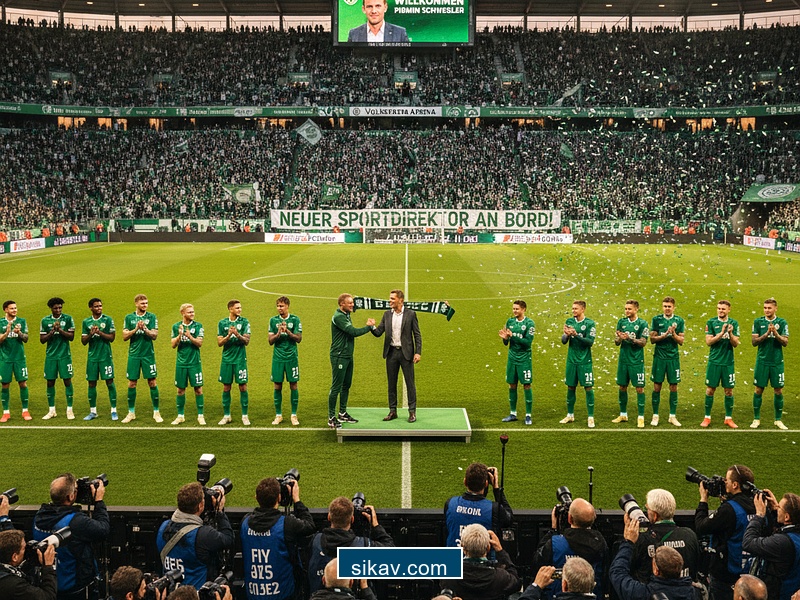
In modern football analysis, we often obsess over the geometry of the pitch—triangles on the wing, the compactness of a 4-4-2 low block, or the verticality of a counter-attack. However, the most critical tactical adjustments often occur well before the referee blows the opening whistle. They happen in the boardroom, where the architectural blueprints of a club are drawn. The appointment of Pirmin Schwegler as VfL Wolfsburg’s new sporting director is not merely a personnel change; it is a fundamental shift in formation. It represents a move away from a static administrative structure toward a dynamic, fluid system designed to control the "transition phases" of the transfer market.
Wolfsburg has effectively signed a Deep-Lying Playmaker for their front office. By recruiting Schwegler from Eintracht Frankfurt, where he served as the Head of Professional Football, Wolfsburg is attempting to install a specific "operating system" based on intelligence, ball retention (talent retention), and progressive passing (squad development). To understand the impact of this move, we must ignore the narrative of a former player returning to the league and instead analyze the structural deficiencies this appointment is designed to correct.
The Sporting Director as the Organizational #6
If we map the hierarchy of a football club onto a tactical board, the Sporting Director operates as the solitary number six—the defensive midfielder. They are the screen in front of the ownership (the backline) and the supplier for the coaching staff (the forward line). Schwegler’s playing career saw him operate in exactly these zones on the grass. He was a controller, a player who dictated tempo and intercepted danger before it became critical.
"The modern executive must visualize the market like a midfielder visualizes space. It is about anticipating the turnover before it happens."
Wolfsburg’s recent administrative performance has suffered from a lack of connection between departments—a "broken team shape," if you will. The gap between recruitment strategy and coaching philosophy created large spaces for errors to exploit. Schwegler’s profile suggests his primary directive will be to tighten this formation. He brings "vertical compactness" to the organization. His role requires him to drop deep to secure funding and alignment from the board, then turn and play progressive passes by delivering viable transfer targets to the manager.
Analyzing the Frankfurt Data Set
To predict the tactical output Schwegler will bring to Wolfsburg, we must audit the data from his tenure at Eintracht Frankfurt. While there, he operated within a system renowned for its high-risk, high-reward scouting network. Frankfurt’s recruitment model functions like a high-pressing team: they aggressively target undervalued assets in volatile markets (the French Ligue 1, for example), develop them rapidly, and sell at peak valuation.
| Metric | Frankfurt Model (Schwegler Era) | Wolfsburg Current State |
|---|---|---|
| Recruitment Tempo | High Velocity (Rapid integration) | Static / Delayed Reaction |
| Squad Age Profile | Developmental Prime (21-24) | Mixed / Inconsistent |
| Market Positioning | Proactive / Disruptive | Reactive |
Schwegler was instrumental in the operational side of this machinery. His shift to Wolfsburg implies that the "Wolves" are looking to adopt this aggressive recruitment press. The data indicates that Wolfsburg has often been too passive in the transfer windows, waiting for the market to settle rather than dictating the terms. Schwegler’s arrival signals a move to a "front-foot" transfer policy, engaging agents and targets earlier in the cycle to secure value before the "xG" (Expected Goals) of a transfer creates inflation in the fee.
The Half-Spaces of Player Management
A crucial aspect of Schwegler's remit falls into what tacticians call the "half-spaces"—the grey area between the pitch and the office. As Head of Professional Football at Frankfurt, Schwegler specialized in this zone. It is the area of squad harmony, contract negotiation, and daily conflict resolution.
Wolfsburg has historically struggled with retention in these zones. Players often drift, and the squad hierarchy becomes disjointed. By installing a former Bundesliga midfielder in this role, Wolfsburg is utilizing a "man-marking" strategy on their own squad. Schwegler understands the biometric load, the psychological triggers, and the dressing room dynamics. He provides a tactical bridge. When the manager demands high intensity, Schwegler is the one ensuring the contractual and logistical framework supports that intensity. He prevents the administrative "turnovers" that lead to player dissatisfaction and eventual exit.
Strategic Overload: The Vertical Integration
Tactically, successful clubs today rely on vertical integration—the seamless movement of philosophy from the U17s to the first team. This is the concept of "positional play" applied to club structure. Everyone must know where to be and what the system demands.
Wolfsburg's appointment of Schwegler is a direct attempt to fix their vertical passing lanes. The academy has produced talent, but the transition to the first team (the final third) has lacked precision. Schwegler’s mandate will likely focus on increasing the "pass completion rate" of academy graduates into the Bundesliga squad. This requires a harmonized tactical identity. If the U19s play a high line, the recruitment for the first team must prioritize speed in recovery defense. Schwegler is the tactician responsible for ensuring this alignment exists across all age groups.
<p style="font-size: 1.125rem; line-height: 1.8; color: #374151; margin-bottom: