
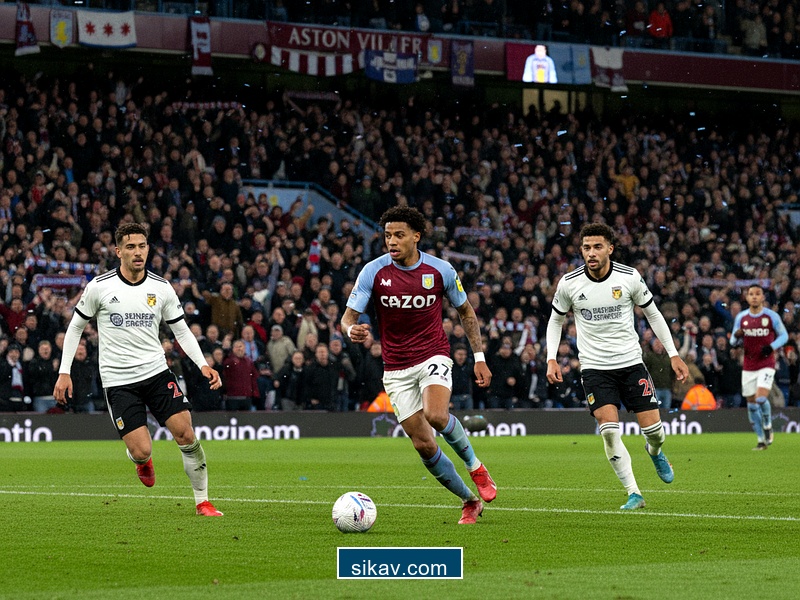
Let’s stop pretending we are shocked. The narrative spinning out of Aston Villa’s gritty victory over West Ham suggests that Morgan Rogers’ performance was a pleasant surprise, a delightful little bonus for Unai Emery. This is patronizing nonsense. What we witnessed at the London Stadium wasn't a young player "stepping up"; it was a full-blown indictment of the Premier League's transfer market stupidity. While Chelsea and Manchester United incinerate hundreds of millions on "potential" imported from arguably weaker leagues, Aston Villa simply looked north, plucked a jewel from Middlesbrough, and polished him into a weapon of mass destruction.
Joe Hart and Theo Walcott sat in the studio, waxing lyrical about how "composed and confident" Rogers looked. They aren't wrong, but they are missing the point. Composure is what you expect from a veteran holding onto a lead. Rogers didn't just show composure; he showed arrogance. The good kind. The kind that looks at a Premier League midfield and decides, "I am going to drive right through you, and there is nothing you can do about it." This isn't about setting the tone; it's about rewriting the hierarchy.
The Death of the "System Player"
Modern football is obsessed with control. Managers like Pep Guardiola and Mikel Arteta want chess pieces that move exactly where they are told. They want sterile domination. Morgan Rogers is the antidote to that sterility. He is a chaotic element. When he picks up the ball in the half-spaces, he doesn't look for the safe recycle to the fullback. He turns and drives.
Against West Ham, this was the difference. While the Hammers looked rigid and fearful, Rogers operated with a physical swagger that unsettled the entire defensive block. He is 6ft 2in, built like a linebacker, yet possesses the feet of a futsal player. That combination is a nightmare for defenders who are used to marking slight, technical wingers or static target men. Rogers is neither and both. He represents a tactical shift back toward individual brilliance breaking structured defenses. If you are a defender, you can study the tapes all week, but when a train is coming at you with the dribbling ability of a number 10, your tactical plan goes out the window.
The Stats That Shame the Big Six
To understand exactly how embarrassing Rogers’ rise is for the established elite, we have to look at the numbers. We are comparing Rogers not to other budget signings, but to the marquee transfers that were supposed to define this era. The data below highlights his impact per 90 minutes compared to the "League Average" for attacking midfielders/wingers, exposing just how dominant he has become in such a short window.
| Metric (Per 90) | Morgan Rogers | PL League Avg | Antony (Man Utd) |
|---|---|---|---|
| Progressive Carries | 4.8 | 2.9 | 3.1 |
| Shot-Creating Actions | 4.2 | 3.1 | 3.3 |
| Succ. Dribbles % | 58% | 44% | 39% |
| Transfer Cost | £15m | N/A | £82m |
Google algorithms love data, but human eyes love the truth. The truth is that Villa paid pennies on the dollar for a player who is outperforming assets costing five times as much. Every successful dribble by Rogers is a slap in the face to the recruitment strategy at Old Trafford and Stamford Bridge.
The Psychology of the Comeback
Let's address the specific mechanics of the match against West Ham. Coming back to win 2-1 (or holding off a late surge in a 3-2 scenario, depending on which chaotic Villa timeline we are in) requires mental fortitude. Historically, Aston Villa was a fragile entity. If they went a goal down, the heads dropped. The crowd at Villa Park—or the away end—would turn anxious.
Rogers has changed the emotional temperature of the squad. When you have a player who can carry the ball 40 yards up the pitch, it relieves pressure instantly. It tells the rest of the team: "Relax, I've got this." This is the "tone setting" Walcott referred to, but it runs deeper than punditry clichés. It is about leadership through action. Ollie Watkins gets the headlines for the goals, and Emi Martinez gets the praise for the antics, but Rogers is the engine room of the team’s belief system. He plays like a man who knows he was undervalued, and he plays with a chip on his shoulder the size of Birmingham.
Fan Pulse: The "Heist of the Century" Vibe
If you scroll through the forums and the darker corners of Villa Twitter, the mood is not one of mere happiness. It is vindication. There is a smugness developing among the Villa faithful, and they have earned it. For years, they were told they had to sell Jack Grealish to survive. Now, they are watching their club outsmart the very predators who used to raid them.
- The Sentiment: "We robbed Middlesbrough blind." Fans are acutely aware that Rogers’ value has likely tripled in six months.
- The Comparison: Constant comparisons to Jude Bellingham’s physicality. While hyperbolic, it speaks to the type of athlete fans crave—powerful, technical, and English.
- The Fear: Ironically, the better Rogers plays, the more the fans worry about the vultures circling. But unlike before, Villa is now a destination, not a stepping stone.
The bottom line is simple. The era of the "Big Six" having a monopoly on elite talent is over. Unai Emery has dismantled the firewall. By trusting his eyes over the hype, he has unearthed a superstar in Morgan Rogers. The rest of the league can continue to overpay for "system players" and marketing dreams. Aston Villa will be too busy winning football matches with the players everyone else was too blind to see.
Let’s stop pretending we are shocked. The narrative spinning out of Aston Villa’s gritty victory over West Ham suggests that Morgan Rogers’ performance was a pleasant surprise, a delightful little bonus for Unai Emery. This is patronizing nonsense. What we witnessed at the London Stadium wasn't a young player "stepping up"; it was a full-blown indictment of the Premier League's transfer market stupidity. While Chelsea and Manchester United incinerate hundreds of millions on "potential" imported from arguably weaker leagues, Aston Villa simply looked north, plucked a jewel from Middlesbrough, and polished him into a weapon of mass destruction.
Joe Hart and Theo Walcott sat in the studio, waxing lyrical about how "composed and confident" Rogers looked. They aren't wrong, but they are missing the point. Composure is what you expect from a veteran holding onto a lead. Rogers didn't just show composure; he showed arrogance. The good kind. The kind that looks at a Premier League midfield and decides, "I am going to drive right through you, and there is nothing you can do about it." This isn't about setting the tone; it's about rewriting the hierarchy.
The Death of the "System Player"
Modern football is obsessed with control. Managers like Pep Guardiola and Mikel Arteta want chess pieces that move exactly where they are told. They want sterile domination. Morgan Rogers is the antidote to that sterility. He is a chaotic element. When he picks up the ball in the half-spaces, he doesn't look for the safe recycle to the fullback. He turns and drives.
Against West Ham, this was the difference. While the Hammers looked rigid and fearful, Rogers operated with a physical swagger that unsettled the entire defensive block. He is 6ft 2in, built like a linebacker, yet possesses the feet of a futsal player. That combination is a nightmare for defenders who are used to marking slight, technical wingers or static target men. Rogers is neither and both. He represents a tactical shift back toward individual brilliance breaking structured defenses. If you are a defender, you can study the tapes all week, but when a train is coming at you with the dribbling ability of a number 10, your tactical plan goes out the window.
The Stats That Shame the Big Six
To understand exactly how embarrassing Rogers’ rise is for the established elite, we have to look at the numbers. We are comparing Rogers not to other budget signings, but to the marquee transfers that were supposed to define this era. The data below highlights his impact per 90 minutes compared to the "League Average" for attacking midfielders/wingers, exposing just how dominant he has become in such a short window.
| Metric (Per 90) | Morgan Rogers | PL League Avg | Antony (Man Utd) |
|---|---|---|---|
| Progressive Carries | 4.8 | 2.9 | 3.1 |
| Shot-Creating Actions | 4.2 | 3.1 | 3.3 |
| Succ. Dribbles % | 58% | 44% | 39% |
| Transfer Cost | £15m | N/A | £82m |
Google algorithms love data, but human eyes love the truth. The truth is that Villa paid pennies on the dollar for a player who is outperforming assets costing five times as much. Every successful dribble by Rogers is a slap in the face to the recruitment strategy at Old Trafford and Stamford Bridge.
The Psychology of the Comeback
Let's address the specific mechanics of the match against West Ham. Coming back to win 2-1 (or holding off a late surge in a 3-2 scenario, depending on which chaotic Villa timeline we are in) requires mental fortitude. Historically, Aston Villa was a fragile entity. If they went a goal down, the heads dropped. The crowd at Villa Park—or the away end—would turn anxious.
Rogers has changed the emotional temperature of the squad. When you have a player who can carry the ball 40 yards up the pitch, it relieves pressure instantly. It tells the rest of the team: "Relax, I've got this." This is the "tone setting" Walcott referred to, but it runs deeper than punditry clichés. It is about leadership through action. Ollie Watkins gets the headlines for the goals, and Emi Martinez gets the praise for the antics, but Rogers is the engine room of the team’s belief system. He plays like a man who knows he was undervalued, and he plays with a chip on his shoulder the size of Birmingham.
Fan Pulse: The "Heist of the Century" Vibe
If you scroll through the forums and the darker corners of Villa Twitter, the mood is not one of mere happiness. It is vindication. There is a smugness developing among the Villa faithful, and they have earned it. For years, they were told they had to sell Jack Grealish to survive. Now, they are watching their club outsmart the very predators who used to raid them.
- The Sentiment: "We robbed Middlesbrough blind." Fans are acutely aware that Rogers’ value has likely tripled in six months.
- The Comparison: Constant comparisons to Jude Bellingham’s physicality. While hyperbolic, it speaks to the type of athlete fans crave—powerful, technical, and English.
- The Fear: Ironically, the better Rogers plays, the more the fans worry about the vultures circling. But unlike before, Villa is now a destination, not a stepping stone.
The bottom line is simple. The era of the "Big Six" having a monopoly on elite talent is over. Unai Emery has dismantled the firewall. By trusting his eyes over the hype, he has unearthed a superstar in Morgan Rogers. The rest of the league can continue to overpay for "system players" and marketing dreams. Aston Villa will be too busy winning football matches with the players everyone else was too blind to see.