
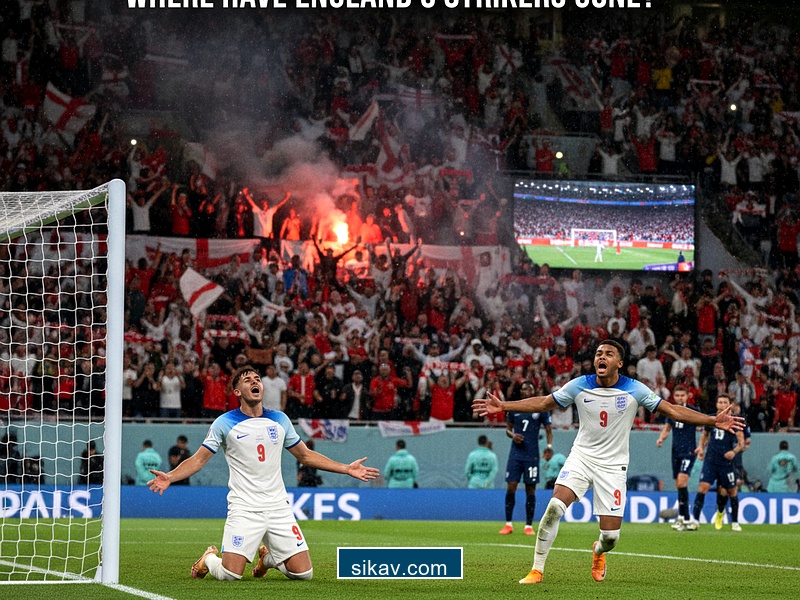
Let’s cut the nostalgia and face the cold, hard reality: English football has a terminal illness at the top of the pitch. We are currently staring into a void that should terrify anyone with a Three Lions crest on their chest. The recent discussions regarding the dearth of options behind Harry Kane are not just pre-tournament jitters; they are the symptoms of a decade-long failure in how this country produces footballers.
Cast your mind back to the mid-1990s. It was a time of excess, sure, but in the penalty box, it was an embarrassment of riches. Les Ferdinand, a man who could hang in the air long enough to read a broadsheet newspaper before heading the ball, earned a meager 17 caps. Why? Not because he wasn't world-class, but because he was fighting for oxygen in a room containing Alan Shearer, Teddy Sheringham, Robbie Fowler, Ian Wright, Andy Cole, and Stan Collymore.
Fast forward to 2024. If Harry Kane sneezes too hard or twists an ankle getting off the team bus, the national collective blood pressure spikes to dangerous levels. We are left scraping the barrel, looking at players who, with all due respect, would not have made the bench in 1996. The question isn't just "where have the strikers gone?" It is "who killed them?"
The "System Player" Infection
We need to stop pretending this happened by accident. This shortage is a direct consequence of a tactical obsession that has gripped English academies for fifteen years. We fell in love with the False Nine, the inverted winger, and the "pressing forward." We decided that a striker’s primary job was no longer to put the ball in the net, but to create space for others, to initiate the high press, and to link play.
The result? We have sanitized the aggression out of the position. We are producing technical clones—midfielders disguised as forwards. The modern English academy product is beautiful to watch in a rondo, technically secure, and tactically disciplined. But they lack the selfish, single-minded narcissism required to be a lethal Number Nine.
Look at the Premier League. The top English scorers are often drifting wide or dropping deep. The art of the "poacher"—the Gary Lineker or Michael Owen type who exists solely on the shoulder of the last defender—is viewed with disdain by modern coaches. If you aren't contributing to the build-up, you aren't playing. We have sacrificed goals for control, and now we wonder why we lack match-winners when the system fails.
The Stat Pack: A Generational Collapse
Data does not lie, and the comparison between the depth charts of the past and the present is nothing short of humiliating. Let’s look at the sheer volume of proven goal-scorers available to an England manager in 1996 versus the barren wasteland facing Gareth Southgate's successors today.
| Metric | The Golden Era (circa 1995-1998) | The Current Crisis (2023-2024) |
|---|---|---|
| Available Options | Shearer, Sheringham, Fowler, Ferdinand, Cole, Wright, Sutton, Collymore | Kane, Watkins, Toney (inconsistent), Wilson (injured), Solanke |
| Premier League Golden Boot | Dominated by Englishmen (Shearer won 3 in a row) | Dominated by Foreign Imports (Haaland, Salah, Son). Kane was the outlier. |
| Squad Status | Genuine competition. Even Shearer had pressure. | Kane is untouchable. The drop-off is roughly 20-30 goals a season. |
The tragedy is visible in the caps. Les Ferdinand, a powerhouse, had 17 caps. Today, a striker with half his ability would be fast-tracked to 30 caps simply because there is nobody else to wear the shirt. We have lowered the bar because the pool has dried up.
The Harry Kane Paradox
Harry Kane is a magnificent footballer. He is also the worst thing that could have happened to England's long-term planning. His durability and consistent excellence allowed the FA and club academies to sleep at the wheel. Because Kane was always there, banging in 30 goals a season and dropping deep to playmaker like a number 10, we ignored the fact that the production line behind him had rusted shut.
Kane is a hybrid—a freak of nature who combines the link-up play modern coaches crave with the finishing ability of the 90s icons. By trying to find another Kane, we have failed to produce players who are simply elite goalscorers. Ivan Toney has the swagger, but lost time. Ollie Watkins runs the channels beautifully but lacks that cold-blooded stare of a Van Nistelrooy or a Shearer. We are looking for unicorns when we should be breeding racehorses.
Fan Pulse: Fear Loathing on the Terraces
Step away from the tactics board and listen to the noise in the pubs and stadiums. The mood is not one of patience; it is anxiety bordering on fatalism. English fans know that without Kane, the team looks toothless. There is a palpable frustration with the "tippy-tappy" obsession that results in 70% possession and zero shots on target.
"We used to have strikers who would score with their earlobe if they had to. Now we have forwards who apologize if they don't pass it three times before shooting."
The fanbase craves a Plan B. They want the option to throw on a big, chaotic center-forward who causes havoc. But that player doesn't exist in the modern English setup because he was released from the academy at age 14 for having a "poor first touch," despite scoring five goals in the trial match. The disconnect between what the fans want—goals—and what the coaches are producing—systems—has never been wider.
England stands at a precipice. The decline of the Number Nine is not a cycle; it is a structural defect caused by over-coaching and a slavish devotion to tactical trends that do not suit our footballing DNA. Unless we start valuing the art of finishing over the art of passing, the post-Kane era will not be a transition. It will be a drought.
Let’s cut the nostalgia and face the cold, hard reality: English football has a terminal illness at the top of the pitch. We are currently staring into a void that should terrify anyone with a Three Lions crest on their chest. The recent discussions regarding the dearth of options behind Harry Kane are not just pre-tournament jitters; they are the symptoms of a decade-long failure in how this country produces footballers.
Cast your mind back to the mid-1990s. It was a time of excess, sure, but in the penalty box, it was an embarrassment of riches. Les Ferdinand, a man who could hang in the air long enough to read a broadsheet newspaper before heading the ball, earned a meager 17 caps. Why? Not because he wasn't world-class, but because he was fighting for oxygen in a room containing Alan Shearer, Teddy Sheringham, Robbie Fowler, Ian Wright, Andy Cole, and Stan Collymore.
Fast forward to 2024. If Harry Kane sneezes too hard or twists an ankle getting off the team bus, the national collective blood pressure spikes to dangerous levels. We are left scraping the barrel, looking at players who, with all due respect, would not have made the bench in 1996. The question isn't just "where have the strikers gone?" It is "who killed them?"
The "System Player" Infection
We need to stop pretending this happened by accident. This shortage is a direct consequence of a tactical obsession that has gripped English academies for fifteen years. We fell in love with the False Nine, the inverted winger, and the "pressing forward." We decided that a striker’s primary job was no longer to put the ball in the net, but to create space for others, to initiate the high press, and to link play.
The result? We have sanitized the aggression out of the position. We are producing technical clones—midfielders disguised as forwards. The modern English academy product is beautiful to watch in a rondo, technically secure, and tactically disciplined. But they lack the selfish, single-minded narcissism required to be a lethal Number Nine.
Look at the Premier League. The top English scorers are often drifting wide or dropping deep. The art of the "poacher"—the Gary Lineker or Michael Owen type who exists solely on the shoulder of the last defender—is viewed with disdain by modern coaches. If you aren't contributing to the build-up, you aren't playing. We have sacrificed goals for control, and now we wonder why we lack match-winners when the system fails.
The Stat Pack: A Generational Collapse
Data does not lie, and the comparison between the depth charts of the past and the present is nothing short of humiliating. Let’s look at the sheer volume of proven goal-scorers available to an England manager in 1996 versus the barren wasteland facing Gareth Southgate's successors today.
| Metric | The Golden Era (circa 1995-1998) | The Current Crisis (2023-2024) |
|---|---|---|
| Available Options | Shearer, Sheringham, Fowler, Ferdinand, Cole, Wright, Sutton, Collymore | Kane, Watkins, Toney (inconsistent), Wilson (injured), Solanke |
| Premier League Golden Boot | Dominated by Englishmen (Shearer won 3 in a row) | Dominated by Foreign Imports (Haaland, Salah, Son). Kane was the outlier. |
| Squad Status | Genuine competition. Even Shearer had pressure. | Kane is untouchable. The drop-off is roughly 20-30 goals a season. |
The tragedy is visible in the caps. Les Ferdinand, a powerhouse, had 17 caps. Today, a striker with half his ability would be fast-tracked to 30 caps simply because there is nobody else to wear the shirt. We have lowered the bar because the pool has dried up.
The Harry Kane Paradox
Harry Kane is a magnificent footballer. He is also the worst thing that could have happened to England's long-term planning. His durability and consistent excellence allowed the FA and club academies to sleep at the wheel. Because Kane was always there, banging in 30 goals a season and dropping deep to playmaker like a number 10, we ignored the fact that the production line behind him had rusted shut.
Kane is a hybrid—a freak of nature who combines the link-up play modern coaches crave with the finishing ability of the 90s icons. By trying to find another Kane, we have failed to produce players who are simply elite goalscorers. Ivan Toney has the swagger, but lost time. Ollie Watkins runs the channels beautifully but lacks that cold-blooded stare of a Van Nistelrooy or a Shearer. We are looking for unicorns when we should be breeding racehorses.
Fan Pulse: Fear Loathing on the Terraces
Step away from the tactics board and listen to the noise in the pubs and stadiums. The mood is not one of patience; it is anxiety bordering on fatalism. English fans know that without Kane, the team looks toothless. There is a palpable frustration with the "tippy-tappy" obsession that results in 70% possession and zero shots on target.
"We used to have strikers who would score with their earlobe if they had to. Now we have forwards who apologize if they don't pass it three times before shooting."
The fanbase craves a Plan B. They want the option to throw on a big, chaotic center-forward who causes havoc. But that player doesn't exist in the modern English setup because he was released from the academy at age 14 for having a "poor first touch," despite scoring five goals in the trial match. The disconnect between what the fans want—goals—and what the coaches are producing—systems—has never been wider.
England stands at a precipice. The decline of the Number Nine is not a cycle; it is a structural defect caused by over-coaching and a slavish devotion to tactical trends that do not suit our footballing DNA. Unless we start valuing the art of finishing over the art of passing, the post-Kane era will not be a transition. It will be a drought.