
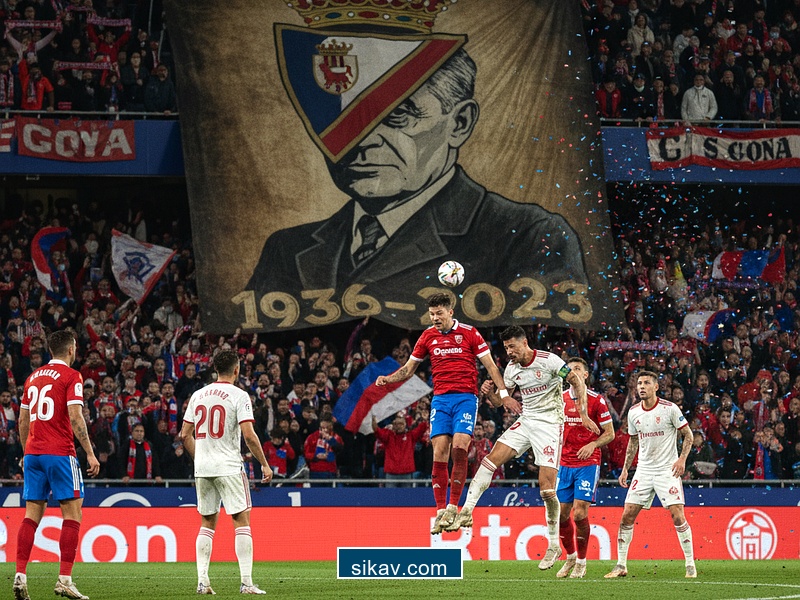
The earth has a habit of keeping secrets, but it rarely keeps them forever. In the rugged, wind-swept geography of Navarra, the soil has finally given up a ghost that has haunted the periphery of Club Atlético Osasuna for nearly nine decades. The confirmation that the remains of Ramón Bengaray Zabalza have been identified is not merely a footnote in a forensic journal; it is a seismic event in the history of Spanish football. It is the return of a stolen father of the club.
For too long, the narrative of Spanish football during the Civil War has been sanitized or relegated to hushed whispers. We speak of the glory of the 1950s or the chaos of the modern era, often stepping gingerly over the graves of 1936. Ramón Bengaray was a directivo—a board member—during Osasuna’s most romantic and tragic period, spanning from 1931 to 1935. His murder by Francoist forces wasn't just a political act; it was a lobotomy performed on the intellectual and cultural leadership of Pamplona.
The Architect of the Golden Republic
To understand the gravity of this discovery, we must strip away the modern cynicism surrounding football executives. Today, we view directors as suits in VIP boxes, detached from the heartbeat of the terrace. Bengaray was the antithesis of this. He was a creature of the street, the stage, and the printing press.
A member of the Republican Left, a celebrated baritone in the local Orfeón (choir), and a printer by trade, Bengaray represented the holistic integration of sport into society. When he served on the board between 1931 and 1935, Osasuna was not merely kicking a ball; they were constructing an identity. Under the stewardship of men like Bengaray, the club transcended its provincial status. They weren't just participating; they were climbing.
This era marked Osasuna’s ascent to the Primera División for the very first time in 1935. It was a golden age fueled by local pride and astute management. Bengaray’s execution in August 1936, alongside other prominent Republicans, was a deliberate attempt to sever that head. When we look at the history of European football, we often ignore how many clubs had their trajectories violently altered by war. Osasuna was rising; the bullets that killed Bengaray also killed that momentum, plunging the club into decades of irrelevance and silence.
Deep Dive: The Decapitation of Strategy
Why does the death of a board member matter to the sport itself? Because institutions are built on continuity and vision. The murder of Ramón Bengaray was part of a wider pattern that crippled Spanish football's intellectual development for a generation.
Consider the parallel with FC Barcelona’s Josep Sunyol, also murdered in 1936. These men were proponents of a modernized, socially conscious football. They envisioned clubs as civic assets. When they were purged, they were replaced in the ensuing dictatorship by military sympathizers or apolitical bureaucrats whose primary goal was regime stability, not sporting excellence or community integration.
For Osasuna, the loss of Bengaray and his contemporaries meant the loss of their "Brain Trust." The club had just reached the pinnacle of Spanish football in 1935. Without the visionary leadership that put them there, they could not sustain it. The tactical shift here wasn't on the pitch—it was in the boardroom. The club was forced into survival mode, fearful of its own shadow, stripping away its political and cultural identity to avoid the wrath of the new regime. It took decades for Los Rojillos to rediscover the fiery, defiant spirit that defines them today. The identification of Bengaray is the final piece of the puzzle, explaining why a club with such potential in the 1930s seemingly vanished into the ether.
The Stat Pack: The 1935 Peak
To illustrate what was lost, we must look at the data. The Osasuna of Bengaray’s tenure was a formidable machine, not a relegation candidate. The trajectory was vertical until the war brought the curtain down.
| Season | Tier | Achievement | Context |
|---|---|---|---|
| 1931-1932 | Tercera | Promotion to Segunda | Bengaray joins the board. Modernization begins. |
| 1934-1935 | Segunda | Promotion to La Liga | The historic breakthrough. First time in top flight. |
| 1935-1936 | La Liga | Copa Semifinalists | Despite league struggles, they reach the Cup semis. |
| 1936-1939 | Civil War | Suspended | Execution of leadership. The project is dismantled. |
The numbers paint a clear picture. Bengaray oversaw a club that jumped two divisions in four years. This was an era of aggressive ambition. The gap between the 1935 promotion and Osasuna's subsequent establishment as a top-flight regular is measured in decades—a dark age caused directly by the violence that claimed its architect.
The Fan Pulse: Closure in El Sadar
In Pamplona, football is rarely just about the ninety minutes. The fanbase at El Sadar is known for its intense atmosphere and, in many quarters, a fierce connection to the region's political memory. The news of Bengaray’s identification has been met not with shock, but with a somber, validated nod.
"It is not opening old wounds; it is cleaning them so they can finally heal."
For the *socios* (members), this is a victory of perseverance. Families in Navarra have spent decades searching for loved ones dumped in roadside graves. For the club to officially acknowledge and recover one of its own directors aligns with the modern identity of Osasuna—a club that prides itself on being distinct, stubborn, and deeply rooted in its community. The mood is one of quiet triumph. They have reclaimed a piece of their history that was stolen at gunpoint.
While modern football often tries to scrub itself clean of politics, pretending that sport exists in a vacuum, the recovery of Ramón Bengaray proves otherwise. His bones are proof that football has always been a mirror of the society that plays it. In 1936, that society was tearing itself apart. Today, by identifying him, Osasuna is
The earth has a habit of keeping secrets, but it rarely keeps them forever. In the rugged, wind-swept geography of Navarra, the soil has finally given up a ghost that has haunted the periphery of Club Atlético Osasuna for nearly nine decades. The confirmation that the remains of Ramón Bengaray Zabalza have been identified is not merely a footnote in a forensic journal; it is a seismic event in the history of Spanish football. It is the return of a stolen father of the club.
For too long, the narrative of Spanish football during the Civil War has been sanitized or relegated to hushed whispers. We speak of the glory of the 1950s or the chaos of the modern era, often stepping gingerly over the graves of 1936. Ramón Bengaray was a directivo—a board member—during Osasuna’s most romantic and tragic period, spanning from 1931 to 1935. His murder by Francoist forces wasn't just a political act; it was a lobotomy performed on the intellectual and cultural leadership of Pamplona.
The Architect of the Golden Republic
To understand the gravity of this discovery, we must strip away the modern cynicism surrounding football executives. Today, we view directors as suits in VIP boxes, detached from the heartbeat of the terrace. Bengaray was the antithesis of this. He was a creature of the street, the stage, and the printing press.
A member of the Republican Left, a celebrated baritone in the local Orfeón (choir), and a printer by trade, Bengaray represented the holistic integration of sport into society. When he served on the board between 1931 and 1935, Osasuna was not merely kicking a ball; they were constructing an identity. Under the stewardship of men like Bengaray, the club transcended its provincial status. They weren't just participating; they were climbing.
This era marked Osasuna’s ascent to the Primera División for the very first time in 1935. It was a golden age fueled by local pride and astute management. Bengaray’s execution in August 1936, alongside other prominent Republicans, was a deliberate attempt to sever that head. When we look at the history of European football, we often ignore how many clubs had their trajectories violently altered by war. Osasuna was rising; the bullets that killed Bengaray also killed that momentum, plunging the club into decades of irrelevance and silence.
Deep Dive: The Decapitation of Strategy
Why does the death of a board member matter to the sport itself? Because institutions are built on continuity and vision. The murder of Ramón Bengaray was part of a wider pattern that crippled Spanish football's intellectual development for a generation.
Consider the parallel with FC Barcelona’s Josep Sunyol, also murdered in 1936. These men were proponents of a modernized, socially conscious football. They envisioned clubs as civic assets. When they were purged, they were replaced in the ensuing dictatorship by military sympathizers or apolitical bureaucrats whose primary goal was regime stability, not sporting excellence or community integration.
For Osasuna, the loss of Bengaray and his contemporaries meant the loss of their "Brain Trust." The club had just reached the pinnacle of Spanish football in 1935. Without the visionary leadership that put them there, they could not sustain it. The tactical shift here wasn't on the pitch—it was in the boardroom. The club was forced into survival mode, fearful of its own shadow, stripping away its political and cultural identity to avoid the wrath of the new regime. It took decades for Los Rojillos to rediscover the fiery, defiant spirit that defines them today. The identification of Bengaray is the final piece of the puzzle, explaining why a club with such potential in the 1930s seemingly vanished into the ether.
The Stat Pack: The 1935 Peak
To illustrate what was lost, we must look at the data. The Osasuna of Bengaray’s tenure was a formidable machine, not a relegation candidate. The trajectory was vertical until the war brought the curtain down.
| Season | Tier | Achievement | Context |
|---|---|---|---|
| 1931-1932 | Tercera | Promotion to Segunda | Bengaray joins the board. Modernization begins. |
| 1934-1935 | Segunda | Promotion to La Liga | The historic breakthrough. First time in top flight. |
| 1935-1936 | La Liga | Copa Semifinalists | Despite league struggles, they reach the Cup semis. |
| 1936-1939 | Civil War | Suspended | Execution of leadership. The project is dismantled. |
The numbers paint a clear picture. Bengaray oversaw a club that jumped two divisions in four years. This was an era of aggressive ambition. The gap between the 1935 promotion and Osasuna's subsequent establishment as a top-flight regular is measured in decades—a dark age caused directly by the violence that claimed its architect.
The Fan Pulse: Closure in El Sadar
In Pamplona, football is rarely just about the ninety minutes. The fanbase at El Sadar is known for its intense atmosphere and, in many quarters, a fierce connection to the region's political memory. The news of Bengaray’s identification has been met not with shock, but with a somber, validated nod.
"It is not opening old wounds; it is cleaning them so they can finally heal."
For the *socios* (members), this is a victory of perseverance. Families in Navarra have spent decades searching for loved ones dumped in roadside graves. For the club to officially acknowledge and recover one of its own directors aligns with the modern identity of Osasuna—a club that prides itself on being distinct, stubborn, and deeply rooted in its community. The mood is one of quiet triumph. They have reclaimed a piece of their history that was stolen at gunpoint.
While modern football often tries to scrub itself clean of politics, pretending that sport exists in a vacuum, the recovery of Ramón Bengaray proves otherwise. His bones are proof that football has always been a mirror of the society that plays it. In 1936, that society was tearing itself apart. Today, by identifying him, Osasuna is