
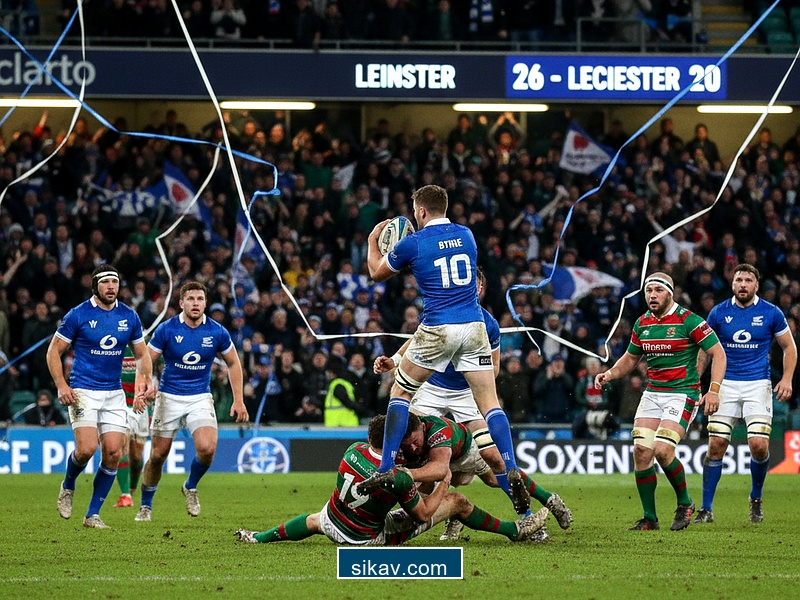
Welford Road has never been a place for the faint-hearted. It is a cathedral of old-school English rugby values: mud, aggression, and a partisan crowd that bays for blood with a ferocity rarely seen in the modern, sanitized corporate bowls of Europe. For decades, teams have traveled to Leicester with grand reputations and left with bruised ribs and shattered egos. Leinster’s 23-15 victory this weekend was not a showcase of champagne rugby. It was something far more important for a club chasing the ghost of a fifth European star: it was a triumph of survival.
To understand the significance of this win, one must look past the spilled passes and the disjointed phases that marred the afternoon. In previous eras, particularly during the twilight of the Leo Cullen and Stuart Lancaster partnership, Leinster became synonymous with perfection. They were a machine built to destroy teams with precision. However, when the gears jammed—usually against heavy packs like Saracens or La Rochelle—the machine often sputtered. Saturday showed a different beast. This was a Leinster willing to descend into the trenches, to engage in a disjointed arm-wrestle, and simply refuse to lose.
The Heavy Crown of the Number 10
The shadow of Johnny Sexton is long, and it casts a chill over anyone brave enough to wear the Leinster 10 jersey. For fifteen years, Sexton was not just the fly-half; he was the emotional and tactical heartbeat of the province. His retirement left a void that many feared was unfillable. The history of this club is defined by its pivots—from the mercurial Felipe Contepomi to the imperious Sexton.
Harry Byrne has long been touted as the heir apparent, yet injuries and inconsistency have often stalled his ascent. At Welford Road, amidst the chaos of an error-strewn contest, Byrne did not try to be Sexton. He did not berate referees or scream at forwards. Instead, he simply did his job with an icy detachment that should thrill the coaching staff. His goal-kicking was the differentiator. In a match where fluency was non-existent, the ability to punish indiscipline is the only currency that matters.
This performance was a rite of passage. European away days are where boys become generals. Byrne’s contribution wasn't about highlight-reel passes; it was about the dull, monotonous excellence of accumulation. He kept the scoreboard ticking, keeping Leicester at arm's length even when the home side’s momentum seemed undeniable.
Deep Dive: The Nienaber Effect and Tactical Regression
We must address the uncomfortable truth: this game was ugly. But perhaps, for Leinster, ugly is beautiful. The arrival of Jacques Nienaber, the dual World Cup-winning coach from South Africa, signaled a shift in Leinster’s DNA. The "Leinster Way" has historically prioritized ball retention and multi-phase attack. Nienaber’s philosophy is different. It is built on defensive suffocation and pressure.
Against Leicester, we saw the embryonic stages of this hybrid identity. The error count was high not just because of poor handling, but because Leinster was willing to play without the ball for long stretches, trusting their line speed to force Leicester into mistakes. This is a tactical evolution born of heartbreak.
The losses in Marseille and Dublin to La Rochelle proved that you cannot purely "football" your way to a Champions Cup title against the monsters of the Top 14. You must be able to win a street fight. By holding off a determined Leicester side that dominated periods of possession, Leinster proved they are developing a chin. They absorbed pressure rather than trying to counter-punch their way out of trouble immediately. It is a pragmatic regression, moving away from total rugby toward total victory.
The Stat Pack: Anatomy of a Dogfight
The numbers paint a clear picture of a game decided by precision from the tee rather than dominance in open play. Leicester created, but Leinster converted.
| Metric | Leicester Tigers | Leinster Rugby | Analysis |
|---|---|---|---|
| Kicking Success | 60% | 100% | The decisive factor. Byrne’s radar was locked in. |
| Handling Errors | 14 | 11 | Both sides struggled for fluency; a disjointed affair. |
| Red Zone Efficiency | 25% | 66% | Leinster took points when they visited the 22; Tigers squandered territory. |
Fan Pulse: The Relief of the "Ugly Win"
Scanning the forums and the post-match discourse among the Leinster faithful, the mood is distinctly different from previous campaigns. In years past, a disjointed performance like this would have drawn criticism. Fans would have bemoaned the lack of flair, the dropped balls, the stuttering backline.
Today, there is a grim satisfaction. The Leinster fanbase has been traumatized by near-misses. They have watched their team play beautiful, poetic rugby in May, only to be bullied in the final ten minutes of a Champions Cup final. They are tired of being the "best team in Europe" that doesn't hold the trophy.
"I don't care if we never score a try from our own half again, as long as we have the Cup in June. We needed to learn how to win badly. Today was a lesson in winning badly." — Seamus, Leinster Season Ticket Holder (via Twitter)
This shift in spectator psychology mirrors the shift on the pitch. The fans are no longer demanding entertainment; they are demanding closure. They see the pragmatic value in Harry Byrne kicking penalties and the pack slowing the ball down. It is a maturation of the stands as much as the squad.
History in the Making
When we look back at the history of the Champions Cup, the group stage games often bleed together into a hazy memory of winter weekends. However, some matches serve as waypoints. This victory at Welford Road may well be looked back upon as the moment Leinster stopped trying to be the Harlem Globetrotters and accepted their role as prize fighters.
They faced a Leicester team that threw everything at them—passion, physicality, and the weight of history—and they repelled it. Not with style, but with substance. Harry Byrne, a young man with the weight of a province on his shoulders, stood tall. The road to the final in London is long, and the specters of La Rochelle and Toulouse still loom large, but on a gray afternoon in the East Midlands, Leinster proved they still know how to win when the rugby stops being pretty and starts being war.
Welford Road has never been a place for the faint-hearted. It is a cathedral of old-school English rugby values: mud, aggression, and a partisan crowd that bays for blood with a ferocity rarely seen in the modern, sanitized corporate bowls of Europe. For decades, teams have traveled to Leicester with grand reputations and left with bruised ribs and shattered egos. Leinster’s 23-15 victory this weekend was not a showcase of champagne rugby. It was something far more important for a club chasing the ghost of a fifth European star: it was a triumph of survival.
To understand the significance of this win, one must look past the spilled passes and the disjointed phases that marred the afternoon. In previous eras, particularly during the twilight of the Leo Cullen and Stuart Lancaster partnership, Leinster became synonymous with perfection. They were a machine built to destroy teams with precision. However, when the gears jammed—usually against heavy packs like Saracens or La Rochelle—the machine often sputtered. Saturday showed a different beast. This was a Leinster willing to descend into the trenches, to engage in a disjointed arm-wrestle, and simply refuse to lose.
The Heavy Crown of the Number 10
The shadow of Johnny Sexton is long, and it casts a chill over anyone brave enough to wear the Leinster 10 jersey. For fifteen years, Sexton was not just the fly-half; he was the emotional and tactical heartbeat of the province. His retirement left a void that many feared was unfillable. The history of this club is defined by its pivots—from the mercurial Felipe Contepomi to the imperious Sexton.
Harry Byrne has long been touted as the heir apparent, yet injuries and inconsistency have often stalled his ascent. At Welford Road, amidst the chaos of an error-strewn contest, Byrne did not try to be Sexton. He did not berate referees or scream at forwards. Instead, he simply did his job with an icy detachment that should thrill the coaching staff. His goal-kicking was the differentiator. In a match where fluency was non-existent, the ability to punish indiscipline is the only currency that matters.
This performance was a rite of passage. European away days are where boys become generals. Byrne’s contribution wasn't about highlight-reel passes; it was about the dull, monotonous excellence of accumulation. He kept the scoreboard ticking, keeping Leicester at arm's length even when the home side’s momentum seemed undeniable.
Deep Dive: The Nienaber Effect and Tactical Regression
We must address the uncomfortable truth: this game was ugly. But perhaps, for Leinster, ugly is beautiful. The arrival of Jacques Nienaber, the dual World Cup-winning coach from South Africa, signaled a shift in Leinster’s DNA. The "Leinster Way" has historically prioritized ball retention and multi-phase attack. Nienaber’s philosophy is different. It is built on defensive suffocation and pressure.
Against Leicester, we saw the embryonic stages of this hybrid identity. The error count was high not just because of poor handling, but because Leinster was willing to play without the ball for long stretches, trusting their line speed to force Leicester into mistakes. This is a tactical evolution born of heartbreak.
The losses in Marseille and Dublin to La Rochelle proved that you cannot purely "football" your way to a Champions Cup title against the monsters of the Top 14. You must be able to win a street fight. By holding off a determined Leicester side that dominated periods of possession, Leinster proved they are developing a chin. They absorbed pressure rather than trying to counter-punch their way out of trouble immediately. It is a pragmatic regression, moving away from total rugby toward total victory.
The Stat Pack: Anatomy of a Dogfight
The numbers paint a clear picture of a game decided by precision from the tee rather than dominance in open play. Leicester created, but Leinster converted.
| Metric | Leicester Tigers | Leinster Rugby | Analysis |
|---|---|---|---|
| Kicking Success | 60% | 100% | The decisive factor. Byrne’s radar was locked in. |
| Handling Errors | 14 | 11 | Both sides struggled for fluency; a disjointed affair. |
| Red Zone Efficiency | 25% | 66% | Leinster took points when they visited the 22; Tigers squandered territory. |
Fan Pulse: The Relief of the "Ugly Win"
Scanning the forums and the post-match discourse among the Leinster faithful, the mood is distinctly different from previous campaigns. In years past, a disjointed performance like this would have drawn criticism. Fans would have bemoaned the lack of flair, the dropped balls, the stuttering backline.
Today, there is a grim satisfaction. The Leinster fanbase has been traumatized by near-misses. They have watched their team play beautiful, poetic rugby in May, only to be bullied in the final ten minutes of a Champions Cup final. They are tired of being the "best team in Europe" that doesn't hold the trophy.
"I don't care if we never score a try from our own half again, as long as we have the Cup in June. We needed to learn how to win badly. Today was a lesson in winning badly." — Seamus, Leinster Season Ticket Holder (via Twitter)
This shift in spectator psychology mirrors the shift on the pitch. The fans are no longer demanding entertainment; they are demanding closure. They see the pragmatic value in Harry Byrne kicking penalties and the pack slowing the ball down. It is a maturation of the stands as much as the squad.
History in the Making
When we look back at the history of the Champions Cup, the group stage games often bleed together into a hazy memory of winter weekends. However, some matches serve as waypoints. This victory at Welford Road may well be looked back upon as the moment Leinster stopped trying to be the Harlem Globetrotters and accepted their role as prize fighters.
They faced a Leicester team that threw everything at them—passion, physicality, and the weight of history—and they repelled it. Not with style, but with substance. Harry Byrne, a young man with the weight of a province on his shoulders, stood tall. The road to the final in London is long, and the specters of La Rochelle and Toulouse still loom large, but on a gray afternoon in the East Midlands, Leinster proved they still know how to win when the rugby stops being pretty and starts being war.