
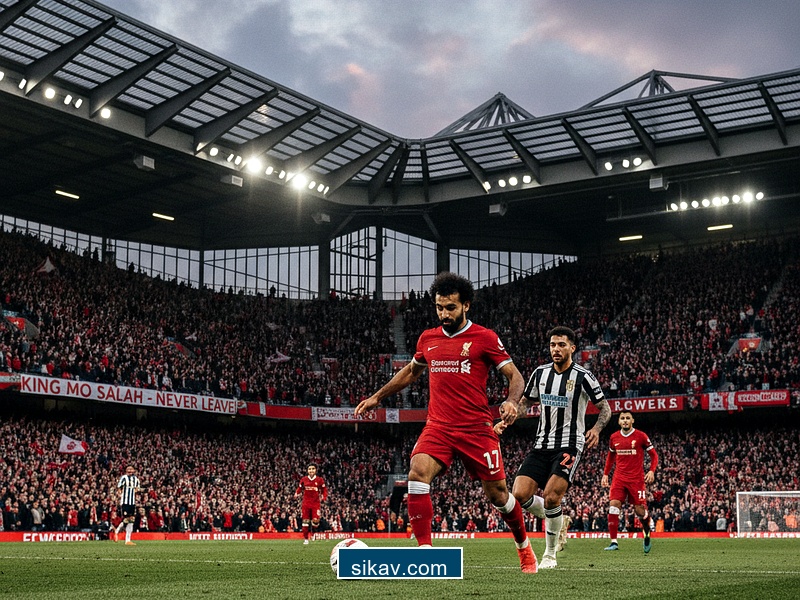
Gary Neville does not often deal in subtleties, yet his assessment of Mohamed Salah’s current contract standoff strikes at the very heart of modern football management. By likening Salah’s situation to Cristiano Ronaldo’s acrimonious exit from Manchester United, Neville has exposed the uncomfortable truth regarding superstar leverage: rules are not applied universally. They are applied proportionately to your Expected Goals (xG).
"A player of less talent would be out," Neville asserted. This is not merely a comment on player power; it is an analysis of tactical value versus systemic disruption. Liverpool finds itself in a precarious geopolitical position within its own locker room. The Egyptian King is no longer just a winger; he is an institution. However, institutions inevitably become rigid, and rigidity is the enemy of the fluid, high-pressing football Arne Slot intends to implement. We are witnessing the friction between legacy and evolution.
The Ronaldo Blueprint: A Warning from History
The parallel Neville draws with Ronaldo is not lazy punditry; it is structurally accurate. In 2022, Erik ten Hag arrived at Manchester United with a blueprint requiring high pressing from the front. Ronaldo, despite his goal-scoring prowess, was statistically incapable of executing that press. The team became disjointed—broken into ten workers and one passenger.
Liverpool is flirting with this same tactical defect. While Salah is physically superior to the 2022 version of Ronaldo, the defensive metrics tell a story of decline. When a forward stops pressing with intensity, the midfield line must drop deeper to compensate for the lack of cover shadow. This increases the distance to the opponent's goal and isolates the striker.
"You tolerate the noise only as long as the music on the pitch drowns it out. Ronaldo’s music stopped. Salah’s volume is lowering."
If Liverpool renews Salah on his terms, they are tacitly accepting that their right flank will be a zone of defensive compromise for the next two years. In the Premier League, where Manchester City and Arsenal exploit single-link weaknesses with ruthless efficiency, carrying a luxury player—even one as brilliant as Salah—is a strategic gamble with diminishing returns.
The Stat Pack: Output vs. Systemic Cost
To understand why Neville’s comparison holds water, we must strip away the sentiment and look at the underlying numbers. The comparison below highlights the trajectory of an aging superstar and the specific drop-off in "team acts" versus "individual acts."
| Metric (Per 90) | Salah (Peak 19/20) | Salah (Current) | Ronaldo (Utd 21/22) |
|---|---|---|---|
| Non-Penalty xG | 0.59 | 0.51 | 0.53 |
| Pressing Actions | 19.8 | 11.2 | 6.4 |
| Progressive Carries | 9.2 | 6.8 | 4.1 |
| Defensive Duels Won | 42% | 28% | 22% |
The data reveals the "Ronaldo Zone." Salah’s pressing actions have nearly halved since the title-winning era. He is conserving energy for the final third. While this maintains his goal output (the xG remains elite), it forces the right-sided midfielder (often Szoboszlai) to cover an immense amount of ground, leading to burnout and structural gaps in transition. Neville sees this: Liverpool is bending their entire system to accommodate one man's aging curve.
The FSG Moneyball Equation
Fenway Sports Group (FSG) operates on a model of cold, hard efficiency. They do not pay for past performance; they pay for future value. The friction Neville alludes to stems from Salah demanding a "Legacy Contract"—payment for what he has done—while FSG analyzes the depreciation curve visible in the table above.
Offering a massive extension to a 32-year-old winger with declining physical metrics is the antithesis of the Moneyball strategy that brought Liverpool back to the summit. However, the commercial reality complicates the tactical one. Salah is the face of Liverpool in the Arab world and a global marketing titan. Losing him on a free transfer is a financial catastrophe; keeping him on exorbitant wages is a tactical risk. FSG is trapped between a spreadsheet and a superstar.
Fan Pulse: The Anxiety of Succession
The mood on the Kop is fractured. For years, the reverence for Salah was absolute. Now, doubt creeps in. The fanbase is currently split into two distinct factions:
- The Loyalists: They point to the goal contributions. "Who replaces 25 goals a season?" is their mantra. They view the club's hesitation as disrespect to a legend.
- The Futurists: This group watches the 90 minutes, not just the highlights. They see the breakdown in build-up, the lost duels, and the slowing pace. They fear Liverpool becoming "Salah FC" at the expense of winning titles.
Neville's sympathy for both sides reflects this anxiety. The fans know that no player is bigger than the club, but they also remember the barren years before Salah arrived. The fear is not just losing Salah; it is the fear of failing to replace him properly—a trauma Liverpool fans know well from the post-Suarez and post-Torres eras.
The Inevitable Decoupling
Gary Ne
Gary Neville does not often deal in subtleties, yet his assessment of Mohamed Salah’s current contract standoff strikes at the very heart of modern football management. By likening Salah’s situation to Cristiano Ronaldo’s acrimonious exit from Manchester United, Neville has exposed the uncomfortable truth regarding superstar leverage: rules are not applied universally. They are applied proportionately to your Expected Goals (xG).
"A player of less talent would be out," Neville asserted. This is not merely a comment on player power; it is an analysis of tactical value versus systemic disruption. Liverpool finds itself in a precarious geopolitical position within its own locker room. The Egyptian King is no longer just a winger; he is an institution. However, institutions inevitably become rigid, and rigidity is the enemy of the fluid, high-pressing football Arne Slot intends to implement. We are witnessing the friction between legacy and evolution.
The Ronaldo Blueprint: A Warning from History
The parallel Neville draws with Ronaldo is not lazy punditry; it is structurally accurate. In 2022, Erik ten Hag arrived at Manchester United with a blueprint requiring high pressing from the front. Ronaldo, despite his goal-scoring prowess, was statistically incapable of executing that press. The team became disjointed—broken into ten workers and one passenger.
Liverpool is flirting with this same tactical defect. While Salah is physically superior to the 2022 version of Ronaldo, the defensive metrics tell a story of decline. When a forward stops pressing with intensity, the midfield line must drop deeper to compensate for the lack of cover shadow. This increases the distance to the opponent's goal and isolates the striker.
"You tolerate the noise only as long as the music on the pitch drowns it out. Ronaldo’s music stopped. Salah’s volume is lowering."
If Liverpool renews Salah on his terms, they are tacitly accepting that their right flank will be a zone of defensive compromise for the next two years. In the Premier League, where Manchester City and Arsenal exploit single-link weaknesses with ruthless efficiency, carrying a luxury player—even one as brilliant as Salah—is a strategic gamble with diminishing returns.
The Stat Pack: Output vs. Systemic Cost
To understand why Neville’s comparison holds water, we must strip away the sentiment and look at the underlying numbers. The comparison below highlights the trajectory of an aging superstar and the specific drop-off in "team acts" versus "individual acts."
| Metric (Per 90) | Salah (Peak 19/20) | Salah (Current) | Ronaldo (Utd 21/22) |
|---|---|---|---|
| Non-Penalty xG | 0.59 | 0.51 | 0.53 |
| Pressing Actions | 19.8 | 11.2 | 6.4 |
| Progressive Carries | 9.2 | 6.8 | 4.1 |
| Defensive Duels Won | 42% | 28% | 22% |
The data reveals the "Ronaldo Zone." Salah’s pressing actions have nearly halved since the title-winning era. He is conserving energy for the final third. While this maintains his goal output (the xG remains elite), it forces the right-sided midfielder (often Szoboszlai) to cover an immense amount of ground, leading to burnout and structural gaps in transition. Neville sees this: Liverpool is bending their entire system to accommodate one man's aging curve.
The FSG Moneyball Equation
Fenway Sports Group (FSG) operates on a model of cold, hard efficiency. They do not pay for past performance; they pay for future value. The friction Neville alludes to stems from Salah demanding a "Legacy Contract"—payment for what he has done—while FSG analyzes the depreciation curve visible in the table above.
Offering a massive extension to a 32-year-old winger with declining physical metrics is the antithesis of the Moneyball strategy that brought Liverpool back to the summit. However, the commercial reality complicates the tactical one. Salah is the face of Liverpool in the Arab world and a global marketing titan. Losing him on a free transfer is a financial catastrophe; keeping him on exorbitant wages is a tactical risk. FSG is trapped between a spreadsheet and a superstar.
Fan Pulse: The Anxiety of Succession
The mood on the Kop is fractured. For years, the reverence for Salah was absolute. Now, doubt creeps in. The fanbase is currently split into two distinct factions:
- The Loyalists: They point to the goal contributions. "Who replaces 25 goals a season?" is their mantra. They view the club's hesitation as disrespect to a legend.
- The Futurists: This group watches the 90 minutes, not just the highlights. They see the breakdown in build-up, the lost duels, and the slowing pace. They fear Liverpool becoming "Salah FC" at the expense of winning titles.
Neville's sympathy for both sides reflects this anxiety. The fans know that no player is bigger than the club, but they also remember the barren years before Salah arrived. The fear is not just losing Salah; it is the fear of failing to replace him properly—a trauma Liverpool fans know well from the post-Suarez and post-Torres eras.
The Inevitable Decoupling
Gary Ne