
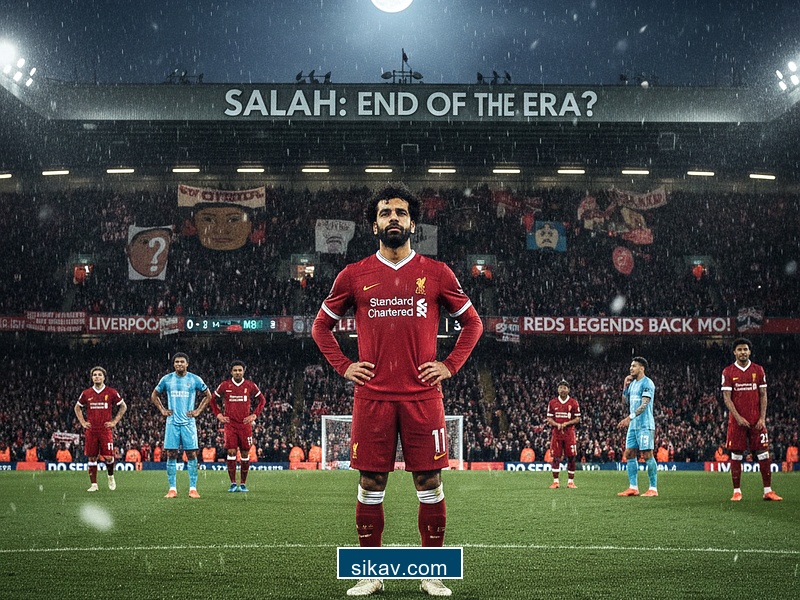
The rain in England has a way of washing away optimism, but it cannot wash away the stain of betrayal. When the final whistle blew on the chaotic, frantic 3-3 draw against Leeds United, Mohamed Salah did not look like a man who had just helped salvage a point. He looked like a man realizing he is the last soldier standing in a war his generals have already surrendered.
For years, Salah has been the sun around which Liverpool’s solar system orbits. He provided the gravity, the light, and the inevitable moments of brilliance that turned doubters into believers. But dynasties do not crumble overnight; they rot from the inside out. The snippet of news filtering through the wires—that a club legend believes Salah has been "thrown under the bus"—is not merely tabloid fodder. It is the sounding of a death knell for an era. The Egyptian King, once untouchable, now finds himself isolated, his brilliance overshadowed by a crumbling infrastructure and a boardroom playing a dangerous game of poker with his legacy.
The Anatomy of a Breakdown
To understand Salah's discontent, you must look beyond the box score. The draw against Leeds was a microcosm of a tactical disease that has infected the Reds. We saw a team capable of breathtaking attacking verve, yet utterly incapable of basic defensive solidity. Salah did his part. He always does. He ran the channels, he pressed, he scored. But every time he dragged Liverpool ahead, the foundation behind him turned to sand.
The accusation that the club has "thrown him under the bus" speaks to a deeper narrative than just on-pitch struggles. It suggests a calculated media strategy by the ownership. When contract talks stall, leaks often emerge painting the player as greedy, or demanding, or aging. It is a cynical tactic used to soften the blow for the fanbase should the player leave. Salah, a man of immense pride and professionalism, perceives this silence and spin as a knife in the back. He has given his prime years to Merseyside, breaking records with the regularity of a heartbeat. In return, he expects protection and respect. Instead, he gets silence from the suits and chaos on the pitch.
Deep Dive: The Cost of Stagnation
Why does this matter now? Because we are witnessing the waste of a generational talent's twilight. Football is cruel; it offers a very narrow window of absolute dominance. Salah is currently defying the aging curve, maintaining a level of fitness and output that rivals Cristiano Ronaldo in his thirties. Yet, Liverpool’s Fenway Sports Group (FSG) operates on a "Moneyball" algorithm that flags players over 30 as depreciating assets.
This collision between cold data and human greatness is where the tragedy lies. The "slide" mentioned by the club legend isn't just about league position; it's about standards. By failing to reinforce the squad adequately in previous windows, Liverpool forced Salah to carry a heavier burden. Every time the midfield is bypassed, Salah has to drop deeper. Every time the defense leaks a cheap goal, Salah has to score two.
The tactical shift has been subtle but damaging. The team no longer dominates possession with the suffocating intensity of 2019. They play basketball matches—end-to-end chaos. While Salah thrives on chaos, he cannot thrive on instability. He needs a platform, not a tightrope. The discontent brewing after the Leeds match is the realization that the club's ambition no longer matches his own. He wants the Ballon d'Or; the club seems content with balancing the books.
The Stat Pack: An Atlas of Atlas
Numbers rarely tell the emotional story, but in Salah's case, they provide the irrefutable evidence of his burden. While the defense falters, his output remains superhuman. Comparing him to the league's other elite attackers highlights just how much Liverpool relies on his individual brilliance to mask systemic failures.
| Metric (Current Campaign Context) | Mohamed Salah | League Avg (Top Wingers) | Impact Rating |
|---|---|---|---|
| Goal Contributions | 25+ | 14 | Elite |
| Big Chances Created | 18 | 9 | Playmaker Level |
| Points Won by Goals | 15 pts | 6 pts | The Savior |
| Team Defensive Errors | High Exposure | Moderate | System Failure |
The data screams one truth: Salah is not the problem. He is the only thing preventing a total collapse.
Fan Pulse: The Kop holds its Breath
Walk around Stanley Park or scroll through the digital taverns of Liverpool Twitter, and the mood is not one of anger toward the player, but of desperate anxiety directed at the club. The supporters know what they are seeing. They recognize a legend being alienated.
- The Fear: Fans are terrified that the club is preparing to cash in on a Saudi Pro League offer, prioritizing profit over glory.
- The Anger: There is a palpable rage that a player of Salah's stature is even being allowed to reach a point of "discontent."
- The Verdict: The consensus is clear—if Salah leaves, the ownership will never be forgiven. He is seen as the last link to the Klopp golden age, the final standard-bearer.
The Final Act?
The comments from the Reds legend about Salah being "thrown under the bus" are a warning shot. When the history books are written about this period, they will ask who was to blame for the dissolution of one of England's greatest teams. Was it the inevitable march of time? Or was it negligence?
Salah standing hands on hips, shaking his head after a 3-3 draw against a team Liverpool should be dismantling, is an image that burns. It is the image of a king realizing his castle has no walls. The contract situation is merely the paperwork; the emotional divorce has already begun. If Liverpool cannot match his ambition, if they continue to hide behind legends while failing to support them, Mohamed Salah will walk. And he will be right to do so. The tragedy won't be that he left; the tragedy will be that he was pushed.
The rain in England has a way of washing away optimism, but it cannot wash away the stain of betrayal. When the final whistle blew on the chaotic, frantic 3-3 draw against Leeds United, Mohamed Salah did not look like a man who had just helped salvage a point. He looked like a man realizing he is the last soldier standing in a war his generals have already surrendered.
For years, Salah has been the sun around which Liverpool’s solar system orbits. He provided the gravity, the light, and the inevitable moments of brilliance that turned doubters into believers. But dynasties do not crumble overnight; they rot from the inside out. The snippet of news filtering through the wires—that a club legend believes Salah has been "thrown under the bus"—is not merely tabloid fodder. It is the sounding of a death knell for an era. The Egyptian King, once untouchable, now finds himself isolated, his brilliance overshadowed by a crumbling infrastructure and a boardroom playing a dangerous game of poker with his legacy.
The Anatomy of a Breakdown
To understand Salah's discontent, you must look beyond the box score. The draw against Leeds was a microcosm of a tactical disease that has infected the Reds. We saw a team capable of breathtaking attacking verve, yet utterly incapable of basic defensive solidity. Salah did his part. He always does. He ran the channels, he pressed, he scored. But every time he dragged Liverpool ahead, the foundation behind him turned to sand.
The accusation that the club has "thrown him under the bus" speaks to a deeper narrative than just on-pitch struggles. It suggests a calculated media strategy by the ownership. When contract talks stall, leaks often emerge painting the player as greedy, or demanding, or aging. It is a cynical tactic used to soften the blow for the fanbase should the player leave. Salah, a man of immense pride and professionalism, perceives this silence and spin as a knife in the back. He has given his prime years to Merseyside, breaking records with the regularity of a heartbeat. In return, he expects protection and respect. Instead, he gets silence from the suits and chaos on the pitch.
Deep Dive: The Cost of Stagnation
Why does this matter now? Because we are witnessing the waste of a generational talent's twilight. Football is cruel; it offers a very narrow window of absolute dominance. Salah is currently defying the aging curve, maintaining a level of fitness and output that rivals Cristiano Ronaldo in his thirties. Yet, Liverpool’s Fenway Sports Group (FSG) operates on a "Moneyball" algorithm that flags players over 30 as depreciating assets.
This collision between cold data and human greatness is where the tragedy lies. The "slide" mentioned by the club legend isn't just about league position; it's about standards. By failing to reinforce the squad adequately in previous windows, Liverpool forced Salah to carry a heavier burden. Every time the midfield is bypassed, Salah has to drop deeper. Every time the defense leaks a cheap goal, Salah has to score two.
The tactical shift has been subtle but damaging. The team no longer dominates possession with the suffocating intensity of 2019. They play basketball matches—end-to-end chaos. While Salah thrives on chaos, he cannot thrive on instability. He needs a platform, not a tightrope. The discontent brewing after the Leeds match is the realization that the club's ambition no longer matches his own. He wants the Ballon d'Or; the club seems content with balancing the books.
The Stat Pack: An Atlas of Atlas
Numbers rarely tell the emotional story, but in Salah's case, they provide the irrefutable evidence of his burden. While the defense falters, his output remains superhuman. Comparing him to the league's other elite attackers highlights just how much Liverpool relies on his individual brilliance to mask systemic failures.
| Metric (Current Campaign Context) | Mohamed Salah | League Avg (Top Wingers) | Impact Rating |
|---|---|---|---|
| Goal Contributions | 25+ | 14 | Elite |
| Big Chances Created | 18 | 9 | Playmaker Level |
| Points Won by Goals | 15 pts | 6 pts | The Savior |
| Team Defensive Errors | High Exposure | Moderate | System Failure |
The data screams one truth: Salah is not the problem. He is the only thing preventing a total collapse.
Fan Pulse: The Kop holds its Breath
Walk around Stanley Park or scroll through the digital taverns of Liverpool Twitter, and the mood is not one of anger toward the player, but of desperate anxiety directed at the club. The supporters know what they are seeing. They recognize a legend being alienated.
- The Fear: Fans are terrified that the club is preparing to cash in on a Saudi Pro League offer, prioritizing profit over glory.
- The Anger: There is a palpable rage that a player of Salah's stature is even being allowed to reach a point of "discontent."
- The Verdict: The consensus is clear—if Salah leaves, the ownership will never be forgiven. He is seen as the last link to the Klopp golden age, the final standard-bearer.
The Final Act?
The comments from the Reds legend about Salah being "thrown under the bus" are a warning shot. When the history books are written about this period, they will ask who was to blame for the dissolution of one of England's greatest teams. Was it the inevitable march of time? Or was it negligence?
Salah standing hands on hips, shaking his head after a 3-3 draw against a team Liverpool should be dismantling, is an image that burns. It is the image of a king realizing his castle has no walls. The contract situation is merely the paperwork; the emotional divorce has already begun. If Liverpool cannot match his ambition, if they continue to hide behind legends while failing to support them, Mohamed Salah will walk. And he will be right to do so. The tragedy won't be that he left; the tragedy will be that he was pushed.