
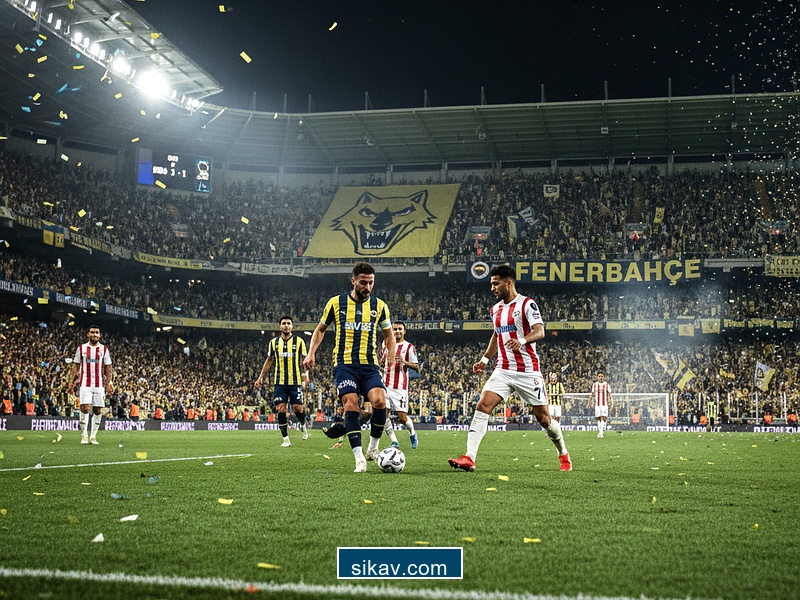
History does not simply repeat itself in Turkish football; it stammers, shouting the same tragic lines over and over until the meaning is lost in the noise. The flashing blue lights reflecting off the Bosphorus waters in the early hours of the morning serve as a grim beacon. When authorities raid the home of a Fenerbahçe captain, the tremors are felt far beyond the Asian side of Istanbul. They rattle the very foundations of the sport in this region.
The news that players, club directors, a commentator, and a referee have been detained in a sweeping betting scandal is shocking, yet entirely unsurprising to those of us who have chronicled the Süper Lig for decades. We are witnessing the reopening of a wound that never truly healed. This is not merely a police operation; it is an indictment of a culture that has persistently failed to separate the beautiful game from the ugly machinery of illicit profit.
The Ghost of 2011: A Cycle of Hubris
To understand the gravity of this morning’s raids, one must look back to the summer of 2011. That year defined the modern era of Turkish football, casting a long shadow that stretches to today's events. The Şike Davası (Match-Fixing Case) saw Fenerbahçe president Aziz Yıldırım imprisoned and the club barred from the Champions League. It was a moment of cataclysm that was supposed to purify the league.
Instead, it seems to have merely taught the corrupt how to hide better. The involvement of the Fenerbahçe captain carries a heavy symbolic weight. The armband at a club like Fenerbahçe—arguably the most intense pressure cooker in European football—is sacred. It belongs to the lineage of Lefter Küçükandonyadis and Alex de Souza. For that home to be raided is a desecration of the club's history. It suggests that the rot has climbed from the basement to the penthouse.
We have seen this script played out in Italy during Calciopoli in 2006. Juventus were relegated, titles stripped, and reputations shattered. Turkey had the chance to perform a similar cleansing over a decade ago but opted for political infighting and conspiracy theories instead of structural reform. Today’s arrests are the direct consequence of that failure. When you do not cut out the tumor entirely, it returns with a vengeance.
Deep Dive: The Architecture of Corruption
The most chilling detail in the BBC report is not the involvement of the players, but the inclusion of a commentator and a referee. This indicates a level of coordination that transcends simple spot-fixing.
The Narrative Manipulators
When a referee is compromised, the match is fixed. But when a commentator is involved, the public perception is fixed. This suggests a sophisticated operation designed to gaslight the viewing public, explaining away suspicious calls as "human error" or "the drama of football" in real-time. This is the industrialization of vice.
From a tactical perspective, this destroys the integrity of the league table. We are no longer analyzing whether Fenerbahçe’s high press is vulnerable to counter-attacks; we are forced to analyze whether the central defender allowed the counter-attack to happen to cover a spread. It renders tactical analysis moot. If the game is scripted, the manager is no longer a strategist, but an unwitting actor in a play written by gambling syndicates.
Stat Pack: The Cost of Scandal
The economic ramifications of such scandals are not abstract; they are devastatingly concrete. History provides us with a grim roadmap of what happens to club valuations and league prestige following such revelations.
| Scandal Era | Key Impact Metrics | Long-term Consequence |
|---|---|---|
| Calciopoli (Italy, 2006) | Juventus valuation dropped ~40% overnight. TV rights renegotiated downwards. | Serie A lost its status as the world's #1 league to the Premier League. |
| Turkish Match-Fixing (2011) | Fenerbahçe stock plummeted 38%. UEFA withheld approx €40m in prize money. | Years of UEFA bans; Coefficient collapse; "Brain drain" of foreign stars. |
| Current Scandal (2024 Proj.) | Immediate freeze on broadcast negotiations. Sponsor exodus likely. | Potential indefinite suspension from UEFA competition for involved clubs. |
The data is clear. Corruption acts as a tax on the entire ecosystem. Every dollar siphoned off by betting rings results in ten dollars lost in brand value and future revenue.
Fan Pulse: Siege Mentality in Kadıköy
To walk through the streets of Kadıköy today is to walk through a neighborhood on the edge of a nervous breakdown. The Fenerbahçe fanbase possesses a unique psychology, forged in the fires of the 3 July 2011 process. They view themselves not just as supporters of a football club, but as defenders of a fortress under constant siege by the state, the federation, and rivals.
"They couldn't defeat us on the pitch, so they come for us in our homes again. It is 2011 all over again."
The mood is not one of shame, as outsiders might expect, but of ferocious, blinding anger. They feel targeted. While the rest of the world sees a police report, the yellow-and-navy faithful see a conspiracy. This polarization is dangerous. If the evidence is irrefutable, the betrayal by their own captain will be a dagger to the heart of millions. If the evidence is flimsy, it will ignite civil unrest in the stands that will make the flares of the Istanbul derby look like birthday candles.
The Verdict
Turkish football is standing at a precipice. The arrest of a Fenerbahçe captain alongside the logistical arms of the game—the directors and officials—suggests that the sport in this country is incapable of self-regulation.
We have spent years discussing the rise of the Süper Lig, the new stadiums, and the arrival of stars like Edin Džeko and Mauro Icardi. Yet, beneath the veneer of modernization, the old vices remain. This raid is a painful reminder that buildings do not make a league professional; integrity does. Until Turkish football can exorcise the demons of gambling and fixing, it will remain a giant with feet of clay, forever stumbling over its own greed. The captain’s door has been broken down, and with it,
History does not simply repeat itself in Turkish football; it stammers, shouting the same tragic lines over and over until the meaning is lost in the noise. The flashing blue lights reflecting off the Bosphorus waters in the early hours of the morning serve as a grim beacon. When authorities raid the home of a Fenerbahçe captain, the tremors are felt far beyond the Asian side of Istanbul. They rattle the very foundations of the sport in this region.
The news that players, club directors, a commentator, and a referee have been detained in a sweeping betting scandal is shocking, yet entirely unsurprising to those of us who have chronicled the Süper Lig for decades. We are witnessing the reopening of a wound that never truly healed. This is not merely a police operation; it is an indictment of a culture that has persistently failed to separate the beautiful game from the ugly machinery of illicit profit.
The Ghost of 2011: A Cycle of Hubris
To understand the gravity of this morning’s raids, one must look back to the summer of 2011. That year defined the modern era of Turkish football, casting a long shadow that stretches to today's events. The Şike Davası (Match-Fixing Case) saw Fenerbahçe president Aziz Yıldırım imprisoned and the club barred from the Champions League. It was a moment of cataclysm that was supposed to purify the league.
Instead, it seems to have merely taught the corrupt how to hide better. The involvement of the Fenerbahçe captain carries a heavy symbolic weight. The armband at a club like Fenerbahçe—arguably the most intense pressure cooker in European football—is sacred. It belongs to the lineage of Lefter Küçükandonyadis and Alex de Souza. For that home to be raided is a desecration of the club's history. It suggests that the rot has climbed from the basement to the penthouse.
We have seen this script played out in Italy during Calciopoli in 2006. Juventus were relegated, titles stripped, and reputations shattered. Turkey had the chance to perform a similar cleansing over a decade ago but opted for political infighting and conspiracy theories instead of structural reform. Today’s arrests are the direct consequence of that failure. When you do not cut out the tumor entirely, it returns with a vengeance.
Deep Dive: The Architecture of Corruption
The most chilling detail in the BBC report is not the involvement of the players, but the inclusion of a commentator and a referee. This indicates a level of coordination that transcends simple spot-fixing.
The Narrative Manipulators
When a referee is compromised, the match is fixed. But when a commentator is involved, the public perception is fixed. This suggests a sophisticated operation designed to gaslight the viewing public, explaining away suspicious calls as "human error" or "the drama of football" in real-time. This is the industrialization of vice.
From a tactical perspective, this destroys the integrity of the league table. We are no longer analyzing whether Fenerbahçe’s high press is vulnerable to counter-attacks; we are forced to analyze whether the central defender allowed the counter-attack to happen to cover a spread. It renders tactical analysis moot. If the game is scripted, the manager is no longer a strategist, but an unwitting actor in a play written by gambling syndicates.
Stat Pack: The Cost of Scandal
The economic ramifications of such scandals are not abstract; they are devastatingly concrete. History provides us with a grim roadmap of what happens to club valuations and league prestige following such revelations.
| Scandal Era | Key Impact Metrics | Long-term Consequence |
|---|---|---|
| Calciopoli (Italy, 2006) | Juventus valuation dropped ~40% overnight. TV rights renegotiated downwards. | Serie A lost its status as the world's #1 league to the Premier League. |
| Turkish Match-Fixing (2011) | Fenerbahçe stock plummeted 38%. UEFA withheld approx €40m in prize money. | Years of UEFA bans; Coefficient collapse; "Brain drain" of foreign stars. |
| Current Scandal (2024 Proj.) | Immediate freeze on broadcast negotiations. Sponsor exodus likely. | Potential indefinite suspension from UEFA competition for involved clubs. |
The data is clear. Corruption acts as a tax on the entire ecosystem. Every dollar siphoned off by betting rings results in ten dollars lost in brand value and future revenue.
Fan Pulse: Siege Mentality in Kadıköy
To walk through the streets of Kadıköy today is to walk through a neighborhood on the edge of a nervous breakdown. The Fenerbahçe fanbase possesses a unique psychology, forged in the fires of the 3 July 2011 process. They view themselves not just as supporters of a football club, but as defenders of a fortress under constant siege by the state, the federation, and rivals.
"They couldn't defeat us on the pitch, so they come for us in our homes again. It is 2011 all over again."
The mood is not one of shame, as outsiders might expect, but of ferocious, blinding anger. They feel targeted. While the rest of the world sees a police report, the yellow-and-navy faithful see a conspiracy. This polarization is dangerous. If the evidence is irrefutable, the betrayal by their own captain will be a dagger to the heart of millions. If the evidence is flimsy, it will ignite civil unrest in the stands that will make the flares of the Istanbul derby look like birthday candles.
The Verdict
Turkish football is standing at a precipice. The arrest of a Fenerbahçe captain alongside the logistical arms of the game—the directors and officials—suggests that the sport in this country is incapable of self-regulation.
We have spent years discussing the rise of the Süper Lig, the new stadiums, and the arrival of stars like Edin Džeko and Mauro Icardi. Yet, beneath the veneer of modernization, the old vices remain. This raid is a painful reminder that buildings do not make a league professional; integrity does. Until Turkish football can exorcise the demons of gambling and fixing, it will remain a giant with feet of clay, forever stumbling over its own greed. The captain’s door has been broken down, and with it,