
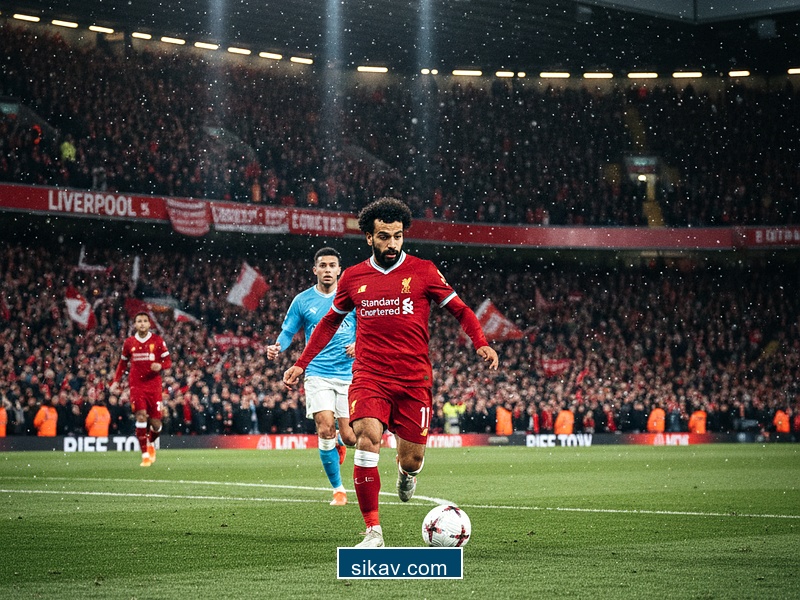
How do you measure the final moments of greatness before they slip into mere memory? It is the question that has haunted the Kop for generations, from the abrupt departure of Kevin Keegan to Hamburg in the seventies, to the heartbroken silence when Fernando Torres traded red for blue. Now, that question hangs heavy over the Mersey once again, triggered not by a transfer request, but by four simple, terrifyingly honest words from Arne Slot regarding Mohamed Salah: "I have no clue."
In an industry dominated by media-trained obfuscation and carefully curated PR statements, Slot’s admission is a jarring splash of cold water. When asked if the Egyptian King has graced the Anfield turf for the final time, the new manager offered no platitudes, no assurances, and no false hope. He offered only the stark reality of the unknown. For a historian of this great club, this moment feels less like a press conference snippet and more like the turning of a heavy, leather-bound page. We are standing on the precipice of a new epoch, and the view down is dizzying.
The Weight of the Number Eleven
To understand the gravity of Slot’s uncertainty, one must look backward before looking forward. Liverpool Football Club is an institution built on the succession of icons. The boot room philosophy was not just about tactics; it was about the lineage of heroes. When Billy Liddell faded, Shankly built a team. When Keegan left, Dalglish arrived. The anxiety currently gripping the fanbase is not just about losing a goalscorer; it is about the fear that the lineage is breaking.
Mohamed Salah has not merely played for Liverpool; he has defined a golden age. Alongside Jurgen Klopp, he was the architect of Liverpool's return to the summit of world football. His impact transcends the statistics, though the numbers are frankly ludicrous. He normalized the extraordinary. Season after season, while others fluctuated, Salah remained the constant—the inevitable left foot cutting in from the right, the curling finish into the far corner. It became a ritual, a certainty in uncertain times.
"I have no clue." — Arne Slot, on the future of Mohamed Salah.
Slot’s comment strips away the security blanket. If Salah has indeed played his last game, we are not just witnessing a transfer; we are witnessing the dismantling of the "Heavy Metal Football" era’s most potent weapon. The implications of this are profound. It suggests that the new regime is walking into a storm without their captain, tasked with navigating waters that have swallowed lesser managers whole.
Statistical Immortality vs. Father Time
Why does this uncertainty sting so sharply? Because Salah is not fading. Usually, legends leave when their light begins to dim. Ian Rush moved to Leeds when his powers waned; Steven Gerrard went to LA Galaxy when his legs could no longer carry the midfield. Salah, conversely, remains a physical marvel. His output dictates that he should be untouchable, yet the contract situation and the looming wealth of the Saudi Pro League create a paradox.
Consider what Liverpool loses if Slot’s "no clue" turns into a "goodbye." We are looking at a void that cannot be filled by a single signing.
- The Guarantee of Goals: 20+ goals a season has been a baseline, not a ceiling, for Salah. No other winger in Premier League history has maintained such a strike rate.
- The Tactical Gravity: Salah requires two defenders. Even when he isn't scoring, he warps the opposition's shape, creating space for Diaz, Nunez, or Jota. Without him, the pitch shrinks.
- The Psychological Edge: Opponents fear him. Walking into the tunnel and seeing Salah creates a 1-0 mental deficit for the opposition.
The Dutch Pragmatism
We must also analyze the messenger. Arne Slot is not Jurgen Klopp. Klopp was the emotional heart, the man who would wrap his arm around the player and the city, promising that everything would be alright. Slot appears to be cut from a different cloth—more pragmatic, perhaps cooler in his detachment. By admitting he has "no clue," he is refusing to play the political game.
This might be exactly what Liverpool needs, or it might be a dangerous gamble. If the club hierarchy is playing hardball over a contract extension, or if they are tempted by a massive transfer fee to reinvest in the squad, Slot is publicly washing his hands of the decision. He is focusing on the players he *knows* he has. It is a bold strategy reminiscent of Rafa Benitez—focusing on the system rather than the individual ego. But can any system replace a phenomenon?
The Shadow of the 1990s
The fear for the Anfield faithful is not just the loss of Salah, but what his exit represents in the wider context of the post-Klopp era. History serves a cautionary tale here. When Kenny Dalglish resigned in 1991, the club did not immediately collapse, but the aura of invincibility fractured. Players like Barnes and Rush remained, but the soul of the machine was gone, leading to the erratic wandering of the 1990s.
Klopp leaving was the earthquake; Salah leaving would be the aftershock that brings down the remaining structures. If Salah goes, does Van Dijk commit the twilight of his career to a rebuild? Does Alisson stay to marshal a changing defense? These dominoes are lined up, and Slot’s admission suggests a finger is hovering over the first one.
We are witnessing the painful reality that all empires eventually recede. The Barcelona of Messi, the Manchester United of Ferguson, the Milan of Sacchi—they all end. The transition is usually messy, emotional, and fraught with "what ifs."
A Final Reflection
If Mohamed Salah has indeed played his last game for Liverpool, it is a quiet tragedy that the fans did not know it at the time. There was no grand send-off, no final lap of honor with the certainty of "goodbye." Just a manager, weeks later, admitting he doesn't know.
But perhaps that fits the nature of football history. It is rarely neat. It is rarely scripted. It moves with a brutal, relentless momentum. Arne Slot has "no clue," and in truth, neither do we. We can only look at the records, marvel at the goals, and prepare ourselves for the possibility that the sun has already set on the Egyptian King’s reign on Merseyside. If this is the end, the shadows at Anfield just got a little longer, and the job for the new manager just got infinitely harder.
How do you measure the final moments of greatness before they slip into mere memory? It is the question that has haunted the Kop for generations, from the abrupt departure of Kevin Keegan to Hamburg in the seventies, to the heartbroken silence when Fernando Torres traded red for blue. Now, that question hangs heavy over the Mersey once again, triggered not by a transfer request, but by four simple, terrifyingly honest words from Arne Slot regarding Mohamed Salah: "I have no clue."
In an industry dominated by media-trained obfuscation and carefully curated PR statements, Slot’s admission is a jarring splash of cold water. When asked if the Egyptian King has graced the Anfield turf for the final time, the new manager offered no platitudes, no assurances, and no false hope. He offered only the stark reality of the unknown. For a historian of this great club, this moment feels less like a press conference snippet and more like the turning of a heavy, leather-bound page. We are standing on the precipice of a new epoch, and the view down is dizzying.
The Weight of the Number Eleven
To understand the gravity of Slot’s uncertainty, one must look backward before looking forward. Liverpool Football Club is an institution built on the succession of icons. The boot room philosophy was not just about tactics; it was about the lineage of heroes. When Billy Liddell faded, Shankly built a team. When Keegan left, Dalglish arrived. The anxiety currently gripping the fanbase is not just about losing a goalscorer; it is about the fear that the lineage is breaking.
Mohamed Salah has not merely played for Liverpool; he has defined a golden age. Alongside Jurgen Klopp, he was the architect of Liverpool's return to the summit of world football. His impact transcends the statistics, though the numbers are frankly ludicrous. He normalized the extraordinary. Season after season, while others fluctuated, Salah remained the constant—the inevitable left foot cutting in from the right, the curling finish into the far corner. It became a ritual, a certainty in uncertain times.
"I have no clue." — Arne Slot, on the future of Mohamed Salah.
Slot’s comment strips away the security blanket. If Salah has indeed played his last game, we are not just witnessing a transfer; we are witnessing the dismantling of the "Heavy Metal Football" era’s most potent weapon. The implications of this are profound. It suggests that the new regime is walking into a storm without their captain, tasked with navigating waters that have swallowed lesser managers whole.
Statistical Immortality vs. Father Time
Why does this uncertainty sting so sharply? Because Salah is not fading. Usually, legends leave when their light begins to dim. Ian Rush moved to Leeds when his powers waned; Steven Gerrard went to LA Galaxy when his legs could no longer carry the midfield. Salah, conversely, remains a physical marvel. His output dictates that he should be untouchable, yet the contract situation and the looming wealth of the Saudi Pro League create a paradox.
Consider what Liverpool loses if Slot’s "no clue" turns into a "goodbye." We are looking at a void that cannot be filled by a single signing.
- The Guarantee of Goals: 20+ goals a season has been a baseline, not a ceiling, for Salah. No other winger in Premier League history has maintained such a strike rate.
- The Tactical Gravity: Salah requires two defenders. Even when he isn't scoring, he warps the opposition's shape, creating space for Diaz, Nunez, or Jota. Without him, the pitch shrinks.
- The Psychological Edge: Opponents fear him. Walking into the tunnel and seeing Salah creates a 1-0 mental deficit for the opposition.
The Dutch Pragmatism
We must also analyze the messenger. Arne Slot is not Jurgen Klopp. Klopp was the emotional heart, the man who would wrap his arm around the player and the city, promising that everything would be alright. Slot appears to be cut from a different cloth—more pragmatic, perhaps cooler in his detachment. By admitting he has "no clue," he is refusing to play the political game.
This might be exactly what Liverpool needs, or it might be a dangerous gamble. If the club hierarchy is playing hardball over a contract extension, or if they are tempted by a massive transfer fee to reinvest in the squad, Slot is publicly washing his hands of the decision. He is focusing on the players he *knows* he has. It is a bold strategy reminiscent of Rafa Benitez—focusing on the system rather than the individual ego. But can any system replace a phenomenon?
The Shadow of the 1990s
The fear for the Anfield faithful is not just the loss of Salah, but what his exit represents in the wider context of the post-Klopp era. History serves a cautionary tale here. When Kenny Dalglish resigned in 1991, the club did not immediately collapse, but the aura of invincibility fractured. Players like Barnes and Rush remained, but the soul of the machine was gone, leading to the erratic wandering of the 1990s.
Klopp leaving was the earthquake; Salah leaving would be the aftershock that brings down the remaining structures. If Salah goes, does Van Dijk commit the twilight of his career to a rebuild? Does Alisson stay to marshal a changing defense? These dominoes are lined up, and Slot’s admission suggests a finger is hovering over the first one.
We are witnessing the painful reality that all empires eventually recede. The Barcelona of Messi, the Manchester United of Ferguson, the Milan of Sacchi—they all end. The transition is usually messy, emotional, and fraught with "what ifs."
A Final Reflection
If Mohamed Salah has indeed played his last game for Liverpool, it is a quiet tragedy that the fans did not know it at the time. There was no grand send-off, no final lap of honor with the certainty of "goodbye." Just a manager, weeks later, admitting he doesn't know.
But perhaps that fits the nature of football history. It is rarely neat. It is rarely scripted. It moves with a brutal, relentless momentum. Arne Slot has "no clue," and in truth, neither do we. We can only look at the records, marvel at the goals, and prepare ourselves for the possibility that the sun has already set on the Egyptian King’s reign on Merseyside. If this is the end, the shadows at Anfield just got a little longer, and the job for the new manager just got infinitely harder.