
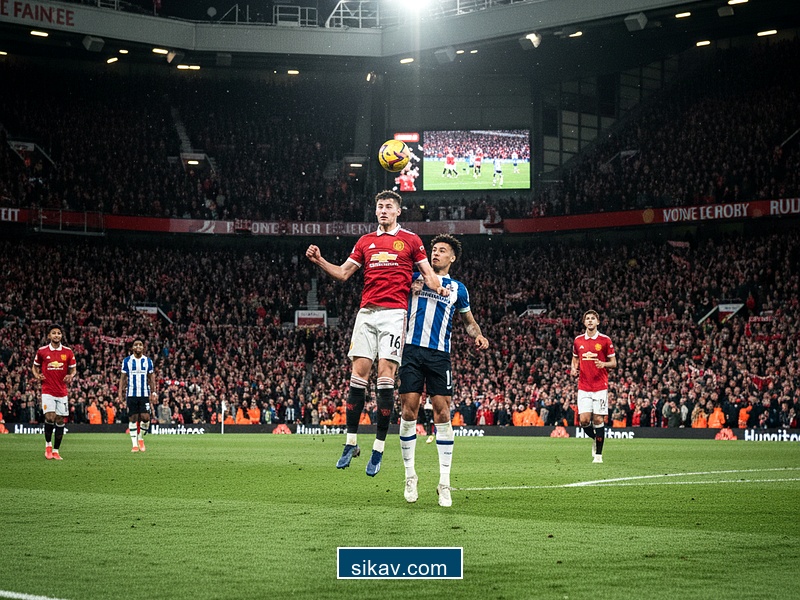
The Stat: One billion pounds. That is the conservative estimate of how much money has been drained from Manchester United in interest, debt repayments, and dividends under the current ownership regime. It is a staggering figure, a financial black hole that sits in stark contrast to the crumbling concrete of the stadium and the often shambolic performances on the pitch. Against this backdrop of financial extraction, we are now presented with a shiny new offer: ticket and hotel packages starting at £155.
On the surface, the headline screams accessibility. For the price of a decent night out in London, you can secure a bed and a seat at the Theatre of Dreams. SportsBreaks, an official partner, is dangling the carrot of affordability in an era where dynamic pricing and hospitality gouging have become the norm. But we need to pause and ask the uncomfortable question: who is this actually for? And more importantly, is this "bargain" actually a symptom of the very disease killing the atmosphere at Old Trafford?
The Gentrification of the Stretford End
Let’s be brutally honest about what a "package" represents. It is the commodification of fandom packaged into a neat, sterile SKU. When you bundle a hotel room with a match ticket, you are not targeting the Mancunian who has bled red for forty years. You are targeting the tourist. You are targeting the day-tripper who views a Premier League fixture not as a tribal obligation, but as a bucket-list item akin to seeing The Lion King on Broadway.
There is nothing inherently wrong with global support; United prides itself on being a global brand. However, when the club prioritizes commercial partners who lock up inventory for "experiences" over general sale availability for members, the demographic of the stadium shifts. We wonder why the famous roar of Old Trafford has been reduced to a polite hum or, worse, sporadic groans of frustration. The answer lies in the receipts.
"We are watching the rapid conversion of a football club into a theme park. The £155 price tag isn't a gateway for the working class; it's a velvet rope for the experience economy."
If you are a local fan trying to get a ticket through the ballot, you know the struggle. The odds are slim. Yet, if you have £155 to drop on a Tuesday for a package, the doors swing wide open. This is pay-to-play dynamics filtering into the stands. It changes the noise. It changes the pressure on the players. A crowd of tourists takes selfies; a crowd of fanatics takes heads. United needs the latter, but they are selling to the former.
Value or Vulture Capitalism?
Let’s dissect the economics of this £155 "deal." In the current climate of the Premier League, where clubs are squeezing every penny out of loyalty, is this actually good value?
- The Hotel Component: Manchester hotel prices surge on matchdays. A decent room can easily cost £100+.
- The Ticket Component: Face value tickets vary, but official hospitality often starts at £200+.
- The "Official" Premium: Buying peace of mind against scammers.
Mathematically, yes, it is cheaper than the black market or high-end hospitality. But the very existence of this middle-tier "package" highlights a broken system. Why must a fan book a hotel they might not need just to guarantee a seat? It forces locals or those staying with friends to buy into an ecosystem they don't require. It is the "Ryanair-ification" of football—you want the seat? Buy the hotel, buy the insurance, buy the "experience."
This pricing strategy also sets a dangerous floor. Once fans accept that £155 is the entry point for a "guaranteed" experience, face-value ticketing becomes a myth, a legacy concept for the few season ticket holders who haven't yet been priced out. We are normalizing the idea that watching United requires a three-figure investment per person.
The Disconnect: Premium Prices for Mediocre Product
Here lies the rub, the aspect of this story that truly grates on the soul. Fans are being asked to pay premium rates for a product that has been largely defective for a decade.
When you walk into a Michelin-star restaurant and pay £155 for a tasting menu, you expect culinary perfection. When you pay £155 for the "United Experience," what are you currently getting? You are getting a stadium with a leaky roof (the famous Old Trafford waterfall). You are getting cramped concourses that haven't seen a paintbrush since the Ferguson era. And on the pitch? You are often getting a disjointed, lethargic display that leaves you checking your watch by the 70th minute.
The audacity of the commercial department to continue maximizing yield while the football department struggles to string three wins together is breathtaking. It speaks to the resilience of the brand, certainly. The badge sells regardless of the league table. But it also speaks to a cynical exploitation of loyalty. They know you will pay. They know the global fanbase is so vast that for every disillusioned local who walks away, ten international fans are refreshing the SportsBreaks page, credit card in hand.
The Soul vs. The Balance Sheet
Does this £155 deal change the tactical landscape? No. Does it buy a new striker? Unlikely, given the club's debt servicing costs. What it does is reinforce the divide between the club as a community asset and the club as a global entertainment vehicle.
We must stop applauding "accessible" packages that essentially serve as a bypass for the traditional ticketing system. While it is great that a father from Singapore or a student from the US can see their heroes, we have to ask at what cost to the identity of the club. If Old Trafford becomes nothing more than a stopover for tourists utilizing hotel bundles, the intimidating atmosphere that once won matches before kickoff will be gone forever.
<p style="font-size: 1.125rem; line-heightThe Stat: One billion pounds. That is the conservative estimate of how much money has been drained from Manchester United in interest, debt repayments, and dividends under the current ownership regime. It is a staggering figure, a financial black hole that sits in stark contrast to the crumbling concrete of the stadium and the often shambolic performances on the pitch. Against this backdrop of financial extraction, we are now presented with a shiny new offer: ticket and hotel packages starting at £155.
On the surface, the headline screams accessibility. For the price of a decent night out in London, you can secure a bed and a seat at the Theatre of Dreams. SportsBreaks, an official partner, is dangling the carrot of affordability in an era where dynamic pricing and hospitality gouging have become the norm. But we need to pause and ask the uncomfortable question: who is this actually for? And more importantly, is this "bargain" actually a symptom of the very disease killing the atmosphere at Old Trafford?
The Gentrification of the Stretford End
Let’s be brutally honest about what a "package" represents. It is the commodification of fandom packaged into a neat, sterile SKU. When you bundle a hotel room with a match ticket, you are not targeting the Mancunian who has bled red for forty years. You are targeting the tourist. You are targeting the day-tripper who views a Premier League fixture not as a tribal obligation, but as a bucket-list item akin to seeing The Lion King on Broadway.
There is nothing inherently wrong with global support; United prides itself on being a global brand. However, when the club prioritizes commercial partners who lock up inventory for "experiences" over general sale availability for members, the demographic of the stadium shifts. We wonder why the famous roar of Old Trafford has been reduced to a polite hum or, worse, sporadic groans of frustration. The answer lies in the receipts.
"We are watching the rapid conversion of a football club into a theme park. The £155 price tag isn't a gateway for the working class; it's a velvet rope for the experience economy."
If you are a local fan trying to get a ticket through the ballot, you know the struggle. The odds are slim. Yet, if you have £155 to drop on a Tuesday for a package, the doors swing wide open. This is pay-to-play dynamics filtering into the stands. It changes the noise. It changes the pressure on the players. A crowd of tourists takes selfies; a crowd of fanatics takes heads. United needs the latter, but they are selling to the former.
Value or Vulture Capitalism?
Let’s dissect the economics of this £155 "deal." In the current climate of the Premier League, where clubs are squeezing every penny out of loyalty, is this actually good value?
- The Hotel Component: Manchester hotel prices surge on matchdays. A decent room can easily cost £100+.
- The Ticket Component: Face value tickets vary, but official hospitality often starts at £200+.
- The "Official" Premium: Buying peace of mind against scammers.
Mathematically, yes, it is cheaper than the black market or high-end hospitality. But the very existence of this middle-tier "package" highlights a broken system. Why must a fan book a hotel they might not need just to guarantee a seat? It forces locals or those staying with friends to buy into an ecosystem they don't require. It is the "Ryanair-ification" of football—you want the seat? Buy the hotel, buy the insurance, buy the "experience."
This pricing strategy also sets a dangerous floor. Once fans accept that £155 is the entry point for a "guaranteed" experience, face-value ticketing becomes a myth, a legacy concept for the few season ticket holders who haven't yet been priced out. We are normalizing the idea that watching United requires a three-figure investment per person.
The Disconnect: Premium Prices for Mediocre Product
Here lies the rub, the aspect of this story that truly grates on the soul. Fans are being asked to pay premium rates for a product that has been largely defective for a decade.
When you walk into a Michelin-star restaurant and pay £155 for a tasting menu, you expect culinary perfection. When you pay £155 for the "United Experience," what are you currently getting? You are getting a stadium with a leaky roof (the famous Old Trafford waterfall). You are getting cramped concourses that haven't seen a paintbrush since the Ferguson era. And on the pitch? You are often getting a disjointed, lethargic display that leaves you checking your watch by the 70th minute.
The audacity of the commercial department to continue maximizing yield while the football department struggles to string three wins together is breathtaking. It speaks to the resilience of the brand, certainly. The badge sells regardless of the league table. But it also speaks to a cynical exploitation of loyalty. They know you will pay. They know the global fanbase is so vast that for every disillusioned local who walks away, ten international fans are refreshing the SportsBreaks page, credit card in hand.
The Soul vs. The Balance Sheet
Does this £155 deal change the tactical landscape? No. Does it buy a new striker? Unlikely, given the club's debt servicing costs. What it does is reinforce the divide between the club as a community asset and the club as a global entertainment vehicle.
We must stop applauding "accessible" packages that essentially serve as a bypass for the traditional ticketing system. While it is great that a father from Singapore or a student from the US can see their heroes, we have to ask at what cost to the identity of the club. If Old Trafford becomes nothing more than a stopover for tourists utilizing hotel bundles, the intimidating atmosphere that once won matches before kickoff will be gone forever.
<p style="font-size: 1.125rem; line-height