
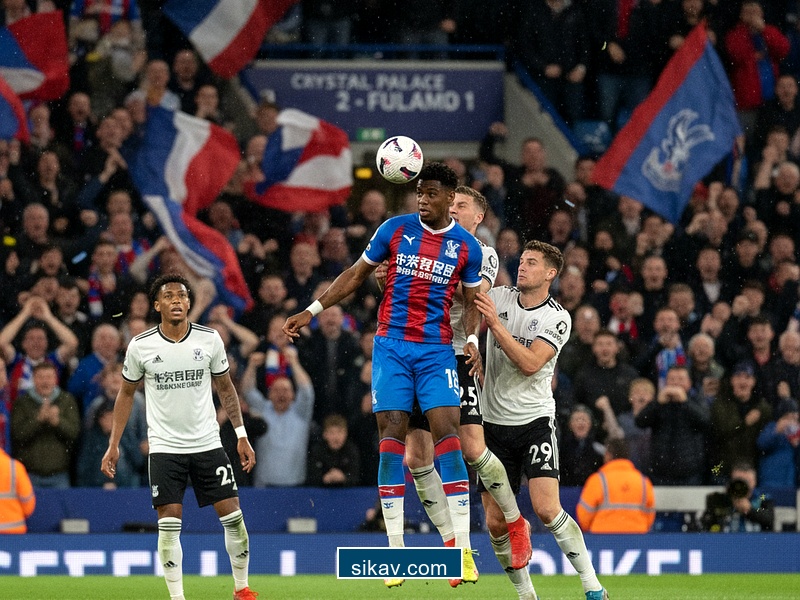
How often do we see a single moment of brilliance not just decide a match, but potentially rewrite the entire narrative of a club’s financial future? When the ball struck Marc Guehi's forehead late in the game at Selhurst Park, the ripple effect went far beyond the three points secured against Fulham. This wasn't just a 2-1 victory; it was a statement of intent that echoed all the way to the boardrooms of Manchester United, Liverpool, and Newcastle.
For years, Crystal Palace has been viewed as the ultimate survivor—a club content with mid-table stability, savvy recruitment, and the occasional bloody nose given to the league's elite. But looking at the table this morning, sitting proudly in the top four, the paradigm has shifted. The vultures have been circling Selhurst Park for months, eyeing up their prized assets, but Saturday’s result hands the leverage firmly back to Steve Parish and the Palace hierarchy.
The Captain’s Value Just Spiked
Let’s cut through the noise and talk about the market. Marc Guehi has been the subject of intense speculation for the better part of a year. When you have a young, English, ball-playing center-back who wears the captain's armband, you are looking at a premium asset. But when that same defender scores the winner in a London derby to put his team into Champions League contention, the price tag doesn't just hold firm; it inflates.
Scouts from Europe's top clubs weren't just watching his defensive positioning against Fulham's dynamic attack; they were watching his temperament. The composure required to guide a header past Bernd Leno in the dying embers of a game is exactly what separates the £40 million defenders from the £75 million ones.
"This is about leverage. If Palace were sitting 14th, the January window becomes a scary prospect where bigger clubs can bully them. Inside the top four? Palace holds all the cards. They can look a suitor in the eye and say, 'Why would he leave? We are competing with you.'"
The timing of this goal is catastrophic for potential buyers. Agents hoping for a discount based on Palace needing to sell to reinvest will find those doors firmly shut. The narrative has moved from "selling to survive" to "retaining to conquer."
Breaking the Glass Ceiling
Beyond the transfer market mathematics, we have to look at the psychological impact inside that dressing room. I’ve been around enough squads to know that "belief" is a tangible currency. For a club of Palace’s stature, the top four is usually a mirage—something you visit in August or September before gravity takes hold.
To be sitting there now, having beaten a direct rival like Fulham in a tight, gritty contest, injects a dangerous level of confidence into the squad. Fulham arrived at Selhurst Park with their own European ambitions. They are a well-drilled, dangerous outfit under Marco Silva. Yet, Palace found a way.
- Resilience: The ability to absorb pressure when Fulham dominated possession in the second half.
- Set-Piece Dominance: Utilizing dead-ball situations to bypass open-play stagnation.
- Squad Depth: The impact of substitutions changing the tempo in the final 15 minutes.
The Fulham Factor: A Missed Opportunity
While the headlines belong to Guehi, we shouldn't overlook what this result says about Fulham. This was a "six-pointer" in the context of the upper-mid-table mini-league. A win for the Cottagers would have vaulted them into the conversation Palace now dominates.
Marco Silva will be furious. To lose to a set-piece late in the game is a cardinal sin when you harbor genuine ambitions of disrupting the established order. It highlights the brutal margins of the Premier League: play well for 80 minutes, switch off for three seconds against an England international, and you go home empty-handed. Fulham remains a good side, but "good" doesn't get you European football. "Ruthless" does.
The January Dilemma
So, where does this leave us as we approach the winter trading period? The insider whispers suggested Palace might be vulnerable to big bids for Guehi or even Eberechi Eze in January. That script is currently being rewritten.
If Palace is still within touching distance of the top four come Christmas, selling Guehi becomes practically impossible from a PR perspective, regardless of the money. How do you sell your captain and best defender when the Champions League anthem is a faint but audible possibility? You don't. You double down.
This win creates a complex headache for the ownership, but it's the best kind of headache to have. Do they stick with the current model of sustainability, or do they push chips into the center of the table and recruit to secure a European spot?
Marc Guehi's header did more than just ripple the net; it sent shockwaves through the market. The valuation has gone up, the leverage has shifted, and for the first time in a long time, Crystal Palace isn't looking over their shoulder at the relegation zone—they are staring down the barrel of the elite, daring them to blink first.
How often do we see a single moment of brilliance not just decide a match, but potentially rewrite the entire narrative of a club’s financial future? When the ball struck Marc Guehi's forehead late in the game at Selhurst Park, the ripple effect went far beyond the three points secured against Fulham. This wasn't just a 2-1 victory; it was a statement of intent that echoed all the way to the boardrooms of Manchester United, Liverpool, and Newcastle.
For years, Crystal Palace has been viewed as the ultimate survivor—a club content with mid-table stability, savvy recruitment, and the occasional bloody nose given to the league's elite. But looking at the table this morning, sitting proudly in the top four, the paradigm has shifted. The vultures have been circling Selhurst Park for months, eyeing up their prized assets, but Saturday’s result hands the leverage firmly back to Steve Parish and the Palace hierarchy.
The Captain’s Value Just Spiked
Let’s cut through the noise and talk about the market. Marc Guehi has been the subject of intense speculation for the better part of a year. When you have a young, English, ball-playing center-back who wears the captain's armband, you are looking at a premium asset. But when that same defender scores the winner in a London derby to put his team into Champions League contention, the price tag doesn't just hold firm; it inflates.
Scouts from Europe's top clubs weren't just watching his defensive positioning against Fulham's dynamic attack; they were watching his temperament. The composure required to guide a header past Bernd Leno in the dying embers of a game is exactly what separates the £40 million defenders from the £75 million ones.
"This is about leverage. If Palace were sitting 14th, the January window becomes a scary prospect where bigger clubs can bully them. Inside the top four? Palace holds all the cards. They can look a suitor in the eye and say, 'Why would he leave? We are competing with you.'"
The timing of this goal is catastrophic for potential buyers. Agents hoping for a discount based on Palace needing to sell to reinvest will find those doors firmly shut. The narrative has moved from "selling to survive" to "retaining to conquer."
Breaking the Glass Ceiling
Beyond the transfer market mathematics, we have to look at the psychological impact inside that dressing room. I’ve been around enough squads to know that "belief" is a tangible currency. For a club of Palace’s stature, the top four is usually a mirage—something you visit in August or September before gravity takes hold.
To be sitting there now, having beaten a direct rival like Fulham in a tight, gritty contest, injects a dangerous level of confidence into the squad. Fulham arrived at Selhurst Park with their own European ambitions. They are a well-drilled, dangerous outfit under Marco Silva. Yet, Palace found a way.
- Resilience: The ability to absorb pressure when Fulham dominated possession in the second half.
- Set-Piece Dominance: Utilizing dead-ball situations to bypass open-play stagnation.
- Squad Depth: The impact of substitutions changing the tempo in the final 15 minutes.
The Fulham Factor: A Missed Opportunity
While the headlines belong to Guehi, we shouldn't overlook what this result says about Fulham. This was a "six-pointer" in the context of the upper-mid-table mini-league. A win for the Cottagers would have vaulted them into the conversation Palace now dominates.
Marco Silva will be furious. To lose to a set-piece late in the game is a cardinal sin when you harbor genuine ambitions of disrupting the established order. It highlights the brutal margins of the Premier League: play well for 80 minutes, switch off for three seconds against an England international, and you go home empty-handed. Fulham remains a good side, but "good" doesn't get you European football. "Ruthless" does.
The January Dilemma
So, where does this leave us as we approach the winter trading period? The insider whispers suggested Palace might be vulnerable to big bids for Guehi or even Eberechi Eze in January. That script is currently being rewritten.
If Palace is still within touching distance of the top four come Christmas, selling Guehi becomes practically impossible from a PR perspective, regardless of the money. How do you sell your captain and best defender when the Champions League anthem is a faint but audible possibility? You don't. You double down.
This win creates a complex headache for the ownership, but it's the best kind of headache to have. Do they stick with the current model of sustainability, or do they push chips into the center of the table and recruit to secure a European spot?
Marc Guehi's header did more than just ripple the net; it sent shockwaves through the market. The valuation has gone up, the leverage has shifted, and for the first time in a long time, Crystal Palace isn't looking over their shoulder at the relegation zone—they are staring down the barrel of the elite, daring them to blink first.