
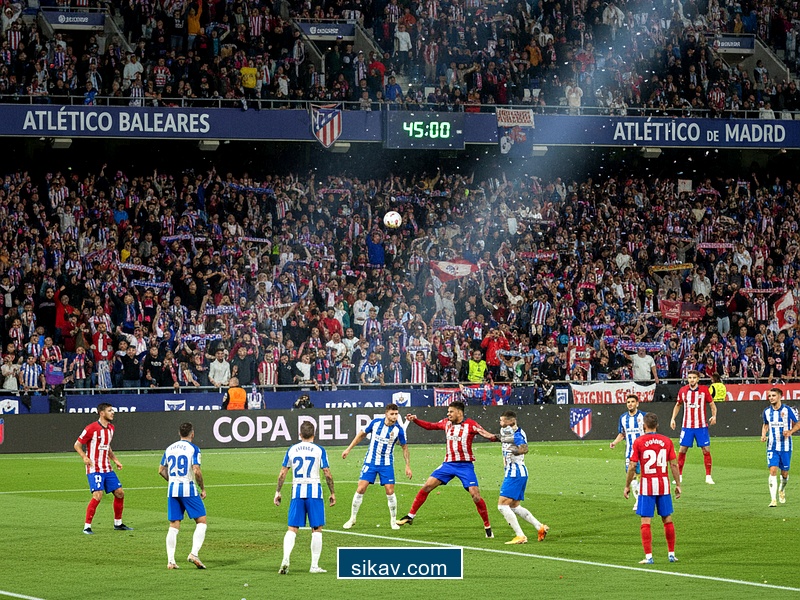
The Bold Claim: The romanticism of the Copa del Rey is a convenient lie sold to television audiences to boost ratings; for a club like Atlético Madrid, this trip to the Balearic Islands isn't a "festival of football"—it is a potential financial and reputational catastrophe waiting to happen. While the cameras focus on the charm of the underdog, the reality behind the scenes is pure, unadulterated anxiety for the elite. Diego Simeone knows it, the board knows it, and the players, usually pampered by the comforts of the Metropolitano, know they are walking into a meticulously set trap.
The news coming out of Palma is deceptive in its simplicity. We are told that over 2,000 tickets have flown out of the box office in a heartbeat. We are told the Estadio Balear is expanding its capacity to 5,000 to accommodate the fever. On the surface, this is a local success story. But if you dig deeper into the market implications, this surge in demand represents the mobilization of an entire island against eleven men who have everything to lose.
The Economics of a Giant Killing
Let’s strip away the sentimentality and look at the ledger. For Atlético Baleares, this match is not just a sporting event; it is a fiscal lifeline. Selling out 5,000 seats at elevated Copa del Rey prices, combined with television revenue shares and merchandising, can cover a significant portion of a lower-tier club's annual operating budget. This is their Champions League final, their IPO, and their holiday bonus rolled into one.
The rush to secure those initial 2,000 tickets signals a frantic demand that the club is smart to capitalize on. By expanding the capacity to 5,000, they are essentially printing money. But here is where the dynamic shifts. That money buys motivation. It funds better recovery for their players, better facilities down the line, and creates a "shop window" effect.
"Every player in that Baleares locker room knows the math. A standout performance against a Champions League defense doesn't just make headlines; it adds a zero to their next contract offer. They aren't playing for glory. They are playing for their careers."
Conversely, for Atlético Madrid, the economic implications are purely negative. A win is expected and carries no stock value. A loss? A loss triggers a crisis. It devalues the brand, invites scrutiny on the manager, and raises questions about squad depth that agents and rivals will exploit in the upcoming transfer windows. The pressure is entirely asymmetrical.
Inside the Pressure Cooker: The Renovated Trap
The Estadio Balear is a fascinating variable in this equation. Having undergone renovations and now pushing its temporary boundaries to hit that 5,000 mark, the acoustics are going to be hostile. When you take elite players, accustomed to the wide, pristine lawns of La Liga, and place them in a compact, raucous environment where the fans are practically breathing down their necks, the tactical landscape shifts.
Simeone’s style relies on intensity, but it also relies on control. In these "magic nights," control is the first casualty. The ball bounces differently on these pitches. The referee is influenced differently by the proximity of the screaming 5,000. The expansion of the stadium doesn't just mean more ticket sales; it means a wall of noise that disrupts communication lines between the goalkeeper and the back four.
- The Proximity Factor: With temporary stands often erected closer to the pitch, the psychological pressure on away players increases tenfold.
- The Surface Variable: While regulations demand quality, lower-tier pitches rarely offer the billiard-table consistency of the Metropolitano, neutralizing technical superiority.
- The Momentum Swing: An early goal for the underdog in a packed 5,000-seater feels like a tidal wave compared to a goal in a half-empty 60,000-seater.
Simeone’s Dilemma: Rotation vs. Respect
What keeps Diego Simeone awake at night regarding this specific fixture isn't the tactical setup of Atlético Baleares; it's the internal management of his own squad. The "Insider" view of the locker room suggests a delicate balancing act. Play the starters, and you risk injury on a physically demanding night, potentially derailing the La Liga or Champions League campaign. Play the reserves, and you risk humiliation.
The fact that over 2,000 tickets vanished instantly tells Simeone that the hosts are not coming to exchange shirts and take selfies. They are coming for blood. This forces the Argentine manager's hand. He cannot afford to treat this as a run-out for the academy kids. The market demands a win, and the fans demands respect for the badge.
The "Shop Window" Warriors
We must also consider the psychology of the opponent. The Atlético Baleares squad is filled with players who believe, rightly or wrongly, that they belong at a higher level. A televised match against Atlético Madrid is the ultimate scouting reel. You will see players running 120% of their usual distance metrics. You will see challenges flying in that border on reckless. This isn't dirty play; it's desperation. It is the hunger of the lower leagues clashing with the comfort of the elite.
When you read that 5,000 people will be there, understand that those 5,000 represent the collective belief that Goliath can be slain. The narrative is already written; Baleares just needs to execute. For Atlético Madrid, this is a business trip from hell. No glory, only duty. And in football, teams playing for duty are often the ones who get caught sleeping by teams playing for dreams.
Make no mistake, the expansion of the Estadio Balear is a statement of intent. They aren't building a stage to applaud Atlético Madrid; they are building a coliseum to bury them.
The Bold Claim: The romanticism of the Copa del Rey is a convenient lie sold to television audiences to boost ratings; for a club like Atlético Madrid, this trip to the Balearic Islands isn't a "festival of football"—it is a potential financial and reputational catastrophe waiting to happen. While the cameras focus on the charm of the underdog, the reality behind the scenes is pure, unadulterated anxiety for the elite. Diego Simeone knows it, the board knows it, and the players, usually pampered by the comforts of the Metropolitano, know they are walking into a meticulously set trap.
The news coming out of Palma is deceptive in its simplicity. We are told that over 2,000 tickets have flown out of the box office in a heartbeat. We are told the Estadio Balear is expanding its capacity to 5,000 to accommodate the fever. On the surface, this is a local success story. But if you dig deeper into the market implications, this surge in demand represents the mobilization of an entire island against eleven men who have everything to lose.
The Economics of a Giant Killing
Let’s strip away the sentimentality and look at the ledger. For Atlético Baleares, this match is not just a sporting event; it is a fiscal lifeline. Selling out 5,000 seats at elevated Copa del Rey prices, combined with television revenue shares and merchandising, can cover a significant portion of a lower-tier club's annual operating budget. This is their Champions League final, their IPO, and their holiday bonus rolled into one.
The rush to secure those initial 2,000 tickets signals a frantic demand that the club is smart to capitalize on. By expanding the capacity to 5,000, they are essentially printing money. But here is where the dynamic shifts. That money buys motivation. It funds better recovery for their players, better facilities down the line, and creates a "shop window" effect.
"Every player in that Baleares locker room knows the math. A standout performance against a Champions League defense doesn't just make headlines; it adds a zero to their next contract offer. They aren't playing for glory. They are playing for their careers."
Conversely, for Atlético Madrid, the economic implications are purely negative. A win is expected and carries no stock value. A loss? A loss triggers a crisis. It devalues the brand, invites scrutiny on the manager, and raises questions about squad depth that agents and rivals will exploit in the upcoming transfer windows. The pressure is entirely asymmetrical.
Inside the Pressure Cooker: The Renovated Trap
The Estadio Balear is a fascinating variable in this equation. Having undergone renovations and now pushing its temporary boundaries to hit that 5,000 mark, the acoustics are going to be hostile. When you take elite players, accustomed to the wide, pristine lawns of La Liga, and place them in a compact, raucous environment where the fans are practically breathing down their necks, the tactical landscape shifts.
Simeone’s style relies on intensity, but it also relies on control. In these "magic nights," control is the first casualty. The ball bounces differently on these pitches. The referee is influenced differently by the proximity of the screaming 5,000. The expansion of the stadium doesn't just mean more ticket sales; it means a wall of noise that disrupts communication lines between the goalkeeper and the back four.
- The Proximity Factor: With temporary stands often erected closer to the pitch, the psychological pressure on away players increases tenfold.
- The Surface Variable: While regulations demand quality, lower-tier pitches rarely offer the billiard-table consistency of the Metropolitano, neutralizing technical superiority.
- The Momentum Swing: An early goal for the underdog in a packed 5,000-seater feels like a tidal wave compared to a goal in a half-empty 60,000-seater.
Simeone’s Dilemma: Rotation vs. Respect
What keeps Diego Simeone awake at night regarding this specific fixture isn't the tactical setup of Atlético Baleares; it's the internal management of his own squad. The "Insider" view of the locker room suggests a delicate balancing act. Play the starters, and you risk injury on a physically demanding night, potentially derailing the La Liga or Champions League campaign. Play the reserves, and you risk humiliation.
The fact that over 2,000 tickets vanished instantly tells Simeone that the hosts are not coming to exchange shirts and take selfies. They are coming for blood. This forces the Argentine manager's hand. He cannot afford to treat this as a run-out for the academy kids. The market demands a win, and the fans demands respect for the badge.
The "Shop Window" Warriors
We must also consider the psychology of the opponent. The Atlético Baleares squad is filled with players who believe, rightly or wrongly, that they belong at a higher level. A televised match against Atlético Madrid is the ultimate scouting reel. You will see players running 120% of their usual distance metrics. You will see challenges flying in that border on reckless. This isn't dirty play; it's desperation. It is the hunger of the lower leagues clashing with the comfort of the elite.
When you read that 5,000 people will be there, understand that those 5,000 represent the collective belief that Goliath can be slain. The narrative is already written; Baleares just needs to execute. For Atlético Madrid, this is a business trip from hell. No glory, only duty. And in football, teams playing for duty are often the ones who get caught sleeping by teams playing for dreams.
Make no mistake, the expansion of the Estadio Balear is a statement of intent. They aren't building a stage to applaud Atlético Madrid; they are building a coliseum to bury them.