
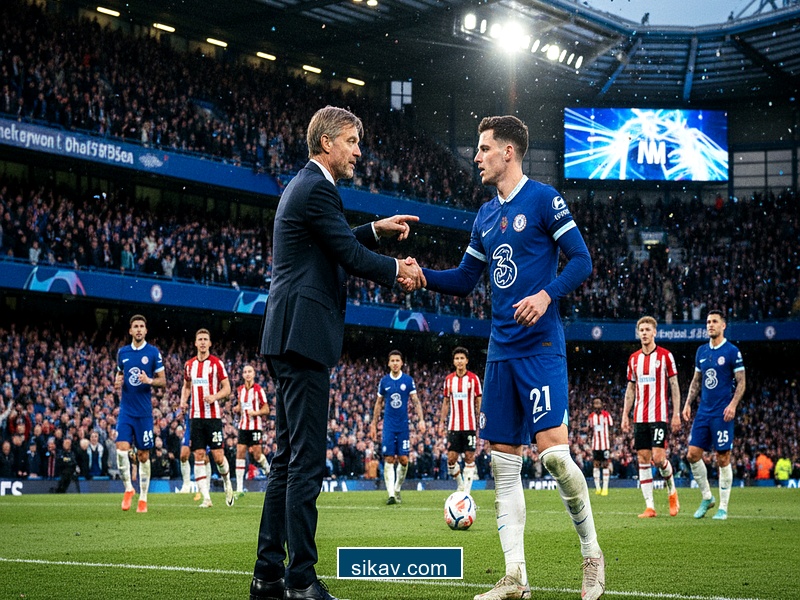
The Quote: "Football is a game you play with your brain. Your feet are just the tools." — Johan Cruyff.
Cruyff’s maxim usually applies to tactical genius or spatial awareness on the pitch. But in 2009, deep within the fortified walls of Stamford Bridge, Roman Abramovich applied it to something far more abstract: the spiritual and mental state of his billion-pound assets. When Vinay Menon walked into a west London mansion for a meeting that would alter the trajectory of the Premier League, he didn't know who Didier Drogba was. He didn't know the offside rule. He was a wellness expert from India, completely unpolluted by the cynicism of English football.
Yet, weeks later, he was embedded in the most volatile dressing room in Europe. This wasn't just a quirky appointment; it was a calculated market inefficiency exploit by the Chelsea hierarchy. While rivals were obsessing over lactate thresholds and GPS data, Chelsea brought in a man to manage the souls of the players. Looking back, this appointment offers a rare glimpse into the "secret sauce" of the Abramovich era—a ruthless willingness to try anything, no matter how unorthodox, to secure silverware.
The Sanctuary in a Shark Tank
To understand the magnitude of Menon's integration, you have to understand the ecosystem of Chelsea circa 2009. This was the era of Player Power. John Terry, Frank Lampard, Ashley Cole, Petr Cech, Didier Drogba. These weren't just players; they were a politburo that had seen off Jose Mourinho, Avram Grant, and Luiz Felipe Scolari. The Cobham training ground was a shark tank.
"The dressing room is a sanctuary, but it is also a courtroom. You are judged instantly. If you are weak, you are eaten. If you are fake, you are ignored."
Menon surviving this environment is arguably as impressive as any trophy win. He offered something the managers couldn't: neutrality. In a high-stakes environment where a bad performance could cost you a contract extension, and a tactical disagreement could see you frozen out, Menon became the release valve. He wasn't there to critique their passing completion; he was there to help them breathe.
From an insider's perspective, this was asset protection at its finest. When you are paying players £150,000 a week, stress is a liability on the balance sheet. A stressed player gets injured. A stressed player misses penalties. By introducing breathing techniques, yoga, and mental conditioning, Chelsea wasn't just being "holistic"—they were maximizing the ROI on their wage bill.
Munich 2012: The Mental Edge
The payout on this investment came on a humid night in Munich in 2012. We all know the narrative: the underdog Chelsea, the interim manager Roberto Di Matteo, the formidable Bayern Munich playing in their own backyard. But look closer at the body language of that night.
Chelsea had been battered. They were missing key players through suspension. They went a goal down late on. In previous iterations of Chelsea, heads might have dropped. Panic might have set in. Instead, there was a strange, almost serene resilience. Drogba’s equalizer wasn't just technical brilliance; it was the act of a man with absolute clarity of mind.
- The "Noise" Factor: Bayern had the home crowd, the stats, and the momentum. Chelsea had to block that out internally.
- Penalty Shootout Composure: The ultimate test of breath control and heart rate management.
- Recovery: The mental fatigue of the semi-final against Barcelona would have broken lesser teams.
Menon was present through all of this. While the tactical coaches were screaming instructions, the "Adhyatma" (spiritual) element Menon introduced allowed the leaders of that team to find stillness in the chaos. When Drogba stepped up for the winning penalty, the preparation wasn't just about striking the ball; it was about silencing the 70,000 screaming Germans. That is the hidden value of the "mindset coach" that modern football is only now fully embracing.
The Modern Void: What Current Chelsea is Missing
Fast forward to the present day, and the contrast is stark. The Boehly-Clearlake era has been defined by frantic spending, algorithmic recruitment, and a revolving door of personnel. We see players signed on eight-year contracts, treated like amortized assets rather than human beings.
Does the current squad have a Menon figure? Is there a neutral sanctuary? The evidence on the pitch suggests otherwise. We see a team that crumbles under pressure, a squad prone to disciplinary lapses, and a general lack of the iron-clad mentality that defined the 2009-2015 era. You can buy the legs, but you cannot buy the headspace.
The Industrialization of Wellness
The market has shifted. What was innovative when Menon arrived is now standard practice, yet it feels more robotic. Every club has a Head of Performance Psychology. But the magic of the Menon appointment was his detachment from the sport. He wasn't a "football guy." He brought a perspective from outside the bubble.
Clubs today are filling these roles with data scientists and sports psychologists who grew up in the academy system. They speak the same language as the coaches. They are part of the machine. Menon was the ghost in the machine—an outlier who forced players to disconnect from the unrelenting pressure of the Premier League table.
The lesson here for the modern Director of Football is significant. In a game of marginal gains, the biggest edge isn't found in a heat map or a scouting report. It's found in the quiet moments before kickoff. It's found in the ability of a player to regulate their nervous system when the world is watching.
Chelsea, in their search for a new identity, would do well to remember that their greatest triumph wasn't just built on Russian roubles. It was built on a foundation of mental steel, forged in part by a man who didn't even know the rules of the game. Sometimes, the mo
The Quote: "Football is a game you play with your brain. Your feet are just the tools." — Johan Cruyff.
Cruyff’s maxim usually applies to tactical genius or spatial awareness on the pitch. But in 2009, deep within the fortified walls of Stamford Bridge, Roman Abramovich applied it to something far more abstract: the spiritual and mental state of his billion-pound assets. When Vinay Menon walked into a west London mansion for a meeting that would alter the trajectory of the Premier League, he didn't know who Didier Drogba was. He didn't know the offside rule. He was a wellness expert from India, completely unpolluted by the cynicism of English football.
Yet, weeks later, he was embedded in the most volatile dressing room in Europe. This wasn't just a quirky appointment; it was a calculated market inefficiency exploit by the Chelsea hierarchy. While rivals were obsessing over lactate thresholds and GPS data, Chelsea brought in a man to manage the souls of the players. Looking back, this appointment offers a rare glimpse into the "secret sauce" of the Abramovich era—a ruthless willingness to try anything, no matter how unorthodox, to secure silverware.
The Sanctuary in a Shark Tank
To understand the magnitude of Menon's integration, you have to understand the ecosystem of Chelsea circa 2009. This was the era of Player Power. John Terry, Frank Lampard, Ashley Cole, Petr Cech, Didier Drogba. These weren't just players; they were a politburo that had seen off Jose Mourinho, Avram Grant, and Luiz Felipe Scolari. The Cobham training ground was a shark tank.
"The dressing room is a sanctuary, but it is also a courtroom. You are judged instantly. If you are weak, you are eaten. If you are fake, you are ignored."
Menon surviving this environment is arguably as impressive as any trophy win. He offered something the managers couldn't: neutrality. In a high-stakes environment where a bad performance could cost you a contract extension, and a tactical disagreement could see you frozen out, Menon became the release valve. He wasn't there to critique their passing completion; he was there to help them breathe.
From an insider's perspective, this was asset protection at its finest. When you are paying players £150,000 a week, stress is a liability on the balance sheet. A stressed player gets injured. A stressed player misses penalties. By introducing breathing techniques, yoga, and mental conditioning, Chelsea wasn't just being "holistic"—they were maximizing the ROI on their wage bill.
Munich 2012: The Mental Edge
The payout on this investment came on a humid night in Munich in 2012. We all know the narrative: the underdog Chelsea, the interim manager Roberto Di Matteo, the formidable Bayern Munich playing in their own backyard. But look closer at the body language of that night.
Chelsea had been battered. They were missing key players through suspension. They went a goal down late on. In previous iterations of Chelsea, heads might have dropped. Panic might have set in. Instead, there was a strange, almost serene resilience. Drogba’s equalizer wasn't just technical brilliance; it was the act of a man with absolute clarity of mind.
- The "Noise" Factor: Bayern had the home crowd, the stats, and the momentum. Chelsea had to block that out internally.
- Penalty Shootout Composure: The ultimate test of breath control and heart rate management.
- Recovery: The mental fatigue of the semi-final against Barcelona would have broken lesser teams.
Menon was present through all of this. While the tactical coaches were screaming instructions, the "Adhyatma" (spiritual) element Menon introduced allowed the leaders of that team to find stillness in the chaos. When Drogba stepped up for the winning penalty, the preparation wasn't just about striking the ball; it was about silencing the 70,000 screaming Germans. That is the hidden value of the "mindset coach" that modern football is only now fully embracing.
The Modern Void: What Current Chelsea is Missing
Fast forward to the present day, and the contrast is stark. The Boehly-Clearlake era has been defined by frantic spending, algorithmic recruitment, and a revolving door of personnel. We see players signed on eight-year contracts, treated like amortized assets rather than human beings.
Does the current squad have a Menon figure? Is there a neutral sanctuary? The evidence on the pitch suggests otherwise. We see a team that crumbles under pressure, a squad prone to disciplinary lapses, and a general lack of the iron-clad mentality that defined the 2009-2015 era. You can buy the legs, but you cannot buy the headspace.
The Industrialization of Wellness
The market has shifted. What was innovative when Menon arrived is now standard practice, yet it feels more robotic. Every club has a Head of Performance Psychology. But the magic of the Menon appointment was his detachment from the sport. He wasn't a "football guy." He brought a perspective from outside the bubble.
Clubs today are filling these roles with data scientists and sports psychologists who grew up in the academy system. They speak the same language as the coaches. They are part of the machine. Menon was the ghost in the machine—an outlier who forced players to disconnect from the unrelenting pressure of the Premier League table.
The lesson here for the modern Director of Football is significant. In a game of marginal gains, the biggest edge isn't found in a heat map or a scouting report. It's found in the quiet moments before kickoff. It's found in the ability of a player to regulate their nervous system when the world is watching.
Chelsea, in their search for a new identity, would do well to remember that their greatest triumph wasn't just built on Russian roubles. It was built on a foundation of mental steel, forged in part by a man who didn't even know the rules of the game. Sometimes, the mo