
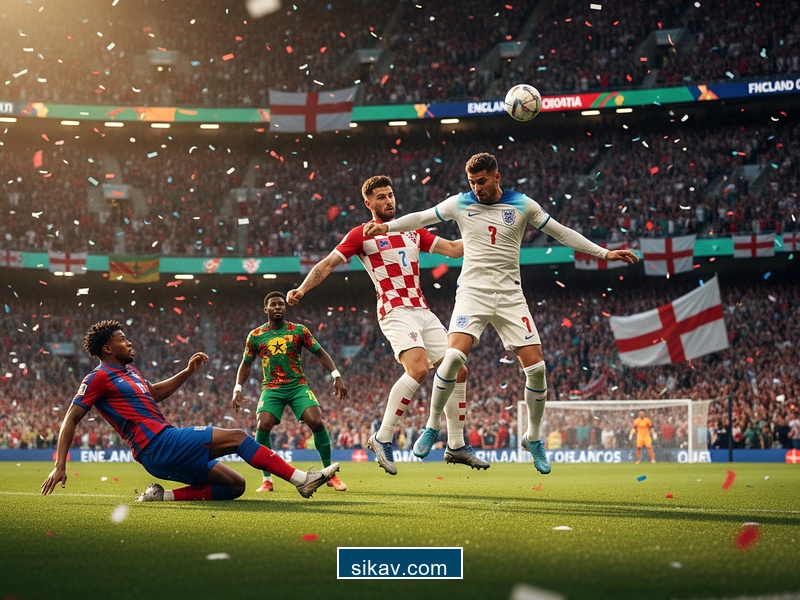
Is there a more uniquely masochistic ritual in modern sports than the English fan scrambling for the privilege of potential heartbreak? The ballot is open. The digital queues are forming. The credit cards are primed. And once again, the collective conscious of a nation is preparing to mortgage its emotional stability on a promise that has remained unfulfilled since 1966.
The news cycle is currently spinning the opening of the 2026 World Cup ticket ballot as a golden opportunity. "Get your tickets now," they say, as if attendance guarantees glory. But before we rush to book flights to the United States, Canada, and Mexico, perhaps it is time to strip away the patriotic fervor and ask the uncomfortable questions. We are looking at a campaign led by Thomas Tuchel, facing a group containing Croatia, Ghana, and Panama. On paper, it looks like a procession. In reality, it has all the makings of a classic English psychological collapse.
The Trap of the "Favorable" Draw
The immediate reaction to drawing Croatia, Ghana, and Panama was a sigh of relief. This reaction is the first mistake. If history has taught us anything about the Three Lions, it is that they are rarely undone by the titans of the game in the early stages; they are undone by their own hubris when facing opposition they believe they are entitled to beat.
Let’s look at the reality of this group, rather than the FIFA rankings.
- Croatia: The perennial overachievers. We love to write them off as an aging squad, yet they possess a tournament IQ that dwarfs England's. They held the psychological edge in 2018, and they know exactly how to frustrate a team that relies on pace and hype.
- Ghana: African football is currently undergoing a tactical renaissance. The Black Stars bring chaos, physicality, and a lack of fear. England historically struggles against teams that refuse to adhere to a structured European tempo.
- Panama: The wildcard. Yes, England thrashed them in 2018. But relying on a result from eight years prior is a dangerous game. In a North American World Cup, Panama is essentially playing at home compared to the traveling English circus.
Applying for tickets for these group games isn't just buying a seat; it's buying into a high-stakes gamble where the odds of a frustrating 0-0 draw or a shock defeat are significantly higher than the marketing brochures admit.
The Tuchel Experiment: Genius or mercenary?
The elephant in the room—or rather, the German in the dugout—is Thomas Tuchel. The narrative being pushed is that we have finally hired a "winner." After the vibes-based management of Gareth Southgate, we have pivoted to cold, hard tactical elitism. But is this actually what international football requires?
"We are trading cultural identity for a tactical mercenary. If Tuchel wins, he is a genius. If he fails, he is just another manager who took the FA's money and couldn't solve the English puzzle."
International management is less about complex pressing structures and more about man-management, creating a siege mentality, and simplifying the game for players exhausted by club schedules. Tuchel is a micro-manager. He is abrasive. He demands perfection.
What happens when the English media turns on him after a lackluster draw against Ghana? Southgate survived because he was diplomatic; he played the game. Tuchel fights fires with gasoline. By applying for the ballot, fans are essentially paying to watch a chemistry experiment that could explode in the laboratory. The collision between Tuchel’s rigid intensity and the English press's hysterical expectations will be the true spectacle of 2026.
The Logistics of "ending 60 Years of Hurt"
We need to address the phrase "ending 60 years of hurt." It has ceased to be a sporting ambition and has become a marketing slogan used to sell shirts and, in this case, expensive tickets to North America.
The Cost of Loyalty
This isn't a hop across the channel to Germany or France. This is a trans-Atlantic expedition. Fans successful in the ballot are looking at thousands of pounds in flights, accommodation in price-gouged American cities, and internal travel across a continent-sized tournament.
The FA and FIFA know that the English fan is a captive market. We pay the highest prices for kits, we travel in the largest numbers, and we complain the least about being exploited. Opening the ballot now, years in advance of the final feeling of the team, is a financial strategy, not a fan engagement tool. They want your commitment before you realize that the team might still be rebuilding, or that the "Golden Generation 2.0" (Bellingham, Foden, Saka) might be burnt out from playing 70 games a season.
A
Is there a more uniquely masochistic ritual in modern sports than the English fan scrambling for the privilege of potential heartbreak? The ballot is open. The digital queues are forming. The credit cards are primed. And once again, the collective conscious of a nation is preparing to mortgage its emotional stability on a promise that has remained unfulfilled since 1966.
The news cycle is currently spinning the opening of the 2026 World Cup ticket ballot as a golden opportunity. "Get your tickets now," they say, as if attendance guarantees glory. But before we rush to book flights to the United States, Canada, and Mexico, perhaps it is time to strip away the patriotic fervor and ask the uncomfortable questions. We are looking at a campaign led by Thomas Tuchel, facing a group containing Croatia, Ghana, and Panama. On paper, it looks like a procession. In reality, it has all the makings of a classic English psychological collapse.
The Trap of the "Favorable" Draw
The immediate reaction to drawing Croatia, Ghana, and Panama was a sigh of relief. This reaction is the first mistake. If history has taught us anything about the Three Lions, it is that they are rarely undone by the titans of the game in the early stages; they are undone by their own hubris when facing opposition they believe they are entitled to beat.
Let’s look at the reality of this group, rather than the FIFA rankings.
- Croatia: The perennial overachievers. We love to write them off as an aging squad, yet they possess a tournament IQ that dwarfs England's. They held the psychological edge in 2018, and they know exactly how to frustrate a team that relies on pace and hype.
- Ghana: African football is currently undergoing a tactical renaissance. The Black Stars bring chaos, physicality, and a lack of fear. England historically struggles against teams that refuse to adhere to a structured European tempo.
- Panama: The wildcard. Yes, England thrashed them in 2018. But relying on a result from eight years prior is a dangerous game. In a North American World Cup, Panama is essentially playing at home compared to the traveling English circus.
Applying for tickets for these group games isn't just buying a seat; it's buying into a high-stakes gamble where the odds of a frustrating 0-0 draw or a shock defeat are significantly higher than the marketing brochures admit.
The Tuchel Experiment: Genius or mercenary?
The elephant in the room—or rather, the German in the dugout—is Thomas Tuchel. The narrative being pushed is that we have finally hired a "winner." After the vibes-based management of Gareth Southgate, we have pivoted to cold, hard tactical elitism. But is this actually what international football requires?
"We are trading cultural identity for a tactical mercenary. If Tuchel wins, he is a genius. If he fails, he is just another manager who took the FA's money and couldn't solve the English puzzle."
International management is less about complex pressing structures and more about man-management, creating a siege mentality, and simplifying the game for players exhausted by club schedules. Tuchel is a micro-manager. He is abrasive. He demands perfection.
What happens when the English media turns on him after a lackluster draw against Ghana? Southgate survived because he was diplomatic; he played the game. Tuchel fights fires with gasoline. By applying for the ballot, fans are essentially paying to watch a chemistry experiment that could explode in the laboratory. The collision between Tuchel’s rigid intensity and the English press's hysterical expectations will be the true spectacle of 2026.
The Logistics of "ending 60 Years of Hurt"
We need to address the phrase "ending 60 years of hurt." It has ceased to be a sporting ambition and has become a marketing slogan used to sell shirts and, in this case, expensive tickets to North America.
The Cost of Loyalty
This isn't a hop across the channel to Germany or France. This is a trans-Atlantic expedition. Fans successful in the ballot are looking at thousands of pounds in flights, accommodation in price-gouged American cities, and internal travel across a continent-sized tournament.
The FA and FIFA know that the English fan is a captive market. We pay the highest prices for kits, we travel in the largest numbers, and we complain the least about being exploited. Opening the ballot now, years in advance of the final feeling of the team, is a financial strategy, not a fan engagement tool. They want your commitment before you realize that the team might still be rebuilding, or that the "Golden Generation 2.0" (Bellingham, Foden, Saka) might be burnt out from playing 70 games a season.