
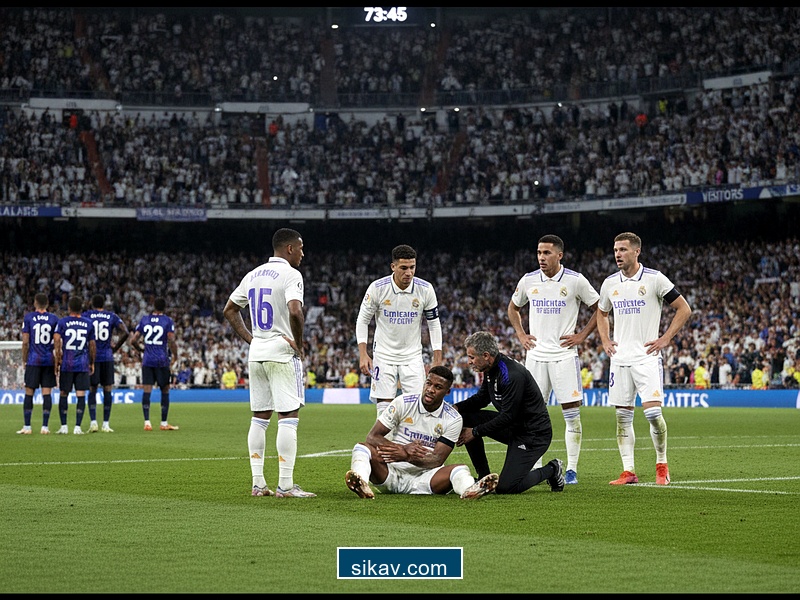
Five years ago, Trent Alexander-Arnold was the indestructible piston in Jürgen Klopp’s heavy metal machine, a local lad redefining a position on the rainy banks of the Mersey, seemingly impervious to the wear and tear of the Premier League. Today, he finds himself in the sanitized, clinical whiteness of the Sanitas La Moraleja hospital, another foreign star grounded by the brutal physical demands of the Spanish capital, staring down the barrel of a two-month hiatus.
The news that the England international has sustained a significant thigh injury during Real Madrid's victory over Athletic Club is not merely a tactical inconvenience for Carlo Ancelotti; it is a recurring motif in the grand opera of Real Madrid. It is a storyline we have read before, etched into the careers of Gareth Bale, Eden Hazard, and Jonathan Woodgate. The transition from the frenetic energy of English football to the technical, yet physically deceptive rigors of La Liga often exacts a toll, and Alexander-Arnold is the latest to pay the bill.
The Curse of the Galáctico Recruit
When Florentino Pérez sanctions a move for a Premier League superstar, the excitement is palpable, yet history warns us to hold our breath. The confirmation from Madrid’s medical staff that Alexander-Arnold will miss approximately eight weeks strikes a dissonant chord. We are reminded immediately of the ghosts of the past. One cannot help but look back to the arrival of Jonathan Woodgate, a defender of immense pedigree whose body simply refused to cooperate with the weight of the white jersey.
While Trent’s situation is far less severe than the tragedies of Woodgate or the lingering sadness of Hazard’s decline, the timing is perilous. Athletic Club, historically one of the most physically demanding opponents in Spain, has always been a litmus test for a new signing's durability. The San Mamés—or even a home fixture against the Lions—is a battleground. To fall there is almost a rite of passage, but to vanish for two months in the middle of the campaign disrupts the very rhythm the team was beginning to find.
"The Bernabéu is a theater that demands constant presence. Absence, in Madrid, is rarely just a medical issue; it becomes an existential crisis for the player involved."
The Void on the Right Flank
To understand the gravity of this loss, one must look at the lineage of the right-back position at Real Madrid. For over a decade, this was the private property of Dani Carvajal. He was the warrior, the defensive staunch, the man who understood the DNA of the club. Alexander-Arnold was brought in not just to replace him, but to evolve the role—to turn the right-back into a quarterback, a playmaker operating from the touchline.
Removing him for two months forces a tactical regression. We are not just losing a defender; we are losing the primary progressor of the ball. The historical parallel here is intriguing. Think back to the mid-2000s when Michel Salgado began to fade. Madrid struggled for years to find the perfect balance between grit and flair until Carvajal matured. Now, in trying to move to the next epoch of "Total Football" with Trent, the chain has snapped.
Who Steps Into the Breach?
The squad depth will now be tested in a way that recalls the makeshift defenses of the 2020-21 season under Zidane, where injuries decimated the backline. The options are familiar, perhaps too familiar for a fanbase craving the new era:
- Lucas Vázquez: The eternal soldier. A winger converted to a fullback, much like Juanfran at Atletico years ago. He offers heart and running, but lacks Trent's laser-guided distribution.
- Fede Valverde: The Uruguayan engine could be forced to retreat from midfield to cover the flank, a move that robs the engine room of its dynamism—a classic case of robbing Peter to pay Paul.
- Eder Militão: Shifting a center-back wide. This harkens back to the days of Sergio Ramos playing right-back in his youth, providing defensive solidity but nullifying the attacking width.
The Implications of Absence
Two months in the football calendar is an eternity. In previous eras, a player could miss eight weeks and return to find the landscape relatively unchanged. In the modern game, with the congested fixture list orchestrated by UEFA and FIFA, eight weeks could mean missing 12 to 14 matches. We are talking about critical Champions League group stage ties (or the new Swiss model equivalents) and pivotal La Liga encounters that often decide the title race before Christmas.
This injury does more than weaken the XI; it threatens the adaptation process. The history of British players in Spain suggests that the first year is vital for integration—learning the language, the culture, and the specific demands of the refereeing. Michael Owen scored goals but never truly settled; David Beckham worked tirelessly but arrived during a chaotic decline. Jude Bellingham bucked the trend by starting like a supernova, but Trent Alexander-Arnold now faces the lonely rehabilitation hours that Gareth Bale knew too well.
Can he return the same player? The thigh is a tricky muscle for a kicker of the ball. Trent’s game is built on explosive whipping motions—those cross-field diagonals that split defenses. A thigh injury lingers in the mind of a passer. Will he hesitate to strike the ball with that trademark ferocity upon his return? We saw similar hesitations with Kaká during his injury-plagued spell in Madrid; the mind was willing, but the body whispered caution.
A Test of Resolve
Real Madrid is a club that does not wait for anyone. The train moves at full speed, regardless of who has fallen off the wagon. This injury places Alexander-Arnold at a crossroads early in his Spanish adventure. He can look to the resilience of Luka Modrić, who was voted the worst signing of the season in his debut year before becoming a legend, or he can let the frustration of the medical room define his tenure.
<p style="font-size: 1.125rem; line-heighFive years ago, Trent Alexander-Arnold was the indestructible piston in Jürgen Klopp’s heavy metal machine, a local lad redefining a position on the rainy banks of the Mersey, seemingly impervious to the wear and tear of the Premier League. Today, he finds himself in the sanitized, clinical whiteness of the Sanitas La Moraleja hospital, another foreign star grounded by the brutal physical demands of the Spanish capital, staring down the barrel of a two-month hiatus.
The news that the England international has sustained a significant thigh injury during Real Madrid's victory over Athletic Club is not merely a tactical inconvenience for Carlo Ancelotti; it is a recurring motif in the grand opera of Real Madrid. It is a storyline we have read before, etched into the careers of Gareth Bale, Eden Hazard, and Jonathan Woodgate. The transition from the frenetic energy of English football to the technical, yet physically deceptive rigors of La Liga often exacts a toll, and Alexander-Arnold is the latest to pay the bill.
The Curse of the Galáctico Recruit
When Florentino Pérez sanctions a move for a Premier League superstar, the excitement is palpable, yet history warns us to hold our breath. The confirmation from Madrid’s medical staff that Alexander-Arnold will miss approximately eight weeks strikes a dissonant chord. We are reminded immediately of the ghosts of the past. One cannot help but look back to the arrival of Jonathan Woodgate, a defender of immense pedigree whose body simply refused to cooperate with the weight of the white jersey.
While Trent’s situation is far less severe than the tragedies of Woodgate or the lingering sadness of Hazard’s decline, the timing is perilous. Athletic Club, historically one of the most physically demanding opponents in Spain, has always been a litmus test for a new signing's durability. The San Mamés—or even a home fixture against the Lions—is a battleground. To fall there is almost a rite of passage, but to vanish for two months in the middle of the campaign disrupts the very rhythm the team was beginning to find.
"The Bernabéu is a theater that demands constant presence. Absence, in Madrid, is rarely just a medical issue; it becomes an existential crisis for the player involved."
The Void on the Right Flank
To understand the gravity of this loss, one must look at the lineage of the right-back position at Real Madrid. For over a decade, this was the private property of Dani Carvajal. He was the warrior, the defensive staunch, the man who understood the DNA of the club. Alexander-Arnold was brought in not just to replace him, but to evolve the role—to turn the right-back into a quarterback, a playmaker operating from the touchline.
Removing him for two months forces a tactical regression. We are not just losing a defender; we are losing the primary progressor of the ball. The historical parallel here is intriguing. Think back to the mid-2000s when Michel Salgado began to fade. Madrid struggled for years to find the perfect balance between grit and flair until Carvajal matured. Now, in trying to move to the next epoch of "Total Football" with Trent, the chain has snapped.
Who Steps Into the Breach?
The squad depth will now be tested in a way that recalls the makeshift defenses of the 2020-21 season under Zidane, where injuries decimated the backline. The options are familiar, perhaps too familiar for a fanbase craving the new era:
- Lucas Vázquez: The eternal soldier. A winger converted to a fullback, much like Juanfran at Atletico years ago. He offers heart and running, but lacks Trent's laser-guided distribution.
- Fede Valverde: The Uruguayan engine could be forced to retreat from midfield to cover the flank, a move that robs the engine room of its dynamism—a classic case of robbing Peter to pay Paul.
- Eder Militão: Shifting a center-back wide. This harkens back to the days of Sergio Ramos playing right-back in his youth, providing defensive solidity but nullifying the attacking width.
The Implications of Absence
Two months in the football calendar is an eternity. In previous eras, a player could miss eight weeks and return to find the landscape relatively unchanged. In the modern game, with the congested fixture list orchestrated by UEFA and FIFA, eight weeks could mean missing 12 to 14 matches. We are talking about critical Champions League group stage ties (or the new Swiss model equivalents) and pivotal La Liga encounters that often decide the title race before Christmas.
This injury does more than weaken the XI; it threatens the adaptation process. The history of British players in Spain suggests that the first year is vital for integration—learning the language, the culture, and the specific demands of the refereeing. Michael Owen scored goals but never truly settled; David Beckham worked tirelessly but arrived during a chaotic decline. Jude Bellingham bucked the trend by starting like a supernova, but Trent Alexander-Arnold now faces the lonely rehabilitation hours that Gareth Bale knew too well.
Can he return the same player? The thigh is a tricky muscle for a kicker of the ball. Trent’s game is built on explosive whipping motions—those cross-field diagonals that split defenses. A thigh injury lingers in the mind of a passer. Will he hesitate to strike the ball with that trademark ferocity upon his return? We saw similar hesitations with Kaká during his injury-plagued spell in Madrid; the mind was willing, but the body whispered caution.
A Test of Resolve
Real Madrid is a club that does not wait for anyone. The train moves at full speed, regardless of who has fallen off the wagon. This injury places Alexander-Arnold at a crossroads early in his Spanish adventure. He can look to the resilience of Luka Modrić, who was voted the worst signing of the season in his debut year before becoming a legend, or he can let the frustration of the medical room define his tenure.
<p style="font-size: 1.125rem; line-heigh