
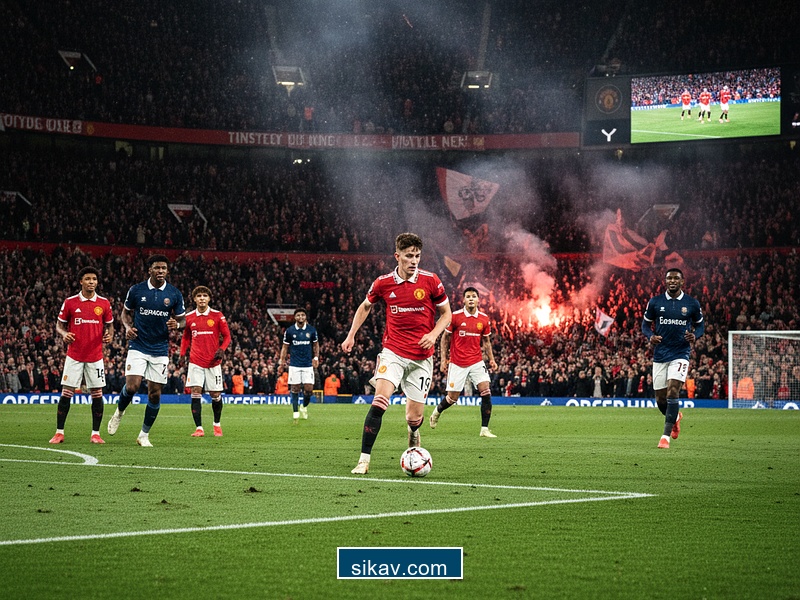
Six weeks ago, Luke Littler was a quiet teenager in Warrington, his world confined to the rhythmic thud of tungsten on sisal and the anonymity of a normal adolescence. Today, he is a national totem, a viral sensation who stands in the most coveted seats in English football, watching his boyhood club, Manchester United, enact a Shakespearean drama against Wolverhampton Wanderers. This specific contrast—between the boy who was invisible and the icon who is now omnipresent—lies at the heart of a debate that has set social media ablaze.
Football, at its core, is a narrative of belonging. But when the doors of the exclusive away end swing open for a celebrity newcomer while slamming shut on the weathered veterans of the loyalty point system, the story takes a darker, more complex turn. We love the hero’s journey, and Littler’s run to the World Darts Championship final was nothing short of mythical. Yet, his presence at Molineux on that chaotic Monday night asks uncomfortable questions about privilege, loyalty, and the currency of modern fame.
The Golden Ticket and the Closed Shop
To understand the fury, you must first understand the battlefield. For the uninitiated, a Manchester United away ticket is not merely a piece of paper; it is an artifact of immense rarity, akin to finding a Fabergé egg in a discount bin. It is the Holy Grail. The away end is the soul of the club—a travelling army of die-hards who have crisscrossed the country on wet Tuesday nights, accruing credits in a system that demands absolute devotion over decades.
Then there is Luke Littler. The 17-year-old prodigy posted a photo from the stands as United edged Wolves 4-3 in a stoppage-time thriller. For the fan who has applied for every ballot for ten years and received nothing but rejection emails, seeing a teenager—however talented at darts—waltz into Molineux feels like a betrayal of the sacred covenant between club and supporter.
"It’s not about begrudging a young lad a good time. It’s about the message it sends. Does viral fame trump twenty years of standing in the rain at Selhurst Park?"
The debate isn't truly about Littler. He is simply the lightning rod. He is the protagonist in a story about how football clubs view their hierarchy of customers. Is the fan who pays their season ticket year after year the hero? Or are they merely the background extras, while the celebrities and influencers take the lead roles?
The Mechanics of the Miracle
So, how did the "Nuke" breach the fortress? It wasn't through the ballot. In the world of elite sports, doors open differently when you carry the weight of public adoration.
- The Player Connection: Littler has been embraced by the United squad. Harry Maguire and Luke Shaw were reportedly among those cheering him on during his Ally Pally run. Players receive allocations; they are the gatekeepers to the inner sanctum.
- The Corporate Machine: United are a commercial juggernaut. Associating with the biggest sports story of the winter is a branding no-brainer. Inviting Littler isn't just a nice gesture; it's a strategic alignment of narratives.
- The Media Spotlight: When you are on the front page of every tabloid, you do not queue. You are escorted.
While the mechanism is understandable from a PR perspective, it strikes a dissonant chord. It highlights a two-tier system: the Meritocracy of the Fan, where you earn your stripes through suffering and expense, and the Aristocracy of Fame, where access is granted as a perk of status. This is where the tragedy lies for the traditional supporter—the realization that their loyalty is a commodity that has been devalued.
A Tale of Two Teenagers
Yet, amidst the cynicism, there was a poetic symmetry to that night at Molineux. While Littler watched from the stands, another 18-year-old, Kobbie Mainoo, was on the pitch creating his own legend. When Mainoo curled that 97th-minute winner into the bottom corner, sending the away end into a feral delirium, the narrative arc completed itself.
Here were two working-class boys, thrust into the blinding limelight, navigating the treacherous waters of sudden superstardom. One was the spectator, the other the gladiator. In that moment of euphoria, the debate about ticket allocation momentarily dissolved into the pure, unadulterated chaos of celebration.
The Verdict: Villain or Victim?
We cannot blame Luke Littler. If Manchester United offered you a ticket to Molineux, would y
Six weeks ago, Luke Littler was a quiet teenager in Warrington, his world confined to the rhythmic thud of tungsten on sisal and the anonymity of a normal adolescence. Today, he is a national totem, a viral sensation who stands in the most coveted seats in English football, watching his boyhood club, Manchester United, enact a Shakespearean drama against Wolverhampton Wanderers. This specific contrast—between the boy who was invisible and the icon who is now omnipresent—lies at the heart of a debate that has set social media ablaze.
Football, at its core, is a narrative of belonging. But when the doors of the exclusive away end swing open for a celebrity newcomer while slamming shut on the weathered veterans of the loyalty point system, the story takes a darker, more complex turn. We love the hero’s journey, and Littler’s run to the World Darts Championship final was nothing short of mythical. Yet, his presence at Molineux on that chaotic Monday night asks uncomfortable questions about privilege, loyalty, and the currency of modern fame.
The Golden Ticket and the Closed Shop
To understand the fury, you must first understand the battlefield. For the uninitiated, a Manchester United away ticket is not merely a piece of paper; it is an artifact of immense rarity, akin to finding a Fabergé egg in a discount bin. It is the Holy Grail. The away end is the soul of the club—a travelling army of die-hards who have crisscrossed the country on wet Tuesday nights, accruing credits in a system that demands absolute devotion over decades.
Then there is Luke Littler. The 17-year-old prodigy posted a photo from the stands as United edged Wolves 4-3 in a stoppage-time thriller. For the fan who has applied for every ballot for ten years and received nothing but rejection emails, seeing a teenager—however talented at darts—waltz into Molineux feels like a betrayal of the sacred covenant between club and supporter.
"It’s not about begrudging a young lad a good time. It’s about the message it sends. Does viral fame trump twenty years of standing in the rain at Selhurst Park?"
The debate isn't truly about Littler. He is simply the lightning rod. He is the protagonist in a story about how football clubs view their hierarchy of customers. Is the fan who pays their season ticket year after year the hero? Or are they merely the background extras, while the celebrities and influencers take the lead roles?
The Mechanics of the Miracle
So, how did the "Nuke" breach the fortress? It wasn't through the ballot. In the world of elite sports, doors open differently when you carry the weight of public adoration.
- The Player Connection: Littler has been embraced by the United squad. Harry Maguire and Luke Shaw were reportedly among those cheering him on during his Ally Pally run. Players receive allocations; they are the gatekeepers to the inner sanctum.
- The Corporate Machine: United are a commercial juggernaut. Associating with the biggest sports story of the winter is a branding no-brainer. Inviting Littler isn't just a nice gesture; it's a strategic alignment of narratives.
- The Media Spotlight: When you are on the front page of every tabloid, you do not queue. You are escorted.
While the mechanism is understandable from a PR perspective, it strikes a dissonant chord. It highlights a two-tier system: the Meritocracy of the Fan, where you earn your stripes through suffering and expense, and the Aristocracy of Fame, where access is granted as a perk of status. This is where the tragedy lies for the traditional supporter—the realization that their loyalty is a commodity that has been devalued.
A Tale of Two Teenagers
Yet, amidst the cynicism, there was a poetic symmetry to that night at Molineux. While Littler watched from the stands, another 18-year-old, Kobbie Mainoo, was on the pitch creating his own legend. When Mainoo curled that 97th-minute winner into the bottom corner, sending the away end into a feral delirium, the narrative arc completed itself.
Here were two working-class boys, thrust into the blinding limelight, navigating the treacherous waters of sudden superstardom. One was the spectator, the other the gladiator. In that moment of euphoria, the debate about ticket allocation momentarily dissolved into the pure, unadulterated chaos of celebration.
The Verdict: Villain or Victim?
We cannot blame Luke Littler. If Manchester United offered you a ticket to Molineux, would y