
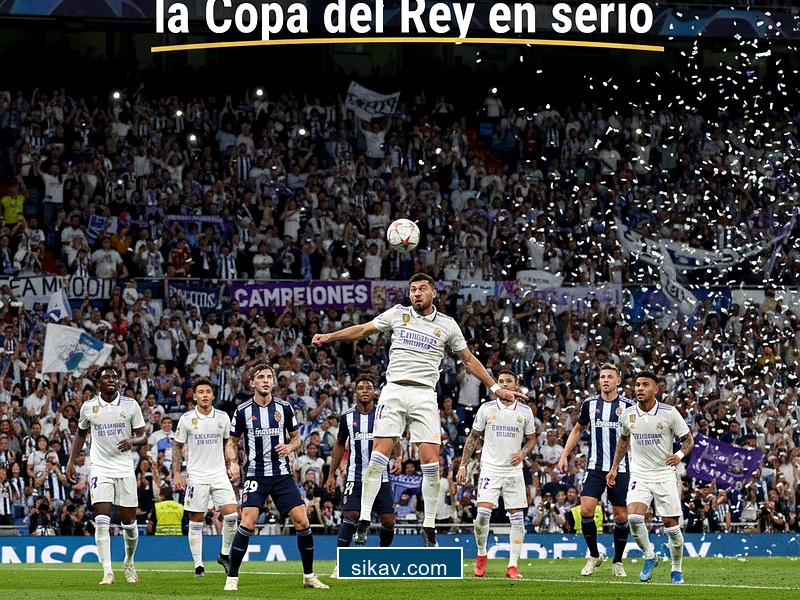
The Bold Claim: Real Madrid has spent the better part of a decade treating the Copa del Rey with the same enthusiasm a teenager reserves for a 7:00 AM dental appointment. For years, this competition was an afterthought, a laboratory for rotation, and frequently, the stage for embarrassing exits against third-tier opposition. However, the grueling performance to eliminate Real Sociedad is not merely a semi-final victory; it is an admission that the hierarchy of silverware at the Santiago Bernabéu has been forcibly restructured by the tactical reality of modern football. The arrogance of prioritizing only the Champions League is dead; tactical pragmatism has taken its place.
The Anatomy of "Sobreesfuerzo"
The snippet from Marca uses a very specific, loaded term: "sobreesfuerzo" (huge over-effort). To the casual observer, this suggests simple hard work. To the analyst, this signals a deviation from the standard operating procedure. Real Madrid usually prefers to control games through technical superiority or chaotic bursts of transition. Against a Real Sociedad side structured by Imanol Alguacil—arguably the most intense pressing unit in Spain—technical arrogance is a death sentence.
To dismantle La Real, Madrid had to abandon the tuxedo and put on the overalls. The data likely points to a significant spike in "distance covered without possession." When you play against a team that utilizes a high defensive line and aggressively constricts the midfield pivots, you cannot simply pass around them. You have to run through them, or more exhaustingly, chase them.
"The 'over-effort' wasn't an accident; it was the tactical cost of doing business against a system designed to suffocate creativity."
This physical toll suggests that the coaching staff identified the Copa del Rey not as a secondary objective, but as a primary tactical battleground. They were willing to burn the team's red-zone energy reserves mid-week. Why? Because the modern game doesn't allow for passengers. You cannot coast into a final anymore.
Breaking the Press: A Structural Analysis
Real Sociedad’s failure to reach their third Copa del Rey final is less about their deficiencies and more about Madrid’s adaptation. Alguacil’s side thrives on forcing turnovers in the central corridor. They trap you.
Madrid’s counter-approach relied on bypassing the midfield compression. We saw a shift from patient build-up to direct verticality. By stretching the pitch, Madrid forced Sociedad’s back line to retreat, creating pockets of space that simply shouldn't exist against such a disciplined team. This requires high-intensity sprinting from the forward line and immense physical resilience from the midfield engine room to cover the transitions.
- Defensive Solidity: Collapsing into a 4-4-2 low block when possession was lost, denying La Real the half-spaces they crave.
- Transition Speed: Utilizing vertical passes to bypass the first line of pressure immediately, increasing the tempo beyond what is sustainable for 90 minutes (hence the fatigue).
- Physical Duels: Winning the second balls—a metric often ignored by purists but essential in knockout football.
The Strategic Implications of the "Serious" Cup Run
What does this mean for the remainder of the season? This is where the analysis must look beyond the scoresheet. By committing such physical resources to the Copa del Rey, Real Madrid is making a calculated gamble with their squad depth.
The Rotation Myth
Historically, Ancelotti or any Madrid manager would rotate heavily in the earlier rounds and even the semis. This performance proves that the "A-Team" is now required to navigate domestic cups. This shrinks the margin for error in La Liga and the Champions League. The "sobreesfuerzo" against La Real implies that recovery times will be the defining metric of the next month. We are moving from tactical management to load management.
If you look at the accumulation of minutes, the spine of the team is being redlined. The decision to go "all in" on the Cup suggests a realization that trophies are scarce commodities. In an era where state-owned clubs dominate the market and the league is a grueling marathon of consistency, the Copa del Rey has appreciated in value. It is no longer a consolation prize; it is a necessity for stability.
The Final Verdict
Real Madrid reaching the final is not the news. The news is
The Bold Claim: Real Madrid has spent the better part of a decade treating the Copa del Rey with the same enthusiasm a teenager reserves for a 7:00 AM dental appointment. For years, this competition was an afterthought, a laboratory for rotation, and frequently, the stage for embarrassing exits against third-tier opposition. However, the grueling performance to eliminate Real Sociedad is not merely a semi-final victory; it is an admission that the hierarchy of silverware at the Santiago Bernabéu has been forcibly restructured by the tactical reality of modern football. The arrogance of prioritizing only the Champions League is dead; tactical pragmatism has taken its place.
The Anatomy of "Sobreesfuerzo"
The snippet from Marca uses a very specific, loaded term: "sobreesfuerzo" (huge over-effort). To the casual observer, this suggests simple hard work. To the analyst, this signals a deviation from the standard operating procedure. Real Madrid usually prefers to control games through technical superiority or chaotic bursts of transition. Against a Real Sociedad side structured by Imanol Alguacil—arguably the most intense pressing unit in Spain—technical arrogance is a death sentence.
To dismantle La Real, Madrid had to abandon the tuxedo and put on the overalls. The data likely points to a significant spike in "distance covered without possession." When you play against a team that utilizes a high defensive line and aggressively constricts the midfield pivots, you cannot simply pass around them. You have to run through them, or more exhaustingly, chase them.
"The 'over-effort' wasn't an accident; it was the tactical cost of doing business against a system designed to suffocate creativity."
This physical toll suggests that the coaching staff identified the Copa del Rey not as a secondary objective, but as a primary tactical battleground. They were willing to burn the team's red-zone energy reserves mid-week. Why? Because the modern game doesn't allow for passengers. You cannot coast into a final anymore.
Breaking the Press: A Structural Analysis
Real Sociedad’s failure to reach their third Copa del Rey final is less about their deficiencies and more about Madrid’s adaptation. Alguacil’s side thrives on forcing turnovers in the central corridor. They trap you.
Madrid’s counter-approach relied on bypassing the midfield compression. We saw a shift from patient build-up to direct verticality. By stretching the pitch, Madrid forced Sociedad’s back line to retreat, creating pockets of space that simply shouldn't exist against such a disciplined team. This requires high-intensity sprinting from the forward line and immense physical resilience from the midfield engine room to cover the transitions.
- Defensive Solidity: Collapsing into a 4-4-2 low block when possession was lost, denying La Real the half-spaces they crave.
- Transition Speed: Utilizing vertical passes to bypass the first line of pressure immediately, increasing the tempo beyond what is sustainable for 90 minutes (hence the fatigue).
- Physical Duels: Winning the second balls—a metric often ignored by purists but essential in knockout football.
The Strategic Implications of the "Serious" Cup Run
What does this mean for the remainder of the season? This is where the analysis must look beyond the scoresheet. By committing such physical resources to the Copa del Rey, Real Madrid is making a calculated gamble with their squad depth.
The Rotation Myth
Historically, Ancelotti or any Madrid manager would rotate heavily in the earlier rounds and even the semis. This performance proves that the "A-Team" is now required to navigate domestic cups. This shrinks the margin for error in La Liga and the Champions League. The "sobreesfuerzo" against La Real implies that recovery times will be the defining metric of the next month. We are moving from tactical management to load management.
If you look at the accumulation of minutes, the spine of the team is being redlined. The decision to go "all in" on the Cup suggests a realization that trophies are scarce commodities. In an era where state-owned clubs dominate the market and the league is a grueling marathon of consistency, the Copa del Rey has appreciated in value. It is no longer a consolation prize; it is a necessity for stability.
The Final Verdict
Real Madrid reaching the final is not the news. The news is