
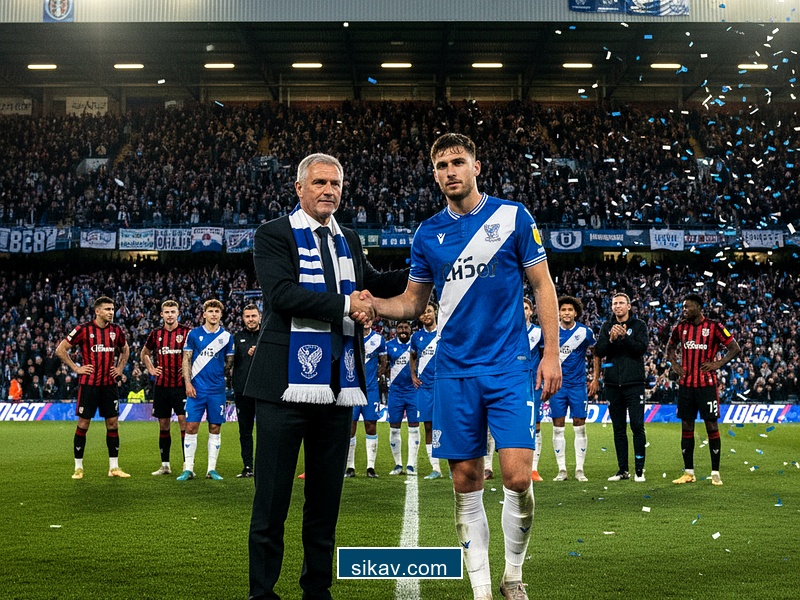
The Scene: The Victoria Ground does not possess the towering stands of Ewood Park, nor do its floodlights pierce the Lancashire mist quite like those of the mid-1990s. Here, the air carries the biting chill of the West Midlands, and the crowd noise is not a roar, but a distinct collection of individual shouts, groans, and urgings. It is in this raw, unvarnished theatre of the Southern League Premier Central that a man who once lifted the most coveted trophy in English football prepares to stand in the dugout. The scent of deep heat and wet earth remains the same, regardless of the tier, and it is that intoxicating aroma that has lured Tim Flowers back into the fray for the twelfth time.
A Shadow of the Golden Era
To understand the magnitude of this appointment, one must look backward through the lens of history. To the modern observer, Tim Flowers is a journeyman manager, a familiar face on the non-league circuit. But to those of us who watched the Premier League in its embryonic, chaotic glory, he represents something far greater. He was the bedrock of Jack Walker’s dream.
In 1995, football was undergoing a seismic shift. The grip of Manchester United was being challenged not by a state-owned entity, but by a local steel magnate and a Scottish King, Kenny Dalglish. While Alan Shearer and Chris Sutton—the infamous SAS—garnered the headlines and the glory, it was Flowers who often preserved the points. He was, at that time, the most expensive goalkeeper in Britain, a £2.4 million investment that paid dividends in silverware.
"Goalkeepers are the lone wolves of the game. They see the field differently, and perhaps that is why so many struggle to transition that singular vision into the collective management of a squad. Yet, Flowers refuses to leave the pack."
His return to the dugout at Bromsgrove is a stark reminder of the game's relentless evolution. The 58-year-old is not resting on the laurels of that title win, nor his 11 England caps. Instead, he is stepping into a relegation dogfight in the seventh tier of English football. It speaks to a specific kind of madness inherent in football men—a refusal to let the silence of retirement take hold.
The Rouslers’ Rescue Mission
Bromsgrove Sporting find themselves in a position that requires immediate pragmatism rather than philosophical rebuilding. The dismissal of Scott Adey-Linforth was brutal but predictable, the inevitable consequence of a slide toward oblivion. The statistics paint a grim picture of the task awaiting Flowers:
- Current Position: 17th in the Southern League Premier Central.
- The Gap: A mere two points separating them from the relegation zone.
- Recent Form: A damaging 2-1 defeat to Stratford Town that sealed the previous manager's fate.
This is not a project for a tactician obsessed with passing lanes and high presses; this is a job for a motivator, a distinct personality who can organize a defense and instill belief. The club’s statement was brief, noting only the parting of ways with Adey-Linforth and his assistant, but the subtext is screaming: Save us.
The Managerial Merry-Go-Round
Why Bromsgrove? And perhaps more pertinently, why Flowers? This marks his 12th managerial appointment. His CV is a winding road through the lower leagues: Solihull Moors, Macclesfield Town, Barnet, Stratford Town, Gloucester City, and Redditch United, to name a few. It is a far cry from the stability he enjoyed as a player at Southampton or Blackburn.
There is a tendency in modern football analysis to look down upon the "journeyman manager." We fetishize the young coach with the iPad and the philosophy. But history tells us there is immense value in the firefighter. Flowers knows the geography of non-league football intimately. He knows the budget constraints, the muddy pitches, and the character required to grind out a 1-0 win on a Tuesday night in February.
However, the skepticism is valid. Constant movement between clubs can suggest a difficulty in building long-term projects. His tenure at Barnet was fraught with difficulty, and his time at Gloucester was brief. The question for the Rouslers’ faithful is whether they are getting the shrewd operator who guided Solihull Moors to a second-place finish, or the man who has struggled to find a permanent home in the dugout since.
The Weight of Experience
When a player of Flowers’ pedigree walks into a dressing room at Step 3, the dynamic shifts immediately. Young players look at him and see the medals, the England caps, the history. Instant respect is the currency he brings to the table. But respect does not clear lines, and it does not score goals.
The tactical landscape of the Southern League Premier Central is unforgiving. It is a league of attrition. Bromsgrove’s precarious position suggests a defensive frailty that a former world-class goalkeeper should, in theory, be uniquely equipped to solve. If he can transmit even a fraction of the defensive organization that Kenny Dalglish instilled in that Blackburn side, Bromsgrove will survive.<
The Scene: The Victoria Ground does not possess the towering stands of Ewood Park, nor do its floodlights pierce the Lancashire mist quite like those of the mid-1990s. Here, the air carries the biting chill of the West Midlands, and the crowd noise is not a roar, but a distinct collection of individual shouts, groans, and urgings. It is in this raw, unvarnished theatre of the Southern League Premier Central that a man who once lifted the most coveted trophy in English football prepares to stand in the dugout. The scent of deep heat and wet earth remains the same, regardless of the tier, and it is that intoxicating aroma that has lured Tim Flowers back into the fray for the twelfth time.
A Shadow of the Golden Era
To understand the magnitude of this appointment, one must look backward through the lens of history. To the modern observer, Tim Flowers is a journeyman manager, a familiar face on the non-league circuit. But to those of us who watched the Premier League in its embryonic, chaotic glory, he represents something far greater. He was the bedrock of Jack Walker’s dream.
In 1995, football was undergoing a seismic shift. The grip of Manchester United was being challenged not by a state-owned entity, but by a local steel magnate and a Scottish King, Kenny Dalglish. While Alan Shearer and Chris Sutton—the infamous SAS—garnered the headlines and the glory, it was Flowers who often preserved the points. He was, at that time, the most expensive goalkeeper in Britain, a £2.4 million investment that paid dividends in silverware.
"Goalkeepers are the lone wolves of the game. They see the field differently, and perhaps that is why so many struggle to transition that singular vision into the collective management of a squad. Yet, Flowers refuses to leave the pack."
His return to the dugout at Bromsgrove is a stark reminder of the game's relentless evolution. The 58-year-old is not resting on the laurels of that title win, nor his 11 England caps. Instead, he is stepping into a relegation dogfight in the seventh tier of English football. It speaks to a specific kind of madness inherent in football men—a refusal to let the silence of retirement take hold.
The Rouslers’ Rescue Mission
Bromsgrove Sporting find themselves in a position that requires immediate pragmatism rather than philosophical rebuilding. The dismissal of Scott Adey-Linforth was brutal but predictable, the inevitable consequence of a slide toward oblivion. The statistics paint a grim picture of the task awaiting Flowers:
- Current Position: 17th in the Southern League Premier Central.
- The Gap: A mere two points separating them from the relegation zone.
- Recent Form: A damaging 2-1 defeat to Stratford Town that sealed the previous manager's fate.
This is not a project for a tactician obsessed with passing lanes and high presses; this is a job for a motivator, a distinct personality who can organize a defense and instill belief. The club’s statement was brief, noting only the parting of ways with Adey-Linforth and his assistant, but the subtext is screaming: Save us.
The Managerial Merry-Go-Round
Why Bromsgrove? And perhaps more pertinently, why Flowers? This marks his 12th managerial appointment. His CV is a winding road through the lower leagues: Solihull Moors, Macclesfield Town, Barnet, Stratford Town, Gloucester City, and Redditch United, to name a few. It is a far cry from the stability he enjoyed as a player at Southampton or Blackburn.
There is a tendency in modern football analysis to look down upon the "journeyman manager." We fetishize the young coach with the iPad and the philosophy. But history tells us there is immense value in the firefighter. Flowers knows the geography of non-league football intimately. He knows the budget constraints, the muddy pitches, and the character required to grind out a 1-0 win on a Tuesday night in February.
However, the skepticism is valid. Constant movement between clubs can suggest a difficulty in building long-term projects. His tenure at Barnet was fraught with difficulty, and his time at Gloucester was brief. The question for the Rouslers’ faithful is whether they are getting the shrewd operator who guided Solihull Moors to a second-place finish, or the man who has struggled to find a permanent home in the dugout since.
The Weight of Experience
When a player of Flowers’ pedigree walks into a dressing room at Step 3, the dynamic shifts immediately. Young players look at him and see the medals, the England caps, the history. Instant respect is the currency he brings to the table. But respect does not clear lines, and it does not score goals.
The tactical landscape of the Southern League Premier Central is unforgiving. It is a league of attrition. Bromsgrove’s precarious position suggests a defensive frailty that a former world-class goalkeeper should, in theory, be uniquely equipped to solve. If he can transmit even a fraction of the defensive organization that Kenny Dalglish instilled in that Blackburn side, Bromsgrove will survive.<