
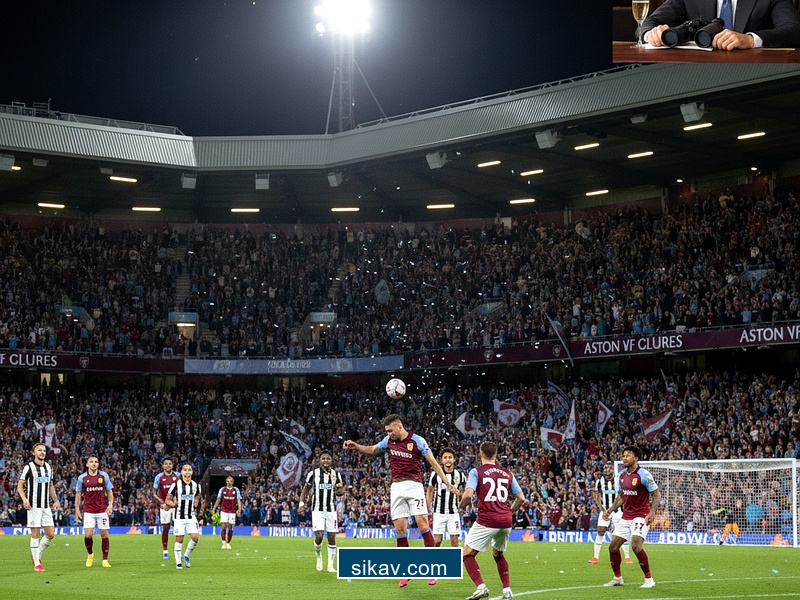
The Stat: One point one billion dollars. That is the estimated career earnings—prize money and endorsements combined—of the man sitting quietly in the directors' box at Villa Park last night, a figure that arguably dwarfs the combined transfer value of both starting XIs on the pitch.
When Roger Federer walks into a room, the air pressure changes. We aren't just talking about a tennis player; we are talking about a global conglomerate in a scarf. While the cameras flashed and the commentators chuckled about tennis royalty descending on the Midlands, those of us watching the market of European football saw something different. This wasn’t just a celebrity spotting; it was a collision of two very different sporting economies, and a validation of the stage Aston Villa now plays on.
The Basel Connection: Loyalty Over Luxury
Let’s strip away the Rolex sponsorships and the impeccably tailored coats for a moment. Why was the 44-year-old Swiss maestro actually there? It’s easy to be cynical and assume it’s a PR stunt, but the reality is far more grounding. Federer is a boyhood FC Basel fanatic. This isn't the "I support Manchester United because they were winning in the 90s" type of fandom we see from so many celebrities. This is visceral.
Having hung up his racquet in 2022, Federer has entered that strange, often perilous phase of an elite athlete's life: the vacuum of retirement. We see it in the locker rooms all the time. NFL quarterbacks who can't stop checking their heart rate monitors; NBA stars who buy pickleball teams just to feel the thrill of competition. For Federer, traveling to Birmingham on a cold Thursday night to watch his childhood club battle in the Europa League speaks to a genuine need to reconnect with sport as a fan, rather than a participant.
"He’s not there for the prawn sandwiches. You look at his eyes when Basel attacks—that’s the same focus he had at 40-30 on Centre Court. The athlete never truly leaves the body, even if the body has left the court."
The Villa Park Elevation
From an Aston Villa perspective, having a figure with an £820 million net worth in the stands is a massive subliminal boost. Under Unai Emery, the club has transformed from a chaotic entity into a polished, European machine. But brand perception lags behind results. It takes years to change how the world views a club.
When global icons like Federer choose Villa Park as their destination for the evening, it accelerates that branding process. It legitimizes the "European Nights" narrative the ownership is desperate to sell to sponsors. The Europa League can sometimes feel like the Champions League’s poor relation, but when the camera pans to the greatest tennis player of all time gripping the railing in tension, the fixture suddenly feels premium. It feels essential.
- Global Eyes: Federer's social media reach exceeds the population of most European countries. One photo from Villa Park does more for the club's global visibility than a month of paid advertising.
- The Prestige Factor: High-net-worth individuals attract other high-net-worth individuals. The directors' box becomes a networking hub, potentially opening doors for future investment or commercial partnerships.
- Locker Room Buzz: Don't think the players don't notice. Knowing a legend is watching raises the level. It’s human nature.
Psychology of the "Free" Legend
There is a tactical nuance here too. Federer spent decades in an individual sport where he was the sole architect of his downfall or victory. Football is collective chaos. Watching him observe the tactical rigidness of Emery’s setup versus the fluidity of Basel’s counter-attacks is fascinating.
He has been spotted at various events since his retirement, but his presence at football matches feels different. In tennis, silence is golden. In football, the noise is the weapon. For a man who spent twenty years demanding quiet before a serve, immersing himself in the cauldron of English football atmosphere is likely a form of release. It’s the antithesis of his career environment.
What This Means for the Season
So, does Roger Federer sitting in a leather seat change the trajectory of Aston Villa’s season? Directly, no. He isn’t putting on boots. He isn’t advising Emery on how to close out a tie-break.
However, indirectly, it reinforces the fortress mentality. Villa Park is becoming a place where things happen. The atmosphere, the intensity, and the guest list are all trending upward. For the players, seeing sporting royalty in the stands is a reminder that they ar
The Stat: One point one billion dollars. That is the estimated career earnings—prize money and endorsements combined—of the man sitting quietly in the directors' box at Villa Park last night, a figure that arguably dwarfs the combined transfer value of both starting XIs on the pitch.
When Roger Federer walks into a room, the air pressure changes. We aren't just talking about a tennis player; we are talking about a global conglomerate in a scarf. While the cameras flashed and the commentators chuckled about tennis royalty descending on the Midlands, those of us watching the market of European football saw something different. This wasn’t just a celebrity spotting; it was a collision of two very different sporting economies, and a validation of the stage Aston Villa now plays on.
The Basel Connection: Loyalty Over Luxury
Let’s strip away the Rolex sponsorships and the impeccably tailored coats for a moment. Why was the 44-year-old Swiss maestro actually there? It’s easy to be cynical and assume it’s a PR stunt, but the reality is far more grounding. Federer is a boyhood FC Basel fanatic. This isn't the "I support Manchester United because they were winning in the 90s" type of fandom we see from so many celebrities. This is visceral.
Having hung up his racquet in 2022, Federer has entered that strange, often perilous phase of an elite athlete's life: the vacuum of retirement. We see it in the locker rooms all the time. NFL quarterbacks who can't stop checking their heart rate monitors; NBA stars who buy pickleball teams just to feel the thrill of competition. For Federer, traveling to Birmingham on a cold Thursday night to watch his childhood club battle in the Europa League speaks to a genuine need to reconnect with sport as a fan, rather than a participant.
"He’s not there for the prawn sandwiches. You look at his eyes when Basel attacks—that’s the same focus he had at 40-30 on Centre Court. The athlete never truly leaves the body, even if the body has left the court."
The Villa Park Elevation
From an Aston Villa perspective, having a figure with an £820 million net worth in the stands is a massive subliminal boost. Under Unai Emery, the club has transformed from a chaotic entity into a polished, European machine. But brand perception lags behind results. It takes years to change how the world views a club.
When global icons like Federer choose Villa Park as their destination for the evening, it accelerates that branding process. It legitimizes the "European Nights" narrative the ownership is desperate to sell to sponsors. The Europa League can sometimes feel like the Champions League’s poor relation, but when the camera pans to the greatest tennis player of all time gripping the railing in tension, the fixture suddenly feels premium. It feels essential.
- Global Eyes: Federer's social media reach exceeds the population of most European countries. One photo from Villa Park does more for the club's global visibility than a month of paid advertising.
- The Prestige Factor: High-net-worth individuals attract other high-net-worth individuals. The directors' box becomes a networking hub, potentially opening doors for future investment or commercial partnerships.
- Locker Room Buzz: Don't think the players don't notice. Knowing a legend is watching raises the level. It’s human nature.
Psychology of the "Free" Legend
There is a tactical nuance here too. Federer spent decades in an individual sport where he was the sole architect of his downfall or victory. Football is collective chaos. Watching him observe the tactical rigidness of Emery’s setup versus the fluidity of Basel’s counter-attacks is fascinating.
He has been spotted at various events since his retirement, but his presence at football matches feels different. In tennis, silence is golden. In football, the noise is the weapon. For a man who spent twenty years demanding quiet before a serve, immersing himself in the cauldron of English football atmosphere is likely a form of release. It’s the antithesis of his career environment.
What This Means for the Season
So, does Roger Federer sitting in a leather seat change the trajectory of Aston Villa’s season? Directly, no. He isn’t putting on boots. He isn’t advising Emery on how to close out a tie-break.
However, indirectly, it reinforces the fortress mentality. Villa Park is becoming a place where things happen. The atmosphere, the intensity, and the guest list are all trending upward. For the players, seeing sporting royalty in the stands is a reminder that they ar