
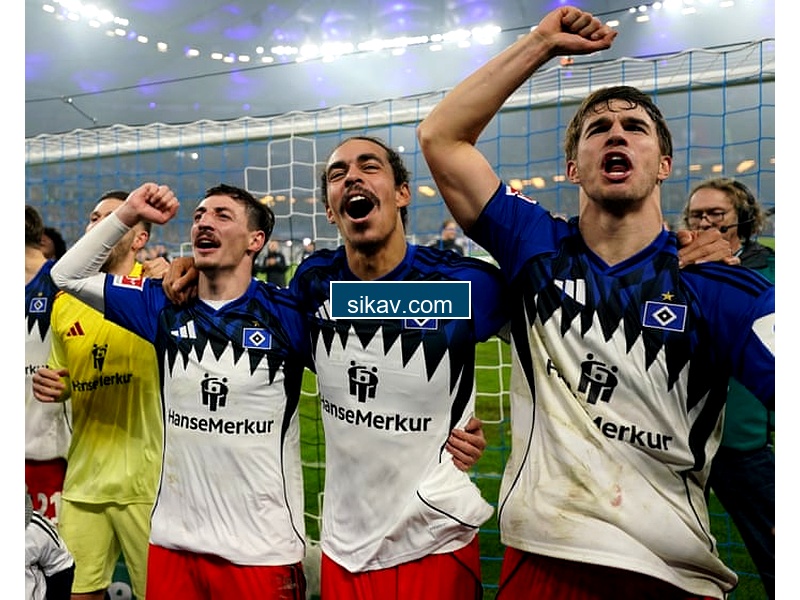
The air inside the Volksparkstadion didn't just vibrate; it shook with the accumulated tension of nearly eight years of silence. As the referee brought the whistle to his lips to end a contest that felt less like a sporting match and more like a gladiatorial exorcism, the containment lines broke. It wasn’t the players on the pitch who drew the eye first, but a figure on the sidelines. Alexander Røssing-Lelesiit, an 18-year-old who hadn’t played a single minute, was bobbing and weaving in front of the Werder Bremen bench, a conductor of chaos, screaming into the void. This was the release. This was the explosion. The Nordderby was back, and it had drawn blood.
2,843 Days in the Wilderness
To understand why an unused substitute felt the need to ignite a touchline skirmish, you have to understand the sheer weight of the clock. Sunday marked exactly 2,843 days since the last time these two northern giants collided in the top flight. That is a lifetime in football. It is an era of suffering, relegation, missed promotions, and the gnawing fear that perhaps Hamburg SV, the glorious Dinosaur, had gone extinct.
But here they were. Back in the Bundesliga. The narrative going into the game was one of adjusted expectations. HSV is no longer the entitled aristocrat demanding a seat at the European table; they are the bruised fighter just happy to be back in the ring. Yet, when the green shirts of Werder Bremen stepped onto the turf, logic evaporated. The history of the fixture demanded a spectacle, and the players obliged in a breathless encounter that swung violently between tragedy and ecstasy.
The Hero and the Antagonist
Every great story needs a villain, and depending on your allegiance, Justin Njinmah played the role to perfection—or perhaps he was the tragic hero denied his redemption. The Hamburg-born forward, donning the green of the enemy, seemed to have twisted the knife into the heart of the home support.
Coming off the bench with Werder trailing, Njinmah needed less than ten minutes to silence the 57,000 in attendance. His equalizer to make it 2-2 was a moment of cold precision amidst the heat of the derby. For a fleeting moment, it looked as though he had saved a point for Bremen, securing a narrative of defiance. But football is cruel. HSV found a winner, a jagged, beautiful goal that turned the silence back into a roar, leaving Njinmah to watch the celebrations with simmering resentment.
"Some injured HSV players ran on to the field and thought they had to gesticulate and talk shit. That pisses me off. But I guess that’s part of a derby." — Justin Njinmah, Werder Bremen
Njinmah's post-match comments reveal the raw nerve that this fixture exposes. He named no names, but the finger was pointed squarely at the likes of Røssing-Lelesiit. This wasn't just about three points; it was about respect, territory, and the pettiness that makes rivalries matter. When injured players are storming the pitch to "talk shit," you know the club's pulse is beating strong again.
A Defining Moment for the Season
Beyond the shoving matches and the pyrotechnics, what does this actually mean for Hamburg SV? This victory is a massive injection of belief. Surviving in the Bundesliga after a long absence requires more than just tactical discipline; it requires an emotional fortress. The Volksparkstadion needs to be a place opponents fear, a cauldron where logic goes to die.
The Psychological Shift
- Validation: Beating a direct rival and a historic adversary proves to the squad they belong at this level.
- Unity: The fracas at the end, while unsavory to purists, binds a team together. They fought for the badge, literally.
- Momentum: In a relegation scrap or a mid-table push, these emotional highs sustain a team through the inevitable lows of winter.
Werder Bremen, conversely, leave with a bloodied nose—both metaphorically and spiritually. They had the game within their grasp. They had the momentum at 2-2. To lose it late on is the kind of psychological blow that lingers. Njinmah’s frustrati