
The ball snaps loose in the defensive third, a moment that mere months ago would have induced panic in the stands at the Georgi Asparuhov Stadium. But the reaction this time is different. It is synchronized. Two blue shirts immediately collapse on the passing lane, not chasing the ball, but cutting off the escape route. The turnover is forced, the transition is vertical, and within six seconds, Levski is threatening the opposition box. This isn't luck. This is a mechanism. It is the signature of a team that has stopped playing on instinct and started playing by design.
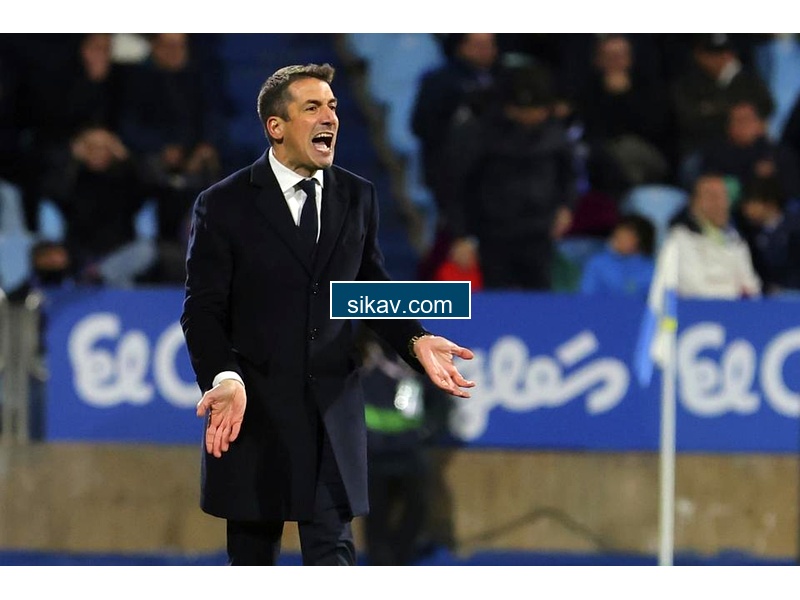
Julio Velázquez has arrived in Bulgaria, and he hasn't just brought a whistle and a stopwatch; he has brought a calculator. The news coming out of Sofia is clear: the Spanish technician has revolutionized the club, securing top spot in the league, qualifying for the Cup, and booking a ticket to the Supercup. But headlines only tell you what happened. As analysts, we need to understand why it happened.
The Myth of the Spanish Style
When a Spanish coach lands in Eastern Europe, the lazy narrative is always the same: "He will bring Tiki-Taka." It is a reductive assumption that ignores the tactical evolution of modern Spanish coaching. Velázquez is not Guardiola. He is a pragmatist who understands that possession without penetration is arguably the most dangerous state for a football team to be in.
What Velázquez has implemented at Levski is not aesthetic vanity, but structural rigidity. The team’s rise to the top of the table is built on a defensive foundation that borders on the obsessive. In the chaotic environment of the Bulgarian First League, where transition play often dictates results, Velázquez has installed a 'Rest Defense' system that is arguably the best in the region. Even when Levski attacks, three players are positioned solely to nullify the counter-attack before it begins.
"Control is not about holding the ball for 70% of the match. Control is dictating where the opponent is allowed to have it. Velázquez has Levski controlling space, not just possession."
Defensive Metrics: The Art of Suffering
To understand the magnitude of this turnaround, one must look at the Expected Goals Against (xGA) metrics. Previous iterations of Levski were porous, often relying on individual brilliance from the goalkeeper or last-ditch tackles—high-variance defending that eventually fails. Under Velázquez, the volume of high-quality chances conceded has plummeted.
This solidity stems from a compact mid-block. When the press isn't on, Levski retreats into a shape that denies entry into the "Zone 14" (the space just outside the penalty area). By forcing opponents wide, they turn the game into a contest of aerial duels and crosses—traditional strengths of Bulgarian defenders—rather than a test of agility and turning speed.
- Compactness: Vertical distance between defensive and forward lines reduced significantly.
- Trigger Pressing: Engaging only on poor touches or lateral passes, preserving energy.
- Set Piece Efficiency: Leveraging structure to maximize dead-ball situations in a tight league.
Breaking the Hegemony
We cannot discuss the Bulgarian league without addressing the elephant in the room: Ludogorets. For over a decade, they have turned the league into a procession. Their financial might usually renders tactical nuances irrelevant over a 30-game season. However, outliers occur when a coach maximizes the sum of his parts beyond their market value.
Velázquez is currently achieving this statistical anomaly. By qualifying for the Cup and Supercup, he has opened multiple fronts for silverware. But the league leadership is the true indicator of sustainability. Cup runs can be fueled by adrenaline and luck; league tables are fueled by consistency and tactical discipline. The fact that Levski is sitting top suggests they have solved the consistency puzzle.
The Psychological Component
The report mentions Velázquez has "returned the illusion" (devuelve la ilusión) to the fans. In tactical terms, we call this "buy-in." A manager can draw the most sophisticated passing triangles on a whiteboard, but if the players do not believe those triangles will protect them from defeat, the system collapses under pressure.
Velázquez, having managed in the intense cauldrons of Betis and Udinese, understands the weight of a heavy shirt. Levski is a historic giant that has been sleeping. The "illusion" is actually confidence derived from competence. Players run harder when they know exactly where their teammates will be. The uncertainty is removed from their game, replaced by automated responses.
The Road Ahead: Can the Structure Hold?
Is this the turning point? It is premature to declare the Ludogorets era over, but the data suggests Levski is no longer a soft touch. The challenge for Velázquez now shifts from installation to maintenance. As the season grinds on, fatigue sets in, and opposition analysts begin to decode the trigger points of his pressing system.
The "Velázquez Revolution" is not about flashy football; it is about efficiency. It is about a 1-0 win away from home in freezing conditions. It is about positional discipline over individual heroism. If Levski lifts a trophy this year, it won't be because of magic. It will be because a Spaniard walked into Sofia and taught a chaotic giant how to love the boring, beautiful art of tactical organization.