
"The strength of the team is each individual member. The strength of each member is the team." — Phil Jackson.
Oliver Glasner is not a man prone to gambling, but in Dublin, he pushed his chips to the center of the table and walked away with the house. The narrative surrounding Crystal Palace’s maiden European voyage has largely focused on the novelty of the occasion, yet the comfortable dismantling of Shelbourne signifies something far more substantial than a mere joyous away day. It was a litmus test for the squad's underbelly, and for the first time this season, the fringe elements didn't just survive—they thrived.
Leaving the talismanic Jean-Philippe Mateta and the relentless engine that is Daniel Muñoz in London was a statement of intent. It told the squad that the Conference League isn't just a distraction; it is an incubator. Glasner looked at the calendar—a brutal, lung-burning December marathon—and realized that relying on his preferred XI was a fast track to muscular failure. He needed answers from the shadows, and in Christantus Uche and Eddie Nketiah, he found them.
The Uche Experiment: Chaos as a Strategy
To understand the significance of this victory, you have to look past the scoreline and look at the shape. Uche, a summer loan acquisition from Getafe, has been somewhat of an enigma at Selhurst Park. Often viewed as a raw, physical presence, his deployment in Dublin offered a tactical wrinkle that Shelbourne simply could not iron out.
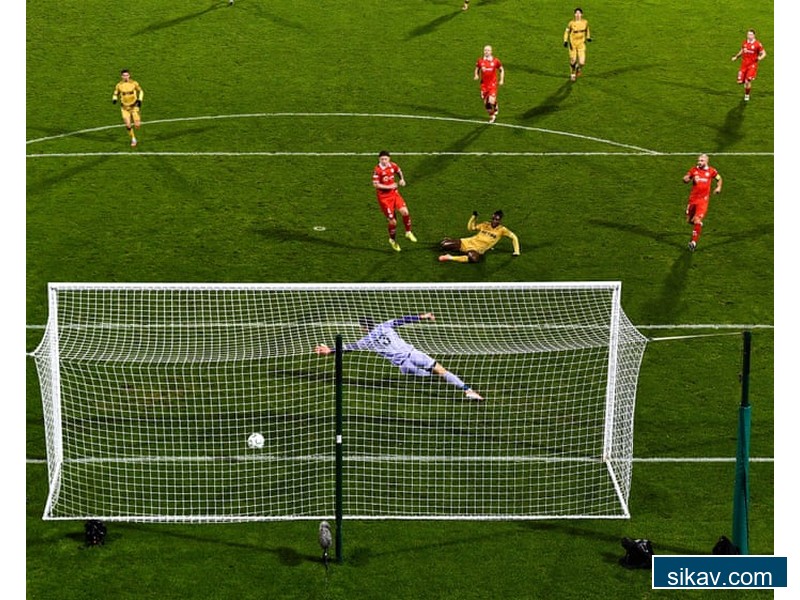
In his second start, Uche operated less as a traditional midfielder and more as a battering ram in the half-spaces. His goal—a well-taken finish that capped a dominant display—was the headline, but his movement was the story. By occupying defenders physically, he created the pockets of space that Nketiah thrives in. This is the hallmark of a maturing squad: when Plan A (Mateta holding up play) is removed, Plan B (Uche’s chaotic disruption) becomes effective immediately.
Why This Matters for the "December Marathon"
The timing of this performance is critical. We are entering the attrition phase of the Premier League season. The data on teams playing Thursday-Sunday splits is historically grim, often resulting in a noticeable drop-off in domestic points per game. Glasner’s public declaration that he will field a "weakened" team against KuPS next week is not arrogance; it is preservation.
With eight games crammed into this festive period, the emergence of Uche and the resurgence of Nketiah allows Glasner to rotate without fear of capitulation. If Uche can replicate 80% of what he showed in Dublin against lower-tier Premier League sides, Mateta gets a rest. That rest translates to sharpness in January.
Nketiah: The Fox in the Box Returns
Perhaps the most encouraging takeaway for the traveling Eagles faithful was the body language of Eddie Nketiah. Strikers are fragile creatures, fueled almost entirely by the dopamine hit of the net rippling. Scoring for the second game in succession changes the biochemistry of a forward.
He didn't just score; he led. In the absence of the senior leadership group, Nketiah took ownership of the offensive transitions. This is vital because Palace cannot exist solely on the shoulders of Eberechi Eze (when fit) or Mateta. They need a predatory instinct against low blocks, and Nketiah finding his rhythm offers exactly that.
- Depth Validation: The "B-Team" proved they can execute Glasner's high-pressing system away from home.
- Tactical Flexibility: Uche offers a physical alternative to the technical prowess of Wharton or Hughes.
- European Security: Playoff spot virtually assured, allowing total rotation vs. KuPS.
The Verdict: Learning at Lightspeed
European campaigns have been the poison chalice for many mid-table Premier League sides—ask West Ham or Burnley about the domestic cost of continental adventure. But Palace seem to be learning at lightspeed. The Shelbourne victory wasn't about the coefficient or the glory; it was about squad management.
By securing the result in Dublin without their heavy artillery, Glasner has bought himself the most valuable commodity in modern football: time. He can now approach the Finnish side KuPS with impunity, resting legs for the domestic grind, knowing that his fringe players aren't just making up the numbers—they are capable of deciding matches. Palace aren't just climbing the Conference League table; they are building the infrastructure to stay there.